
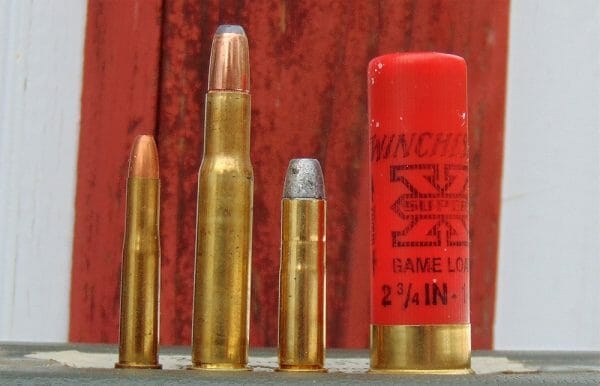
U.S.A. –-(Ammoland.com)- There is an old saying when it comes to hunting, that it’s not the arrow so much as it is the Indian. What that old proverb relates to is the fact that shot placement is more critical than the caliber. It’s not at all uncommon now to see some hunters using rounds that not only get the job done, but done to the point where one might question the sanity behind it. I have seen a couple of whitetail deer shot with large caliber rounds better suited for elk or even bears with a pretty good loss of meat in the process.
With new rounds coming out all the time, are some of the old cartridges that have been around for a century or more on life support, or are they already in a drawer at the morgue?
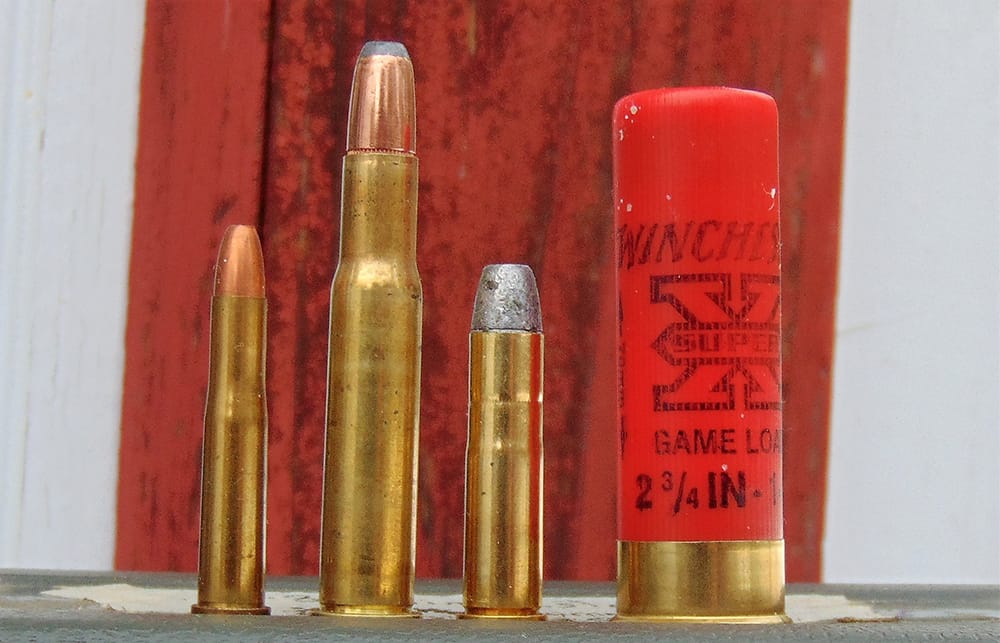
It makes you wonder how some of our ancestors ever got by with some of the puny and what some might consider underpowered rounds that they had to contend with at one time. I know personally of a hunters taking deer successfully with rounds as small as the .25-20 Winchester, and for a time the .44-40 rivalled some of the early smokeless rounds in popularity. One of the most popular for many years in fact was a happy medium between the two, the .32-20. It was small enough in diameter not to tear up small game like rabbits and grouse and at close range bring down a whitetail deer.
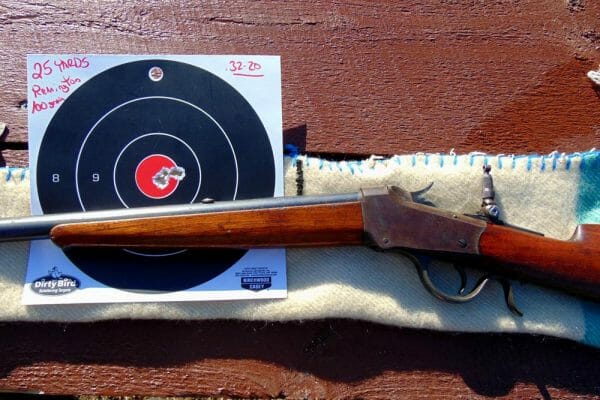
So why would anyone choose such a tiny round? Well, for one, economy. It might be commonplace for you or I to have a safe full of guns, but even up until World War II, most families might have only had a couple of guns, sometimes just one, and they had to make the most of what they had. The .32-20 was a popular round from it’s introduction in 1882 when Winchester chambered in their 1873 rifle. Even after many other and more powerful rounds went the way of the stagecoach, the .32-20 remained and even flourished, making its way into bolt action rifles like the Savage 23 and revolvers like the Smith & Wesson M & P and the Colt Army Special, in addition to the Colt Single Action Army. Even today while so many other rounds are gone, the .32-20 still lives on and it is still a pretty good provider of game with some still taking animals up to whitetail size with the heavier bullets like the 115 grain cast bullet at close range.
One round that has been on death’s door so many times it has worn a hole in the mat is the .30-30. I have heard from many learned scholars that the .30-30 should be put out to pasture as it has outlived its time, and that if you want to be nostalgic and pick a lever action, one should go to the .35 Remington or even up to the .45-70.
While the .30-30 has never been a particularly powerful round, with a 170 grain bullet moving along at 2,200 fps, when it came out in 1895, there was nothing even close to it among rifle cartridges that could be put in a small carbine that weighed less than seven pounds. Keep in mind there was no .30-06, no .308 or other big game rounds here in America to compete with the .30-30 despite the fact that it was in a small and compact package, the .30-30 performed. If it didn’t, it would have gone the way of the dodo. One only needs to look at how popular the .30-30 is compared to other rounds similar in performance like the .32 Winchester Special and the .303 Savage.
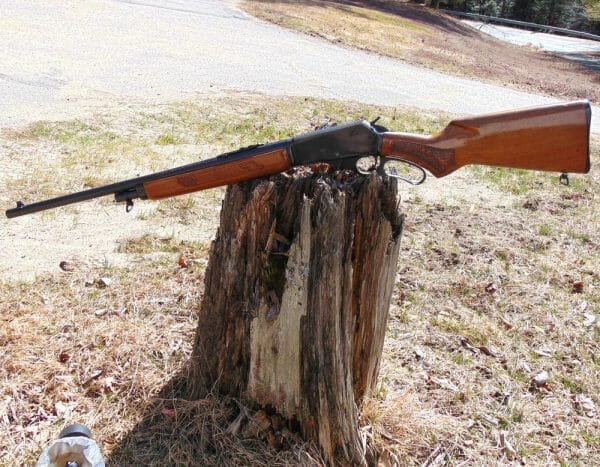
What keeps shooters coming back to the .30-30 is that it just plain works. I killed my first deer with a .30-30 Winchester, albeit a Model 54 bolt action, but the round was the standard 170 grain SP. I have hunted with many others that still pack a .30-30 into the woods for the same reason, they have seen the results over and over again and know that the old round still does the job it was designed to do over one hundred and twenty years ago.
Looking back to the smaller end of the scale, one place that is littered with the carcasses of obsolete rounds is varmint hunting. Over the decades rounds have come and gone that were once the favorite darling of someone looking to put some pelts in the shed for a few extra dollars without doing too much damage. A new round would come out and others would quickly get shuffled aside and stay there as ranges extended and hunters were shooting coyotes out past three and four hundred yards. The Savage .22 High Power, .25-35 Winchester, .222 Remington, and many others have been pushed aside as newer and faster rounds like the .223 and the speedy band of .17 caliber cartridges appeared. It seems that no round can go fast enough to do the jobs on animals that rarely weigh more than fifty pounds.
One of the old favorites that is still fighting for breath is the .22 Hornet, which enjoys a huge following in Europe, where shooting military calibers is frowned upon. Here in the states it’s most popular among shooters who aren’t looking for something out to a country mile, as the Hornet is good to 150-175 yards with a good handload. Where the .22 Hornet excels is that it is quiet, and is known to be extremely accurate without burning a lot of powder, making it a cinch to handload. I have owned both .223 and .22 Hornet rifles and when it comes to varmint hunting, the .223, at least where I am, is overkill. I have yet to make a shot on a coyote past 125 yards. When it comes to fox and your smaller varmints, the .22 Hornet can’t be beat. I have taken grey foxes with little damage, the nicest out at 60 yards in an old H & R single shot with a 45 grain soft point where the fox went to the ground before he knew he had been done in.
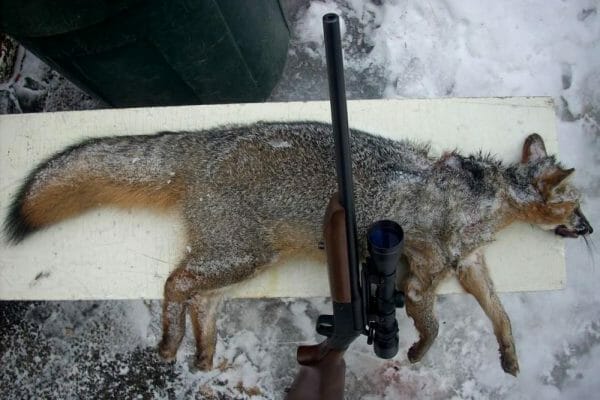
The old Hornet can still be found in CZ’s line of rifles and the occasional Ruger and Savage bolt action. The latest trend though seems to be taking the .22 Hornet and necking it down to make the .17 Hornet, which only time will tell to see if it becomes more popular than its parent.
One of the most puzzling and kicked around semi-obsolete rounds is the 16 gauge, one of my personal favorites. I have been a fan of the old 16 ever since I first started hunting ruffed grouse. I disliked 12 gauge because it was too punishing on the birds up close, littering them with too many pellets, and I found that while 20 gauge did bring them down, it didn’t hit them as hard as when I went to 16 gauge. Which is the secret to the 16 gauge’s success. The 16 has been around as long as the rest of them, and for many years had the reputation of hitting as hard as the 12 gauge but without the recoil.

What has kept the 16 gauge going is a strong hunting base overseas and some hunters here in the states who own them partially because of nostalgia and partly because of their performance. While they are still a good choice, the invention of the 3-inch 20 gauge really took away most of the edge the 16 gauge had. The other drawback is that there are not the variety of loads out there for the 16 gauge out there compared to the other choices. Still the 16 gauge is capable of taking everything from squirrels and grouse right up to whitetail deer and bear with rifled slugs. My uncle’s old 16 gauge Ithaca Deerslayer that I inherited more than fifteen years ago has been responsible for dozens of grouse since I inherited it, not to mention coyotes and the largest buck I have ever taken. That’s not to mention the deer and game he took with it when he got it new in 1971.
There are many other rounds out there that some have put the toe tag on prematurely. The .41 Magnum, the .300 Savage, the .220 Swift are just a few of the rounds that have been out for a long time and have been put on the back burner. That doesn’t mean they aren’t just as good at taking the same game they have for decades, it just means you might have to work a little harder with them and put some more patience in when it comes to finding ammo or even loading your own.
Don’t pass these old cartridges up, someday some of the rounds you have now that are state of the art will fall out of favor perhaps and you will be standing in front of some clerk who has no clue what you’re looking for because it’s not popular anymore. You might as well get acquainted with some of the golden oldies now, you’ll be pleasantly surprised when you do.
About David LaPell:
David LaPell has been a Corrections Officer with the local Sheriff’s Department for thirteen years. A collector of antique and vintage firearms for over twenty years and an avid hunter. David has been writing articles about firearms, hunting and western history for ten years. In addition to having a passion for vintage guns, he is also a fan of old trucks and has written articles on those as well.

Responding to “Roy D’s“ comment about the 357 RUGER of 1 Feb; Will the 375 RUGER, 375 H&H, and 375 Remington still work in the obsolete “Winchester 94 BIG BORE 357 Win”. I have obtained one from a very nice “widow lady” who’s departed spouse had one but to her knowledge, never fired it. It’s in immaculate condition. Problem is the ammo is somewhat hard to find. Again, my question as stated above, will these “other 375 Winchester Lever 94.
The old 30-30 has taken as many deer as any caliber around down south in brush country. It will literally bulldoze a path through the things that the fast moving calibers would get deflected by. I killed my first deer with a Savage pump in this caliber and killed many more with it. As long as I put the crosshairs on the right spot it did the job every time. I have killed deer that weighed over 200 pounds with it. The 170 gr. was my choice. I still have this gun and will always cherish it. I saw my… Read more »
Will still keep my 197’0’s Winchester 70 in .243 Win+Winchester 94 in .30-.30,+ Marlin 1895CB in .45-70. Old is still very usable, and they are all paid for without upsetting the little lady!
Personally I would not sell or trade my savage 99 or Remington 722 in 300 Savage for all the tea in China. This has Been a round I have dropped everything from yotes to Elk with the right load. This is not obsolete by any means. It is just not manufactures in a rifle anymore to my knowledge but Ammo is still plenty easy to find. I only buy new Ammo for the cases as I reload also. This is my primary cartridge for ALl of my hunting since I was 11 years old. The only exception for this is… Read more »
Like the article, I just happen to have the 16 ga. single barrel I got for Christmas in 1960. I also have a 30-30 rifle, a Contender with a .22 Hornet barrel, a Marlin pump in 25-20. All good cartridges in my opinion, I handload most of my ammo these days. Old Cartridges never die, they just get better with age like an old wine.
Right now the 6.5 Creedmore seems to be the darling caliber and everywhere I go I’m told I NEED a rifle chambered in it. BS. I’ll consider it when it has been around ~50 years. However, by then I’ll be gone. Right now all my modern rifle and hunting needs are met more than adequately with .22LR, .223REM/5.56NATO, .243WIN, .308WIN/7.62NATO, and .30-06SPRG. I’ll never own a magnum. All that bang and kick for a couple hundred FPS more? No thank you.
Is .22 Hornet ammo readily available and if so, where??
The advent of new and incredibly powerful big game calibers — some which will blow an 8 inch hole in an elk would have us think the animals are wearing ceramic armor. The considered “harmless” .30-30 (first non black powder center fire cartridge) in a standard (NOT Hornady LEVERevolution–much more effective) 170 grain round delivers the same velocity and energy at 250 yards as a 180 grain .44 Magnum does at one inch.
What about the 30 Remington? It was compairable to the .30-30. Including using the same load data.
Speaking of old calibers, I am looking at some surplus import handguns for $200: Zastava M57 Tokarev Type Semi-Auto Pistol, 7.62x25mm Surplus Very Good Condition. https://www.classicfirearms.com/zastava-m57-tokarev-yugo I’ve never had a 7.62×25 anything, but looking at a few of the countless YouTube 7.62×25 reloading videos, and reviews on a few variations of this general pattern combloc firearm, that 7.62×25 looks to be one seriously _fast_ projectile. In one video the guy shows the final loading he used, after he loaded progressively hotter and hotter til he broke the slide pushing a claimed 2295 fps. All I can say is: Wow! I’d… Read more »