
Opinion
By Shelby Baird Smith

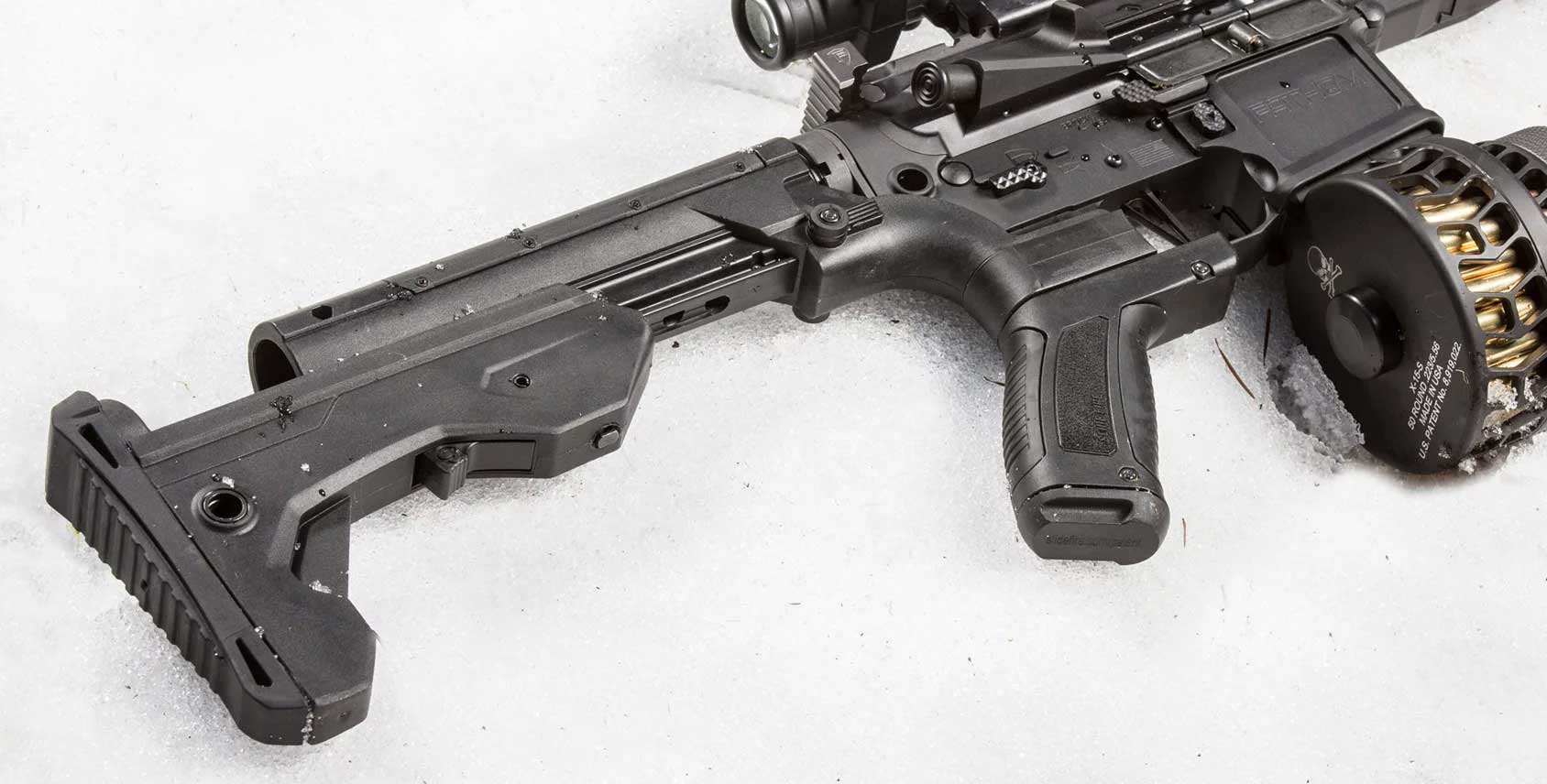
Last week, the U.S. Supreme Court took a major step in reining in the Bureau of Alcohol, Tobacco, Firearms and Explosives’ (ATF) administrative overreach. The Court held in Garland v. Cargill that the agency exceeded its statutory authority by classifying semiautomatic rifles equipped with bump stocks as “machineguns” under the National Firearms Act of 1934 (NFA).
The NFA defines a “machinegun” as “any weapon which shoots, is designed to shoot, or can be readily restored to shoot, automatically more than one shot, without manual reloading, by a single function of the trigger.” For many years, the ATF took the consistent position – over several administrations – that semiautomatic rifles equipped with bump stocks did not meet this definition.
However, the agency did an about-face in the wake of the tragic murders in 2017 in Las Vegas in which bump stocks were used by the murderer. That awful, criminal incident prompted an immediate political response. While Congress was considering several bills to ban bump stocks, ATF charged ahead and issued a Final Rule in 2018, amending its regulations to explicitly classify bump stocks as “machineguns” for the purposes of federal law. In doing so, the ATF repudiated its longstanding interpretation and reimagined the text of the NFA to fit its purposes. As a result, ATF ordered bump stock owners to destroy or surrender their devices or face criminal prosecution.
Definitions Have Meaning
A legal challenge made its way through the federal courts until the question of whether the agency’s action defied Congress’s “machinegun” definition landed at the Supreme Court.
The Court struck down the ATF rule banning bump stocks by a vote of 6-3 in an opinion authored by Justice Clarence Thomas. This was not a difficult case on the face of the law.
The Court held that a semiautomatic rifle with a bump stock does not qualify as a machinegun for two main reasons. First, such a rifle cannot fire more than one shot “by a single function of the trigger.” Second, even if it could, it would not do so “automatically.” The Court explained that adding a bump stock does not change the trigger mechanism of the semiautomatic rifle, which is the key factor Congress used to define a “machinegun.” Rather, if a shooter wants to fire multiple shots from such a rifle, he “must also actively maintain just the right amount of forward pressure on the rifle’s front grip with his nontrigger hand.”
It is important to note that the decision did not invoke the Second Amendment. Rather, the case involved a simple question of statutory interpretation: does the law mean what is says? The ATF’s 180-degree pivot from its prior interpretation flagrantly defied the statutory text. Indeed, if the ATF’s expansive reading of the NFA were to stand – under which a firearm could be classified as a “machinegun” based solely on an individual’s ability to maintain forward pressure to achieve continuous fire instead of classification based upon the trigger mechanism – the agency could have used the same rationale to ban most semiautomatic rifles. But ATF conceded that semiautomatic rifles without bump stocks fire only one shot with each trigger pull, which demonstrated to the Court that ATF’s arguments about what constitutes a “machinegun” were inconsistent and, frankly, incoherent.
Separation of Powers
The Cargill decision is important because it reflects the conservative majority’s commitment to textualism and the separation of powers. The ruling stands for the simple proposition that courts and agencies must follow the statutory text as written rather than read in their own policy goals. In recent years, ATF has brazenly pursued its own agenda through regulatory fiat, as it has justified major policy changes by reinventing the statutory text to fit its goals. The Court has sent a clear message that ATF does not have the authority to reimagine the law. Rather, the power to amend the law resides exclusively with Congress.
While antigun groups have characterized the ruling as the product of an “activist” Court, the opposite is true. By limiting agencies and the courts to the text of a statute, the decision upholds the separation of powers by leaving the work of passing laws to Congress. The argument – embraced by the dissent – that the Court should expand the definition of “machinegun” to fit devices like bump stocks advocates for a judicial and administrative power grab in which judges and agencies go beyond Congress’s clear statutory mandate. As a result, the Court’s dedication to textualism is a form of judicial restraint.
All told, the Cargill decision is a victory for our constitutional order.
About the Author
Shelby Baird Smith is NSSF’s Chief Litigation Counsel. She previously clerked for Judge Thomas M. Hardiman on the Third Circuit Court of Appeals and clerked for Justice Samuel A. Alito on the U.S. Supreme Court of the United States.
About The National Shooting Sports Foundation
NSSF is the trade association for the firearm industry. Its mission is to promote, protect and preserve hunting and shooting sports. Formed in 1961, NSSF has a membership of thousands of manufacturers, distributors, firearm retailers, shooting ranges, sportsmen’s organizations, and publishers nationwide. For more information, visit nssf.org





Humm, I wonder if the ATF is lying ..
The FBI said there were legal full auto guns in Paddocks room along with a few bump fire guns. I never saw any proof that the bump fire gun was even used. If you wanted to ban firing quickly, this would be your chance to seize the opportunity. And they did.
Texualism? Good point! NOW, show me the TEXT that PROVES the BUREAUCRATIC ATF was FORMED BY CONGRESS!!!
All-be-it, it
IS a WELL-KNOWN FACT that the ‘bureaucratic atf division” was FORMED by a
DIRECTOR IN THE IRS —- NOT CONGRESS!!
THUS,
the ENTIRE “bureaucratic atf” IS AN ILLEAGLE ACTING CABAL!!!
THUS,
this ILLEAGALITY includes ALL of the UNENFORCEABLE “rules and regulations” which have been and are being applied as prosecutable and punishable laws!
A one armed person cannot use a bump stock since the gun not fires of the user punches the rifle forward wkith the support zarm. Acvuracy is non existance. Just a waste of ammomitiom.
SCOTUS got ankther case correctly while ducking the Second Amendment issue..
BATFE has no authority to legislate. Congress has no authority to legislate on firearms, for to restrict or limit choice of arms, to ban or even require ANYTHING of citizens such as permits or licenses is to INFRINGE, WHICH IS UNCONSTITUTIONAL. We want the whole cake back, and we’re not gonna comply with any more BS.