
Opinion

“Have no fear of perfection. You’ll never reach it! ~ Salvador Dali.
Gloves negatively affect our dexterity with guns.
No doubt!
However, in “modern times,” gloves are mandatory in many circumstances.
In the 1970s, latex gloves were rarely included in an LEO’s training curriculum.
It was accepted that we would get blood on our hands while treating GSWs and other traumatic injuries in the field. Washing one’s hands afterward was considered sufficient. Due to a bewildering host of blood-borne pathogens, donning nitrile gloves (never mind latex) is SOP prior to any unknown contact(s). Thus, the immediate necessity of effectively operating pistols while wearing gloves is not only possible but very likely!
Thin nitrile gloves can prevent pistol magazines from being seated properly. They can also thwart the reliable depression of the slide-release lever.
Try depressing the slide-release lever on a Glock while wearing gloves versus simply pulling the slide back and then releasing it with your support-side hand. Which is more reliable under high stress or when wearing gloves?
In cold weather, winter gloves can change how well we grip the handgun.
The perfect pistol for carry in July may be unusable in January when we are forced to wear gloves due to the cold. Short grips like those on a G26, G42 or G43, while fine in bare hands, often don’t do well in gloved hands. Conversely, “normal-sized” grips (G48) work either way!
Thin, non-insulated “driving gloves” made from deerskin can be a good choice for cold weather. I have long experience with leather and know that it is heat resistant. Some synthetics will melt to your skin when sufficient heat reaches them.
Sword Master, Miyamoto Musashi spoke about “indoor technique” versus “outdoor technique” with regard to sword training. I recall his dire warning with regard to skills, tactics, and techniques that were oh-so-glamorous within the comfort of the dojo but failed on the battlefield.
Techniques and equipment that may be fine while you’re comfortably standing upright at an indoor range or even at an outdoor range during warm/mild weather with no wind may fail when called upon as you find yourself in a cold, muddy ditch at night, in the rain, with bullets whizzing by your ears!
I have never seen an indoor range floor (nor a dojo floor) that was slick with mud, blood, and ice, covered with snow, large rocks, downed power lines, and glass fragments, with sharp curbs, fallen tree branches, and cracked/uneven pavement!
Thus, having “summer tactics” and “winter tactics” isn’t wise. What is wise is to embrace sound tactics, equipment, and techniques that can be depended upon to work regardless of exterior conditions.
“Universal techniques” are thus always superior (in my opinion) to “situation-specific” or “gun-specific” techniques, which make far too great a demand upon fortune!
/John
Live Inventory Price Checker

|
MIRA Safety HAZ-GLOVES(R) - Butyl Gloves for CBRN Protection | MIRA Safety LLC | $ 91.95 |
|

|
Polishing Gloves - Polishing Gloves, 6 Pairs | Brownells.com | $ 17.99 |
|

|
Krypton Glove | Kryptek | $ 39.99 $ 27.99 |
|
|
|
Nomex Military Flight Glove, Coyote Tan | Army Navy Outdoors | Army Navy Outdoors | $ 32.99 |
|
About John Farnam & Defense Training International, Inc
As a defensive weapons and tactics instructor, John Farnam will urge you, based on your beliefs, to make up your mind about what you would do when faced with an imminent lethal threat. You should, of course, also decide what preparations you should make in advance if any. Defense Training International wants to ensure that its students fully understand the physical, legal, psychological, and societal consequences of their actions or in-actions.
It is our duty to make you aware of certain unpleasant physical realities intrinsic to Planet Earth. Mr. Farnam is happy to be your counselor and advisor. Visit: www.defense-training.com
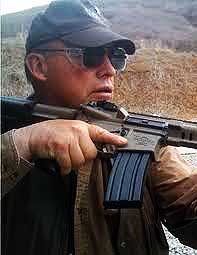




Great points, John. I’ve started incorporating gloves into my training since we have cold winter weather here in Indiana. As a church safety responder and in a uniformed security role, gloves are needed for at least two months every year. I’ve also started putting this into my fall training classes. Even in the summer, gloves are helpful for carbine classes when the sun and high round counts heat up the hand guard of an AR-15.