

There I was, with a JAKL-10 and a box full of red dots and fixed-power prisms. I felt I needed something more appropriate for a .308 rifle. This led me to the Maven CRS.3 4-20×50 scope. I wanted to treat the gun like a DMR rifle, and it needed some serious magnification. I bounced between a few different settings but ultimately wanted to be able to hit small targets at long range. No one wants to spend more than necessary, but I wasn’t settling for the bare-bones budget options.

The CRS.3 is priced at $700 and offers a remarkable array of features for the money. The 4-20x50mm optic comes with either a MIL or MOA reticle. I went with MOA because I’m no PRS shooter, and MOA is simply easier for me to understand. The CRS.3 4-20x50mm boasts an illuminated reticle, fingertip-adjustable turrets, and is a first focal plane (FFP) scope. It comes with all the premium features you’d expect.
It’s nitrogen-purged, fogproof, waterproof, has a phase correction coating, an etched reticle, and a lifetime warranty. These optics are assembled in the Philippines with high-quality Japanese glass. Maven describes it as a mid-range model, and interestingly enough, they don’t use traditional retailers, opting for direct-to-consumer sales only. I hit the ground running with the CRS.3 mounted to the JAKL.
Live Inventory Price Checker
|
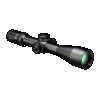
Vortex Strike Eagle 5-25x56mm FFP EBR-7C MRAD Rifle Scope | GunMag Warehouse | $ 799.99 |
|
|
|
Vortex Strike Eagle 5-25x56 EBR-7C MOA FFP Rifle Scope - SE-52503 | Palmetto State Armory | $ 799.99 |
|
|
Vortex - Strike Eagle 1-8x24 | Bear Creek Arsenal | $ 399.99 |
|
|
Vortex Strike Eagle 5-25x56mm FFP EBR-7C MOA Rifle Scope | GunMag Warehouse | $ 799.99 |
|
Zeroing The CRS.3
The turrets make this thing an absolute joy to zero. With the optic mounted, I took my time taking shots and was lucky enough to find that the optic wasn’t all that far off from where the gun was shooting. I had to make only minor adjustments, and I was on the money. The turrets are fingertip-adjustable and provide nice tactile and audible feedback with each click.
The adjustments are ¼ MOA per click. I stabilized the rifle at 100 yards and then checked the tracking. I fired a group, then adjusted four inches down, fired another group, then adjusted four inches left, and fired a third group. Things wrapped up by adjusting four inches up and four inches right, firing a final group. The final group was almost dead-on with my first group. If you looked at it, you’d swear it was one single group fired by a mediocre shooter.
I’m most certainly a mediocre shooter, so the optic performed beautifully. The CRS.3 tracks exceptionally well, and all the groups perfectly coincided with the four-inch low and four-inch left adjustments. With the optic zeroed, I got to go out to 500 yards and practice some slow-fire shooting. The CRS.3 comes with an adjustable parallax, which makes it easy to ensure we are all on the same plane when shooting at varying distances.

At 500 yards, the 20X magnification delivered awesome clarity downrange. I could easily see my targets, make out all the different colors of steel, and put rounds right where I wanted them to be. Well, mostly—any misses were certainly on me, not the optic. The optic’s sharp clarity and etched reticle made it surprisingly easy to make that steel ring.
Going Clear
Sadly, my state seemingly lacks proper long-range shooting ranges, so most of my shooting was done within 200 yards. However, I have plenty of fields to scan and observe how far and wide the optic can see. The view through the optic remains incredibly clear, even at longer observation distances.

There might be faint traces of chromatic aberration, but they’re so minor that they’re barely worth mentioning. The glass is clear from edge to edge, with no noticeable distortion. Colors stand out remarkably well when looking out at long ranges. You can easily pick out different shades of green in a vast field of similar greens. If I were hunting a deer in a pine forest, I’m confident I could pick out the deer’s brown coat against the brown of the pine trees with ease.
Shooting Fast With the CRS.3
I recently shot the Department of Energy Designated Marksman qualification with the JAKL-10 and this CRS.3 optic. This demanding test requires shooting at various ranges and from various positions. I had to shoot accurately while quickly changing positions at ranges from 100 yards down to 15 yards. The smooth magnification range of the CRS.3 and the micro-sized throw lever made it quick and easy to get into action and adapt to changing distances.

The reticle’s illuminated portion was barely visible at high noon in Florida. It’s certainly not as bright as a red dot, but it’s just visible enough to be useful. It’s not eye-catching in bright conditions unless you’re in low light. I don’t personally think the optic needs an illuminated reticle, but hey, it’s there. A feature I really appreciate is that the illumination settings have “off” positions between each brightness level, allowing for quick toggling.
The optic seems robust enough to take a beating. It endured plenty of standing-to-prone transitions and was bumped around without losing or shifting its zero. The turrets don’t have a zero stop, but they didn’t shift during use, and the numbered and hash scale present on them makes it easy to track if they were to move. Resetting the turrets to zero is a simple process and very easy to do.

We get generous eye relief with this optic. At 4X magnification, it runs between 3.4 and 3.9 inches. At 20X, we get 3.1 to 3.7 inches. Both ends of the magnification range offer generous eye relief, making it fast to get behind the scope and acquire your target. It was important to stay within the strict time limits of the DOE qualification, and I didn’t have a problem staying well within the prescribed time limits.
Final Shots
The CRS.3 is a rock-solid little scope in most regards. However, I do have some minor complaints. The reticle gets quite large at 20X magnification. As you extend out to longer ranges, it can become a bit obtrusive. It starts to eat up your field of view and can cover smaller targets.

While shooting at 500 yards isn’t a problem, depending on your target’s size, you might run into some issues if you want to push out to 800, 1,000, or even further.
That’s my only significant complaint, especially considering this price point. The Maven CRS.3 is a real performer for its price. While it might not be revolutionary, it’s a solid optic for a great value.
Specifications
- Focal Plane: First (FFP)
- Magnification Range: 4x – 20x
- Objective Lens Diameter: 50mm
- Tube Diameter: 30mm / 1.18in
- Objective Outer Diameter: 58.04mm
- Eyepiece Outer Diameter: 43.63mm
- Overall Length: 390.5mm / 15.37in
- Weight: 27.27oz
- Travel Elevation: 75 MOA
- Travel Windage: 38 MOA
- Click Value: .25 MOA Adjustment Per Turret Revolution: 15 MOA
- Parallax Adjustment: 11y – Infinity
- Eye Relief: @4x: 87-100mm | @20x: 81-94mm
- Field of View: @ 100y @4x: 22.5ft | @20x: 4.73ft
About Travis Pike
Travis Pike is a former Marine Machine Gunner, a lifelong firearms enthusiast, and now a regular guy who likes to shoot, write, and find ways to combine the two. He holds an NRA certification as a Basic Pistol Instructor and is the world’s Okayest firearms instructor.

Since when is $700 “mid-priced?” You’re out of your freaking mind. Totally NUTS!
Hell. I just got a Vortex Diamondback Tactical 6-24x 50 ffp for under $300, new! I use it on my 5.56 NATO bolt action upper. For my Ruger Gen II 6.5 Creedmormy scope is 6-24 x 50 and my Ruger Precision in 6.5 Creedmor I use a 4 – 40×56 ffp. If you’re shooting distance that works great. I had the opportunity to look through a ffp scope that went to 80x on a 7 prc (I think that’s what it was) but I understand from astronomical optics that higher mag isn’t always better, especially behind the “seeing” is degraded… Read more »
can you imagine a designated marksman for the dept of energy