
This article first appeared on AmmoLand News on May 28, 2025, and appears here now with fresh updates.

Whether you’re setting up an AR-15 for home defense, duty use, or range days, one decision makes a big difference: your zero distance.
Zeroing determines how your point of aim (POA) and point of impact (POI) match up across different distances.
Today, we’ll break down four common zeroing options — 25, 36/300, 50/200, and 100 yards — and help you pick the best one for your mission.
Understanding POA vs. POI and Bullet Trajectory
Before diving into distances, it’s important to understand the relationship between Point of Aim (POA) and Point of Impact (POI).
- POA is where your optic’s reticle or red dot is placed.
- POI is where the bullet actually lands.
Because your optic sits higher than your barrel — known as height over bore — bullets travel in an arc, not a straight line. As a result, your POA and POI only truly match at specific distances. Picking the right zero helps manage that arc and makes hits easier across varying ranges.
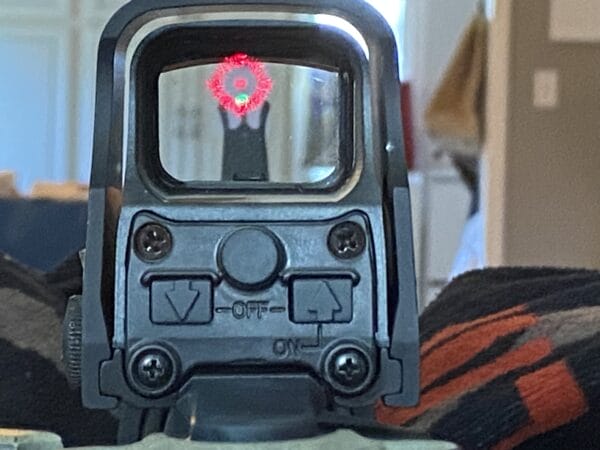
The 25-Yard Zero: Quick Setup, but Not Always Ideal
If you’re working with a 25-yard zero, it’s usually because:
- Your range is short.
- You need a fast, practical zero for close-quarters use.
Zeroing at 25 yards theoretically sets you up for a second intersection around 300 yards. But here’s the downside: between 100 and 200 yards, your rounds can hit 4–6 inches high.
Best for:
- Indoor ranges.
- Emergency field zeroing.
- Defensive shooting inside 50 yards.
If you expect to engage past 100 yards regularly, there are better options.
Understanding the 36/300 Yard Zero (USMC Style)
This classic Marine Corps zero involves aligning your rifle at 36 yards, which theoretically matches again at 300 yards.
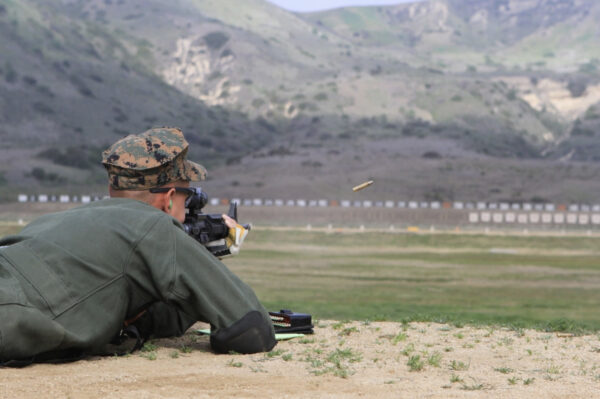
Sounds perfect, right?
Here’s the catch: At 200 yards, the bullet’s trajectory peaks significantly — often 5+ inches higher than your point of aim. That may not seem like much, but it can easily cause misses on smaller, partially exposed targets or when aiming for vital zones.
Best for:
- Shooters trained in range estimation.
- Full-size rifle setups designed for engagements from 0–300 yards.
- Military marksmanship qualifiers.
Be cautious: Unless you’re trained to account for that mid-range rise, the 36/300 zero can create problems at common engagement distances.
The 50/200 Yard Zero: The Practical General-Purpose Zero
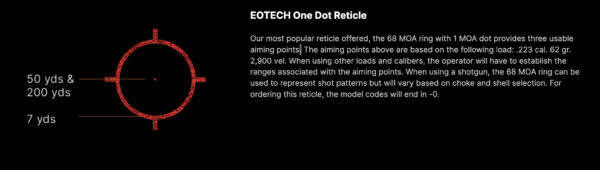
The 50/200-yard zero is one of the most popular for modern AR-15 users, especially those running red dot optics.
- Slightly peaks at 100 yards (around 1–2 inches high).
- Meets the line of sight again at 200 yards.
This creates a Maximum Point Blank Range (MPBR), meaning you can aim center mass and expect effective hits from 0–250 yards without needing to compensate for bullet drop.
Best for:
- Red dots and holographic sights.
- Home defense, patrol rifles, general-purpose ARs.
- Shooters who want simple, stress-proof aiming.
Pro Tip: You can even rough zero at 10 yards indoors by placing your POA about 1.9 inches above your bore’s centerline before fine-tuning at the range.
The 100-Yard Zero: Precision at Known Distances
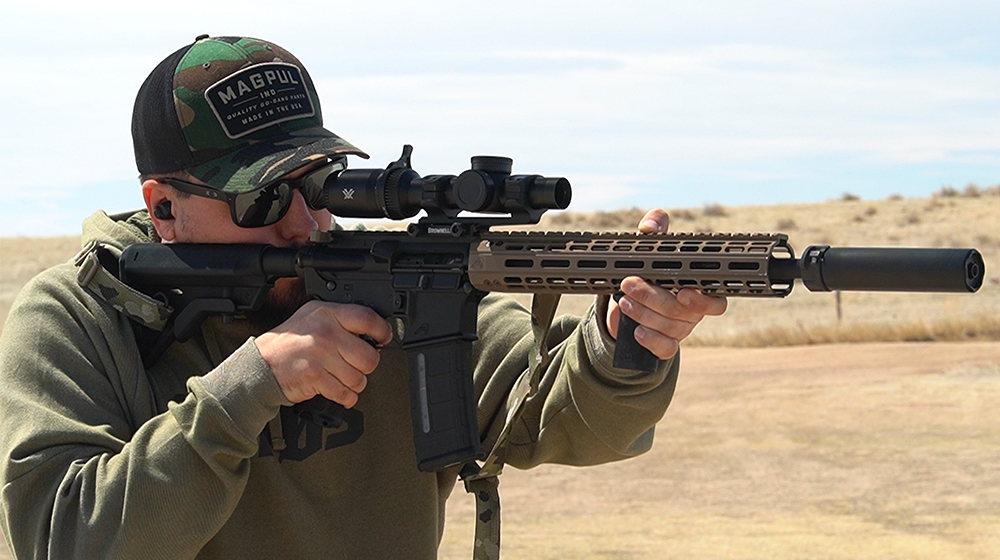
The is a favorite for those using magnified optics like ACOGs, LPVOs, or variable scopes.

- POA and POI align exactly at 100 yards.
- Bullet trajectory stays relatively flat beyond that.
Many BDC reticles are calibrated assuming a 100-yard zero, making it easier to estimate holdovers at extended distances.
Best for:
- Precision shooting at known distances.
- Hunting applications where bullet placement matters.
- Rifles with 3x, 4x, or variable magnification.
Heads up: With a 100-yard zero, you’ll need to understand and apply elevation holds once you stretch past 150–200 yards.
Matching Zeros to BDC Reticles
If your optic has a BDC reticle, match your zero distance to its design.
- ACOGs, LPVOs, and similar optics often assume a 100-yard zero.
- Red dots benefit more from the flatter trajectory of a 50-yard zero because simple center-mass aiming covers more ground without complicated holds.
Final Thoughts: Pick Your Zero, Train With It
Choosing the right zero for your AR-15 isn’t just about ballistics — it’s about matching your gear to your purpose.
- Red dot, home defense, patrol? Choose the 50/200-yard zero.
- Hunting, precision shooting, magnified optics? The 100-yard zero is your friend.
- Limited range space? 25 yards gets you functional fast, but know the limitations.
- Long-range shooting? 36/300 yard zero — if you’re trained to manage the trajectory.
No matter which zero you choose, training is everything. Know your holds, your bullet rise and fall, and how your rifle behaves under stress. Confidence in your zero could make the difference when it counts.
About Scott Witner
Scott Witner is a former Marine Corps Infantryman with 2ndBn/8th Marines. He completed training in desert warfare at the Marine Air Ground Combat Center, Mountain Warfare and survival at the Mountain Warfare Training Center, the South Korean Mountain Warfare School in Pohang, and the Jungle Warfare school in the jungles of Okinawa, Japan. He now enjoys recreational shooting, trail running, hiking, functional fitness, and working on his truck. Scott resides in Northeastern Ohio.



It’s because of gravity, not sight height over bore that bullets travel in an arc. Two important things to remember: 1) in a stressful situation you are not likely concerned if your bullet will hit two inches above or below the 3rd button. 2) The closer the target, the less the significance of a MOA or miliRad though height over bore does become a greater factor. (One way the old Steyr AUG sucks.) If you are shooting at distance you probably have time for a careful aim and should already have your dope for numerous distances.
Now that Bondi changed the BATFE’s in court position on Forced Reset Triggers, how about an article on those? Are they drop in, how does a reset trigger effect the other parts, is tuning after installation needed? What company makes the best FRT?
BDC = ‘Bullet Drop Compensator’. These are calibrated to the ballistics of a specific cartridge/load.
ACSS = ‘Advanced Combined Sighting System’. I am not sure what the specifics of this system is, but it seems to be built on BDC.
HLB
Mine with dots are 50/200 because 90% of what I do is in that range and mine with scopes are 100 because the reticle usually are set for that to show other distances like a BDC or an ACSS
If AR’s are anything like the M-16’s, accuracy is the strongpoint of the system. Either that or physical appearance. I just can’t understand after all the years we were stuck with M-16’s in the military why everybody wants a spin-off rifle as civilians. What the AR has achieved however without question is gotten millions of new people interested in firearms. I spoke to 3 ex-Russian soldiers [immigrants now] at a Las Vegas gun shop and all 3 were being processed for AR-15 rifles. One said he had never wanted anything more in his life.
I sight mine in at 2 inches high at 100 yards. It works out that if I do that, I hit the 10 inch plate aiming at the middle of it at 200 yards At 300 yards I hit it aiming at the top of it. Where I hit I don’t know but I figure that anywhere on a 10-inch plate within 100 to 300 yards is good enough for me. Ding ding ding on the hanging plates and smack smack smack on the solid mounted plates. At 0 to 50, who has time for aiming or focus adjustment, I… Read more »
I don’t own an AR15, but all of my hunting rifles are zeroed for 300 yds. I shoot 200 down to 50 yds and record where the impact is on the target and in most cases only requires a sight picture change at the closer ranges. I’ll determine my shooting range when hunting and dial it in on the scope or open sight.
“Zeroing at 25 yards theoretically sets you up for a second intersection around 300 yards.”
“This classic Marine Corps zero involves aligning your rifle at 36 yards, which theoretically matches again at 300 yards.”
Unless “around 300 yards” = 300 yards then both of these cannot be true. Any given zero cannot have more than two intersecting distances. The POI difference will be small but measurable. 25 yards is a little shorter than the traditional US Army 25 meter zero.
Zero at 100, that way all missed shots out to 300 hit low and are visible to correct.