

Most people stop at building a go-bag. They pack it once, stash it in a closet or the trunk of their vehicle, and check the box in their head: “I’m prepared.”
But gear sitting in a bag is just gear, not readiness. If you’ve spent time building a go-bag, it’s time to take the next step and train with it.
This is where your bag stops being a static piece of gear and starts becoming part of your overall preparedness plan.
Why Training with Your Go-Bag Matters
It’s one thing to own a go-bag. It’s another thing entirely to know how to carry it, live out of it, and access its contents under stress. Your gear needs to work for you, not against you, when the clock is running and your heart rate is up.
Each person’s loadout will be different. Where you live, how far you commute, whether you travel often, and what threats you anticipate all change what your bag looks like. What’s universal is the need to put your setup to the test in the real world before you rely on it.
Drill #1: The Overnight Shakeout
The simplest way to stress-test your kit? Use it for its most likely purpose: a trip. I’m a huge proponent of one-bag travel, so use your go-bag and nothing else.
- Book a local hotel or plan to stay overnight somewhere within an hour or two of home.
- Walk in with just your go-bag. Can you check in and move through public spaces without drawing attention to yourself?
- Set up your space. Get out your laptop, chargers, and toiletries. Does everything have a place, or does it turn into a yard sale on the bed?
- Stay overnight. Live out of the bag for a day or two. Take notes on what’s missing and what you never touched.
This drill quickly exposes overpacking and underpacking.
Drill #2: On The Range
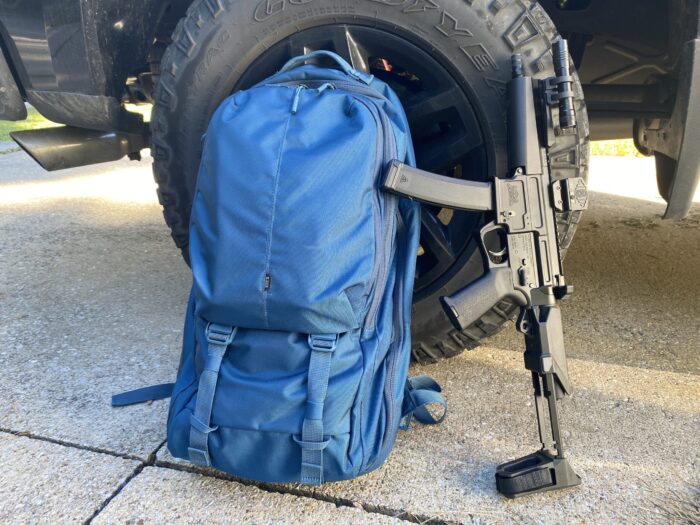
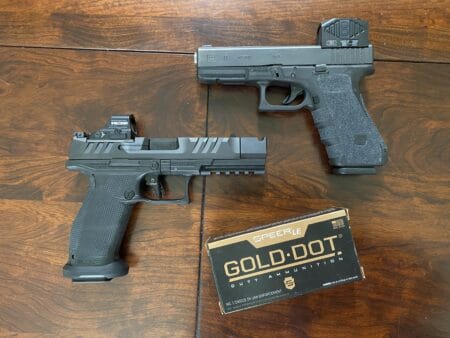
If your go-bag includes a firearm, you need to know that it will still function after weeks or months of sitting in a bag.

I will take my go bag to my friend’s house, who has a range setup on his property, and get some reps in with my go bag firearm. I’m not trying to draw quickly from the bag or anything like that; that’s what my EDC is for.
I’m just working through how the gun is secured in the bag, does it shift during movement, and is it still functional when I pull it out to send rounds downrange.
This is a gun that stays in this bag for months on end, so it’s nice to know it still goes bang.
Live Inventory Price Checker
|
|
Vertx Backpack, 19"x11.5"x7.5", Black - 5037IBK | Palmetto State Armory | $ 244.99 $ 180.99 |
|
|
|
Vertx Black Nylon Tactical Go Pack Backpack | Ammunition Depot | $ 45.49 |
|
|
BUNDLE DEAL: Grey Vertx Urban Ghost Backpack and 200 Rounds of Ammo - PMC 223 55 Grain | True Shot Ammo | $ 184.99 |
|
|
Vertx VTX5059-CGN Long Walks Pack, Backpack, Canopy Green, 28 Liter, Nylon | Shooters Choice | $ 144.99 |
|
Drill #3: Three-Mile Ruck
A go-bag that works from the front seat of your truck may become miserable once you’re forced to walk.
- Pick a local trail or park and hike three miles with your bag fully loaded.
- Check how it rides. Does the weight sit comfortably? Are the straps digging into your shoulders?
- Note what shifts. If magazines, electronics, or medical gear migrate while walking, re-pack or add retention.
Not only will you discover fit issues with the bag itself, you’ll build real-world fitness for carrying the weight.
“Having the ability to move over a variety of terrain with a load on your back is one of the truest indicators of fitness and also one of the most foundational elements of the Modern Minute Man.” – Bill Rapier of AMTAC Shooting
Drill #4: Water & Sustainment Test
If you carry a water filter or purifier, like my Grayl bottle, it’s not enough to know it’s in the bag. You need to use it.
- Find a natural water source on your ruck or trip.
- Filter and drink. Confirm the filter still works and that you remember how to use it.
- Check replacement intervals. This is when you’ll discover expired filters or worn seals.
I also use a standard Nalgene water bottle in conjunction with purification tabs. The Grayl is great, but the filter can freeze in the winter.
Again, I’m going for simplicity. It’s a 32-oz bottle, so during my ruck, I will sometimes fill up the water bottle from a stream or natural spring, throw a single tablet in the bottle, shake it up, wait 30 minutes, and actually drink the water.
Staying Grounded in Reality
People overthink training with their go bag. In their minds, they have a fantasy scenario of the Russians parachuting into their town, grabbing their go-bags, and heading for the hills.
I stay focused on real-life use cases, such as road trips, hotel stays, power outages, or violent unrest between Point A and Point B.
My bag is built for the scenarios I’m most likely to face.
Final Thoughts
The point of these drills isn’t to play commando. It’s to make sure your bag is dialed in, your gear works, and you know how to use it under realistic conditions.
Do this a few times a year and you’ll be far ahead of the guy who just built a bag and threw it in his truck. Preparedness isn’t just owning the gear, it’s knowing you can live out of it when it matters.
DOJ Claims the NFA Only Burdens “Nonessential Firearm Accessories” In Suppressor Case
NRA Director Elections 2026: Plenty of Candidates to Choose From
About Scott Witner
Scott Witner is a former Marine Corps Infantryman with 2ndBn/8th Marines. He completed training in desert warfare at the Marine Air Ground Combat Center, Mountain Warfare and survival at the Mountain Warfare Training Center, the South Korean Mountain Warfare School in Pohang, and the Jungle Warfare school in the jungles of Okinawa, Japan. He now enjoys recreational shooting, trail running, hiking, functional fitness, and working on his truck. Scott resides in Northeastern Ohio.



Along lines of #3, I would advise participating in run-n-gun events wearing your pack. Note differences in speed and accuracy as carrying a load will impact both. While one should avoid running gun battles, and likely will – emergencies often require rapid relocation (ie running) with all your gear. This will serve as exercise and to demonstrate if bag is too heavy for you. Impacts to shooting accuracy will likely mirror impact on ability to engage in all sorts of other activities from first aid/trauma care to writing messages or entering and starting commandeered vehicles. In an emergency you will… Read more »
For all you Glock haters and lovers out there . Check it out:
https://www.youtube.com/watch?v=vb4NJSwRsJE
To begin with though, everyone should have one. I do but if the “fan gets hit” I’m not leaving. At 80 years old I’ll just stay home and go down shooting if necessary. However, my wife and I did stay home in a Cat 5 Hurricane and although we were blessed to only have minimal damage, the go-bag served us well during the three weeks afterward.
I like to include some tools and supplies for unexpected repair or problem-solving needs. Some don’t weigh much or take up much space. Electrical tape, small amt of trip or safety wire, needle and thread, super glue, dental plackers, tweezers, 550 cord, etc. Things will go wrong on any trip or emergency. I was glad I had a small round file once, when I banged my rifle on something and had to file off a big burr on the barrel crown before I could safely fire it. Sometimes little things help you stay relatively sane. As per the article, practice… Read more »