
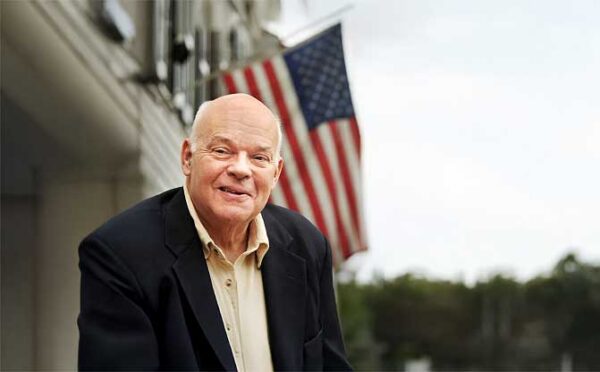
When you read David B. Kopel’s remarkable oral-history interview of John Snyder, you’re not just looking back at one man’s career—you’re looking at the blueprint for the modern gun-rights movement.
Kopel’s work (embedded below) gives Snyder the deep, serious treatment he deserves, capturing the behind-the-scenes battles that shaped everything from the NRA’s early political awakening to the rise of independent organizations like the Citizens Committee for the Right to Keep and Bear Arms.
This companion piece is meant to bridge Snyder’s historic legacy with the audience he spent his final years writing for: AmmoLand News readers.
A Man Ahead of His Time
Kopel’s paper shows something that many people today forget: in the 1960s, the NRA wasn’t a political powerhouse. Most members were hunters, target shooters, and collectors who simply assumed gun control could never happen. Snyder saw the threat a decade before most people did. While others were still shrugging off the early anti-gun push, he was already digging into the research, tracking legislation, and warning anyone who would listen.
He had the instincts of a street-level organizer and the discipline of a political scientist. That combination made him dangerous—to the people trying to push gun control—and invaluable to the people trying to stop it.
From the NRA to CCRKBA: Building a Movement
Kopel’s interview lays out how Snyder pushed the NRA to take politics seriously, even when the old guard wanted nothing to do with it. He wrote the legislative columns, dug up historical records, exposed early ATF abuses, and pushed the truth into the pages of The American Rifleman.
But when he couldn’t get the NRA to fully commit, Snyder didn’t give up.
He built something new.
With help from younger activists and allies in Congress, he helped launch the Citizens Committee for the Right to Keep and Bear Arms—an organization that became a second backbone of the national pro-gun movement. Snyder was effectively one of the first modern, full-time gun lobbyists. He walked the halls of Congress before there even was a “gun lobby.”
Kopel captures this period with clarity, and it’s impossible to read it without realizing just how much of today’s Second Amendment landscape exists because Snyder refused to sit quietly.

A Voice That Never Quit—Including Here at AmmoLand
After decades of grassroots organizing and congressional battles, Snyder kept writing, speaking, and warning Americans about the steady creep of gun control. In his later years, that voice found a home that suited him well: AmmoLand News.
“John was bull-headed, loud, and sometimes abrasive—but that was exactly what AmmoLand News needed at the time [2009 -2017] to shake people awake. He brought real fire to his writing and to his early YouTube messages, back when the platform was new and the entire RKBA conversation was rapidly evolving. John didn’t just keep up; he led from the front,” said Fredy Riehl, Editor-in-Chief of AmmoLand News.
Snyder contributed articles for many years until his passing in 2017. He understood the AmmoLand audience—ordinary armed citizens who aren’t waiting for permission to defend their rights. His columns hit the same notes he hammered in Washington:
- Stay alert.
- Know the law.
- Know your history.
- Never give an inch.
For a man who believed the fight never ends, AmmoLand was the perfect place to keep swinging.
Why Kopel’s Work Matters Today
David B. Kopel deserves real credit for preserving Snyder’s story with honesty and depth. Too often, the early leaders of the gun-rights movement get boiled down to a few bullet points or forgotten entirely. Kopel doesn’t let that happen here. His working paper is long, detailed, personal, and well worth the read (embedded below)—exactly what the movement needs if we want to understand where our strength came from.
And for younger gun owners—especially those in their 20s—Snyder’s life is a reminder that the rights you have today exist because somebody before you fought like hell to secure them.
The Fire Still Burns
John Snyder never stopped fighting. He didn’t bow to pressure, he didn’t chase approval from the elites, and he didn’t wait for someone else to save the Second Amendment. He understood that freedom survives only when ordinary people refuse to let it die.
Kopel’s interview brings all of that to life.
And Snyder’s years writing for AmmoLand News kept that spirit alive for a new generation.
If you’re reading this today, the torch is in your hands now.
Don’t drop it.
ohn Snyder: An Oral History of the Dean of Washington Gun Lobbyists by David B. Kopel


Those who ignore our history are condemned to relive it. The NRA was caught unaware in the late 1960’s as the American left shifted from traditional Progressive values and ideologies to New Left or Frankfurt School Marxist ideology. As that shift happened coinciding with the anti-war movement (Vietnam) the pole of the once-democratic party was intentionally shifted hard left toward the New Left while the Republicans and No Party Affiliation folks clung to their traditional small P progressive values. Nowhere do I use the term liberal in this shift. If you have forgotten your history let me remind you. The… Read more »
2/3 through Kopel’s Snyder history. (Taking breaks while doing a major table saw tune up.) The folks who like to cite Ruby Ridge and the Branch Dividian massacre need to add the Kenyon Ballew Raid of 07 June, 1971 to the list. (Beginning on page 15.) It’s also interesting to learn a little about the founding of the CCRKBA. I was an early member, joining in 1975 (the year of their founding) or 1976. I also sent a letter of resignation less than a year later. A bulletin from them pronounced strong political support for a non-2A issue and that… Read more »
Thirty one pages! I don’t have time to read that. Well I’m pausing at one third the way through to say I am making time. This is a well written history of post-Kennedy gun control and worth the read. Can you believe the current avalanche of gun control laws was started by Hollywood lobbying but only to deflect the attention of Congress away from possible restrictions against certain profitable TV programs? That’s my take. Like one flap of a butterfly’s wings evolving into a tornado, Hollywood rolled a little snowball down the mountainside.
“John Snyder: An Oral History of the Dean of Washington Gun Lobbyists”
Another fine piece from David