
The state of Hawaii has finally filed its Respondent’s Brief in Wolford v. Lopez, which is scheduled for oral arguments before the Supreme Court on January 20, 2026.
At issue is Hawaii’s broad expansion of “sensitive places” to all private property, making it a de facto gun-free zone. The Hawaii law (and the state’s brief) does not differentiate between private property open to the public (stores, restaurants, etc.) and private homes. This means anyone carrying a firearm must first obtain the permission of the property owner or the owner’s representative before they can enter the premises.
Hawaii was one of the states that exploited what it considered to be loopholes in the Supreme Court’s ruling in New York State Rifle and Pistol Association v. Bruen.* Indeed, the state’s brief asserts Hawaii was doing the public a service by saving them the trouble of saying “no.”
The 44-page brief contends Hawaii’s law is consistent with the Second Amendment — if you look at it the right way or have a very unusual definition of “shall not be infringed.”
The state’s attorneys present some state laws, including a post-Civil War Jim Crow law from Louisiana. They claim these prior statutes are sufficiently analogous to meet the Bruen standard.
This is going to be one of the most critical outcomes of Wolford. Bruen set a standard; Rahimi blurred it: Can the Supreme Court set a benchmark that will be a bit more difficult for anti-gun politicians and judges to pervert?
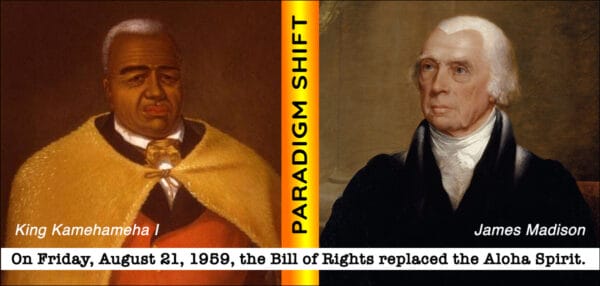
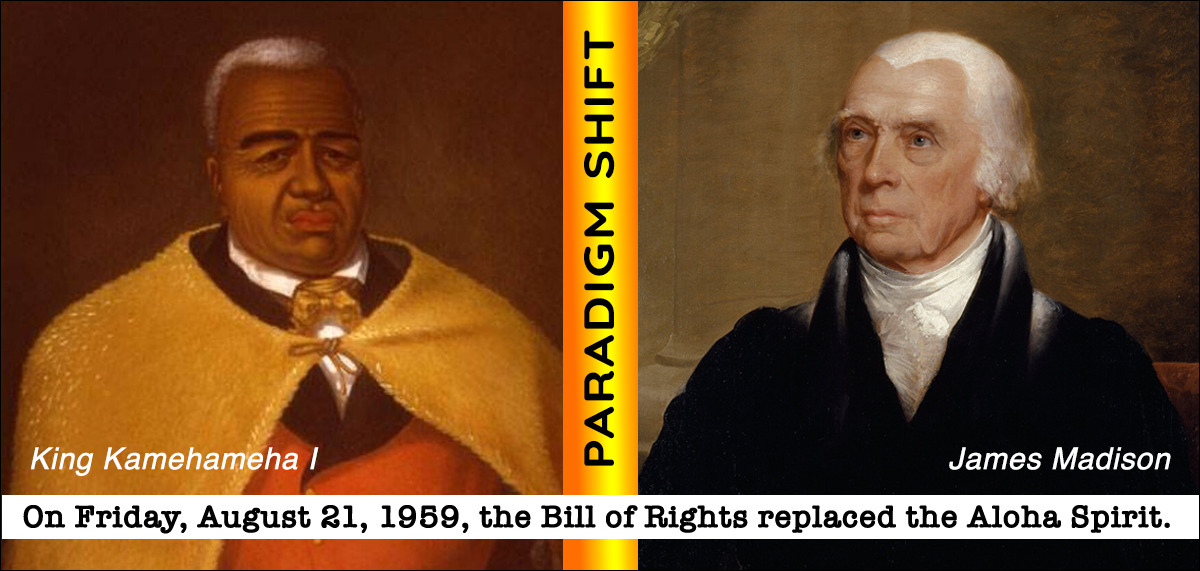
As is SOP in these cases, the attorneys invoke Hawaiian culture, saying polls show most Hawaiians oppose public carry. This is consistent with the “Aloha Spirit” theme used by the Hawaii Supreme Court’s 2024 ruling in Wilson v. Hawaii.
In a flight of judicial fantasy worthy of Samuel Taylor Coleridge at his opium-addled best, Hawaii’s top court said the state’s constitution did not include an individual right to keep and bear arms and so Hawaii didn’t have to recognize the right in the federal constitution. The court also invoked 19th-century Hawaiian kings and their edicts, which generally prohibited possession and carrying of dangerous weapons. Over multiple generations, this became embedded in general society. The Hawaii Supreme Court called it the “Aloha Spirit” and said it meant Hawaii didn’t have to adhere to the federal version.
History shows that Hawaii is not only bound by the federal constitution, more than 90% of its citizens approved it. It wasn’t really all that new: Hawaii had been a U.S. territory since 1893.
Act of March 18, 1959 (now Public Law 86-3, 73 STAT 4) An Act to provide for the admission of the state of Hawaii into the Union.
Passed by the Senate on March 11, 1959; passed the House on March 14; signed into law by President Eisenhower on March 18, 1959; overwhelmingly approved by popular vote of Hawaiian citizens on June 27; proclamation of admission signed by President Eisenhower on August 21, 1959.
“§3. The constitution of the State of Hawaii shall always be republican in form and shall not be repugnant to the Constitution of the United States and the principles of the Declaration of Independence.”
I feel certain the “Aloha Spirit” would be repugnant to the Constitution and the Declaration of Independence would be at least somewhat miffed by the Hawaii Supreme Court’s cavalier disregard of a fundamental human right.
That’s the whole agreement between the United States and Hawaii as it pertains to the Constitution. Note there’s not a single mention of the “Aloha Spirit.”
As of December 15, 1791, the Bill of Rights, including the Second Amendment, was incorporated into the Constitution. As of June 28, 2010, the Second Amendment was incorporated into the Fourteenth Amendment under its Due Process Clause, making the peoples’ right to keep and bear arms binding on Hawaii. Still no mention or carve-out for the “Aloha Spirit.”
In fairness, it is within the realms of possibility Hawaii’s legal eagles overlooked Article IV, Clause 2 of the U.S. Constitution. After all, it’s pretty short and it’s buried in with all those other sections and clauses. Nonetheless, it’s fairly important: Most people know it as the Supremacy Clause:
“This Constitution, and the Laws of the United States which shall be made in Pursuance thereof; and all Treaties made, or which shall be made, under the Authority of the United States, shall be the supreme Law of the Land; and the Judges in every State shall be bound thereby, any Thing in the Constitution or Laws of any State to the Contrary notwithstanding.”
Could this mean the “Aloha Spirit” is irrelevant when it comes to the Second Amendment? Why, yes, it could.
Did Hawaii’s state attorneys find their law degrees in boxes of Cracker Jack or did they get them through correspondence courses at the University of Green Stamps? In either case, they should be recognized for their complete lack of shame over filing this response.
*[Considering how frequently legislators and jurists spin those words and phrases into something completely different, it might be handy for the Supreme Court to start producing a ‘dummies” version with each decision.]
About Bill Cawthon
Bill Cawthon first became a gun owner 55 years ago. He has been an active advocate for Americans’ civil liberties for more than a decade. He is the information director for the Second Amendment Society of Texas.


I still chuckle when I remember seeing Obamas fake Hawaii birth certificate. It was a joke.They tried so hard to make it look like that Kenya African born scum was born there.
If you look at things as “The way it was done before.” vs. “The way it was done after.” it kinda puts Kamehameha I in the same bucket as George III.
Anyone ready to go back to “Protestants get to carry arms but Catholics don’t?” Nah, I didn’t think so.
Hawaiian women have adjusted to wearing shirts. Hawaiian rulers no longer marry their siblings. I’m pretty sure they never really threw virgins into volcanoes, but if the ever did they’ve mostly stopped.
They can learn to live with people who go about their daily lives peaceably armed.
So much for Hawaii. But in other state news: This is the day that Texas improved the entire United States! On this day in 1845, the U.S. Congress approved the annexation of Texas as the nation’s 28th state.
Nothing in Hawaii history counts before statehood.
I have never visited Hawaii, but I know people who have. Tell me: Is it a lot like Australia? Among other similarities, I hear they both have gun-free-zone beaches.
I hope the “Aloha Spirit” gets verbally smacked down like Dominick and Nicky Santoro did in “Casino”
Nobody has to give up their beliefs to live under the framework of the Bill of Rights.
Don’t want to carry a gun don’t.
Don’t want to go out in public unless covered head to toe except your face, then don’t.
Want to treat peaceable citizens like criminals, move to North Korea.
Want to treat women like dogs, move to North Korea.
Hawaii ought to be thankful we were there a few decades back to fight off Japan. That defense was by an arms bearing society where it is an inherent right.
Don’t like rights, move to North Korea.
Hawaii was a constitutional monarchy with a parliamentary system when it was overthrown in a coup in 1893. About a hundred US marines were involved. The coup leaders were foreign businessmen, just under half of whom were Americans. It did not become a US territory until ten years later. As you might imagine, plenty of native Hawaiians are still very unhappy about this.
Aloha, ‘Hello’. Aloha, ‘Goodbye’.
Aloha, when they meet Capt. Cook.
Aloha, when they defecate Capt. Cook.
Cannibalism, that’s an ethos to live by. . .
Its time may have arrived.