
Opinion
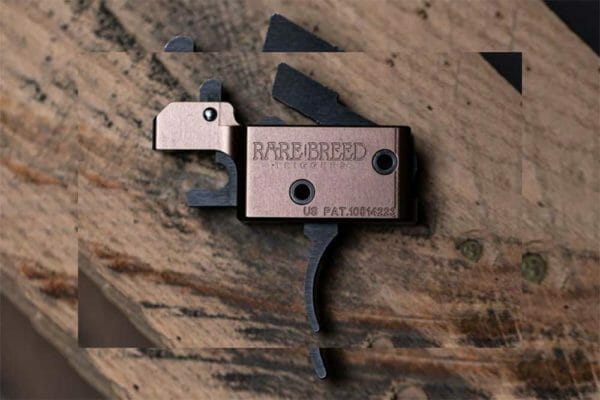
NAGR’s Hannah Hill recently pointed out a critical flaw in the ATF’s legal strategy as it tries to defend its position in the Forced Reset Trigger (FRT) case.
In her words, “if the trigger is being engaged multiple times, you’ve conceded that it’s more than one function of the trigger.”
That single observation sums up why the ATF is once again facing an uphill battle in court. Despite already losing six times on this issue, the ATF is trying to reframe its argument—an approach that’s unlikely to hold up.
The ATF just filed their opening brief in our FRT lawsuit at the 5th Circuit. This is their best effort at explaining why Cargill shouldn’t apply and why the court – which has already ruled against them in this very case – should do a 180 in their favor. pic.twitter.com/A3yDWdNxCi
— Hannah Hill (@hannahhill_sc) October 1, 2024
At the heart of the case is the same question that plagued the ATF’s bump stock ban: how does federal law define a “machinegun”?
The ATF’s oral argument hinges on trying to equate the movements of the shooter’s finger with the mechanical function of the trigger. As Hill points out, the courts—especially the Fifth Circuit—have already rejected this kind of reasoning. The Supreme Court’s ruling in Cargill v. Garland made it clear: the definition of a machine gun revolves around the mechanical function of the trigger, not the shooter’s hand or finger movements.
Shelby Baird Smith, emphasized this very point in the wake of the Cargill decision, stating that the Supreme Court’s ruling “held that a semiautomatic rifle with a bump stock does not qualify as a machinegun…such a rifle cannot fire more than one shot ‘by a single function of the trigger.’” (Cargill Decision Against ATF Demonstrates Textualism in Action).
If that’s true for bump stocks, how much more for FRTs, which similarly require the shooter to maintain trigger pressure to fire multiple shots?
The ATF’s position is even weaker when considering the specifics of FRTs. Forced Reset Triggers work by pushing the trigger forward after each shot, requiring the shooter to continue pulling it for each round. This alone makes it impossible for them to meet the legal definition of a machine gun. As Hill notes, “The ATF is doing their level best to equate the movements of the shooter’s finger with the ‘single function of the trigger’ in the federal machine gun definition.” But the courts have already ruled against this flawed interpretation.
Tred Law’s analysis in AmmoLand News explained how bump stocks, like FRTs, don’t alter the trigger’s mechanical function. “The key lies in the legal definition… The critical phrase here is ‘single function of the trigger,’ which means the trigger’s action, not the shooter’s finger.” (SCOTUS Makes Clear: When a Semiautomatic Rifle is NOT a Machine Gun).
Despite this clarity, the ATF keeps circling back to the same losing argument, hoping for a different outcome.
What’s even more telling is the ATF’s continued complaints about not receiving customer lists from plaintiffs, as Hill humorously points out with a firm, “That’s a big fat NOPE.” The agency’s inability to enforce its own rules and track down affected individuals only highlights the impracticality of their position. It’s no surprise that the courts have consistently sided against the ATF on this issue. As David Codrea noted in AmmoLand News, the bump stock case—and by extension, the FRT battle—has become a symbolic fight. “The Cargill ruling… saved the day. Kudos to those tyranny challengers—we all owe them.” (Bump Stock Return Will Reverse Roles Between Citizens & ATF).
SlideFire, the original bump stock manufacturer, also chimed in, tweeting, “The Bumpstock will be the invention that broke the ATF.” It’s a fitting metaphor for the way the ATF’s authority has crumbled under scrutiny in recent years. From the bump stock case to the current FRT fight, the agency’s overreach has been repeatedly exposed.
The Bumpstock will be the invention that broke the ATF…
— Slide Fire (@SlideFireSol) October 2, 2024
Hannah Hill also highlights the absurdity of the ATF’s continued reliance on the “we’ve been doing this for 50 years” argument, noting that “doing a wrong thing for a long time is really bad.” The courts seem to agree, as they’ve made it clear that the ATF’s interpretation of the law is simply wrong. The Cargill decision, as Shelby Baird Smith pointed out, “reflects the conservative majority’s commitment to textualism and the separation of powers.” (Cargill Decision Against ATF Demonstrates Textualism in Action).
What the ATF continues to ignore is that their legal authority has limits.
The courts have emphasized that Congress, not an administrative agency, has the power to amend laws like the National Firearms Act. As AmmoLand News has explained, the Supreme Court’s decision was not just about bump stocks—it set a precedent that regulatory agencies must follow the letter of the law, rather than invent new interpretations to suit political goals. This principle applies just as strongly in the FRT case.
So what’s the takeaway from the ATF’s latest filing? Hannah Hill sums it up perfectly: they’ve lost the argument before they even made it.
The FRT triggers don’t meet the legal definition of a machine gun, and the ATF’s repeated attempts to stretch the law beyond its intent have failed time and again. As the courts continue to push back, the agency’s credibility is taking a hit—and for gun owners, that’s a victory.
The battle over FRTs may not be over, but it’s clear that the ATF is on the losing side. Just as the bump stock case dealt a significant blow to the agency’s overreach, the FRT case may very well be the next chapter in curbing the ATF’s power.




Our gov. can’t tell the difference between a man and a woman. Expe ting them to be able to understand a function of a trigger might be a stretch.
The definition of insanity is ” doing the same thing over and over again expecting a different result” . The ATF is comprised of mentally ill people at the top it appears .
Violating the constitution is hard work.
Just more evidence that the BATFE remains totally out of control no matter which dimbulb has been appointed to run the corrupt Gestapo branch of the US gub’ment. Unless this agency (and by extension it’s employees) are eliminated (you pick the definition), then the nonsense & harassments will continue. I like the idea of publishing the home addresses of ALL gub’ment employees. That would be an excellent start and save a lot of computer search and driving time by the serfs…
want the atf to be more constitutional?
REQUIRE EVERY atf EMPLOYEE TO LIST A HOME ADDRESS
These triggers are a hoot… a “friend” told me…
“Forced Reset Triggers work by pushing the trigger forward after each shot”
And so does nearly every trigger on every firearm ever made. Bolt action, semi, full, muzzleloader — they all have a spring to push the trigger forward. The FRT just pushes it forward harder than a typical spring after the round fires.
“ …ATF keeps circling back to the same losing argument, hoping for a different outcome.” Recalling the definition of insanity…..doing same thing repeatedly, expecting different outcome.
If government lawyers were intelligent, they wouldn’t be government lawyers. They are lazy and not very bright.
YET! Here in the DemoKKKratic controlled state of Maryland, One CANNOT HAVE/OWN an “enhanced” trigger! PROSECUTIONS will follow!!