
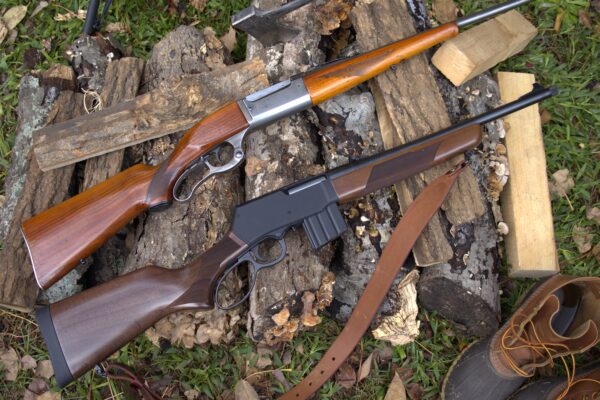
The lever-action rifle is experiencing a revival that has not been seen in over a century, and Henry Repeating Arms has been at the forefront. Henry kept the traditional lever action alive when Winchester and Marlin went into the doldrums. Later, they embraced the tactical lever action concept with side loading gates, M-Lok rails, and adjustable furniture. Henry even popularized the magazine-fed lever action rifle with their Long Ranger series. Or it may be better said that they re-popularized the concept.
After much anticipation, the Henry Lever Action Supreme (LASR) made its concrete debut during SHOT Show 2025. The Supreme is suppressor compatible, takes AR-15 magazines, and comes in two popular chamberings: 5.56 NATO and .300 Blackout. But does the Supreme’s accessibility take away from the authenticity of the lever action experience? Furthermore, is the Supreme itself worth the buy over the alternatives? I had the opportunity to spring for the .300 Blackout Supreme and run it through the ringer. Here is what I learned:
Henry Lever Action Supreme Rifle (LASR) 300 AAC Blackout
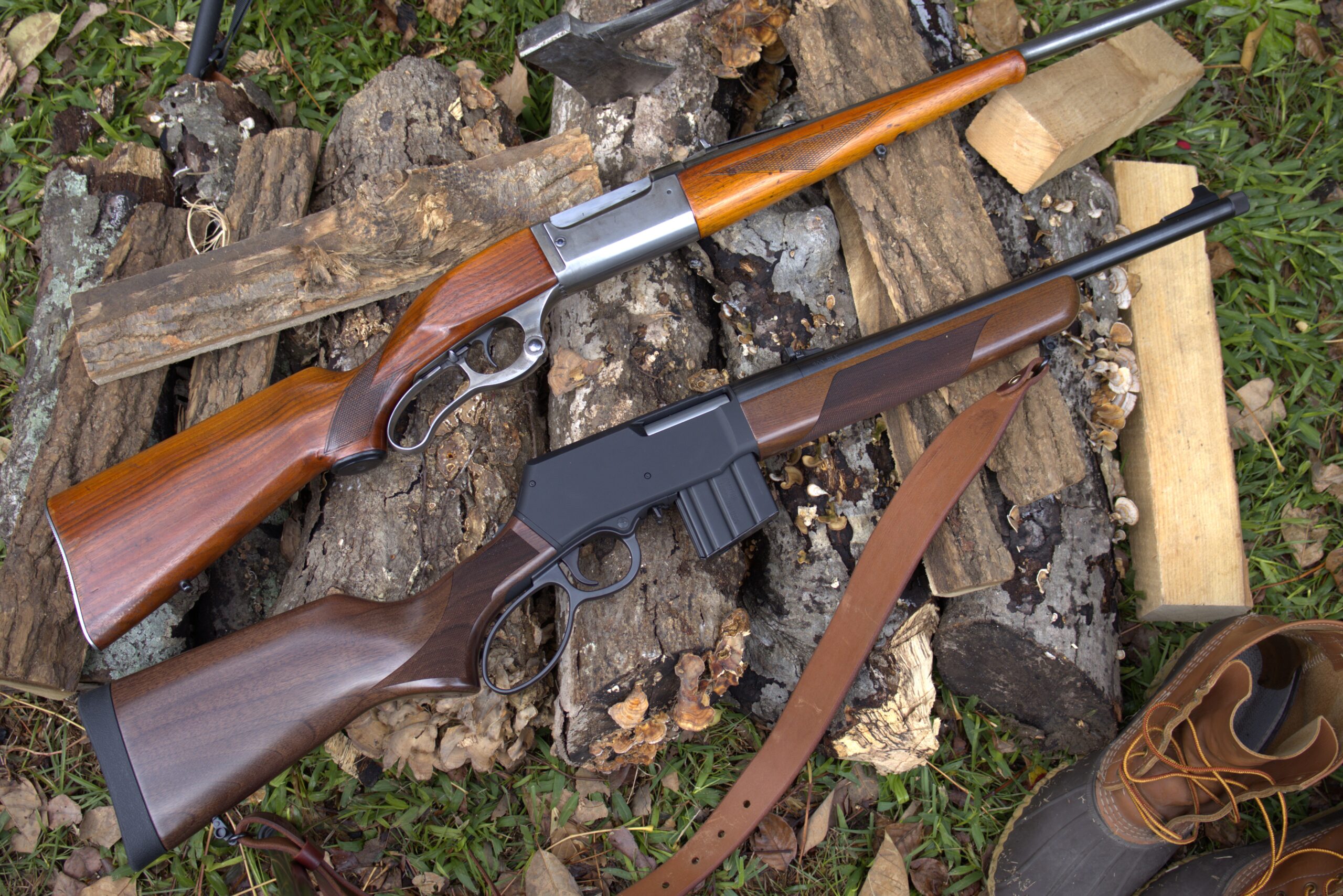
Ordinarily, my first impressions come after the purchase. But the Henry Supreme is a unique case, as I had the opportunity to shoot both the 5.56 and .300 Blackout versions at the 2025 Range Day during my only SHOT Show visit. It was bitter, blustery, and dusty, but I vividly remembered the Supreme. Both rifles shot easily and cycled readily, but I could not get over the juxtaposition of wood-and-steel with a reflex optic, suppressor, and AR magazines. But as I warmed up and chewed on the experience, I got to thinking of another hammerless magazine-fed lever action rifle that sat in my safe: a Savage Model 99 in .300 Savage.
The Supreme may not have had the looks of a Marlin or Winchester, but it looked like a logical successor to the old 99. Savage Arms debuted a rifle with similar lines in 1895 and the improved Model 1899 was produced from that year until 1999 with over 1 million produced. The 99 is older than pointed spitzer bullets, but its rotary magazine future-proofed it once that technology became available. Needless to say, I had to have a Supreme just to pair it with my Savage. It also had to be in .300 Blackout.
Supreme: Quirks and Features
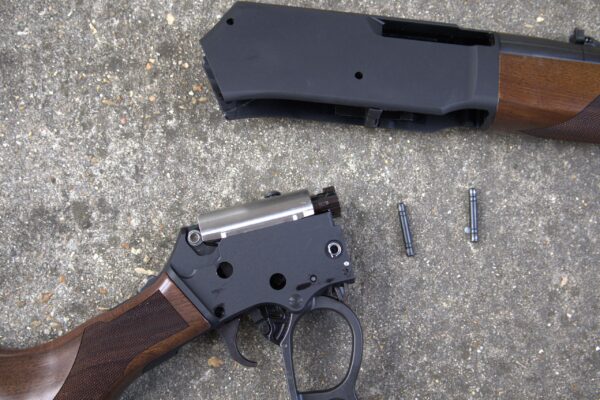
The Henry Supreme is a Hegelian contradiction. It is both a traditional and non-traditional lever action take on the AR-15. The Supreme is built around the two most popular AR chamberings. It also feeds from detachable AR-magazines. Like an AR, the Supreme uses an anodized billet aluminum receiver and has a sleek hammerless design.
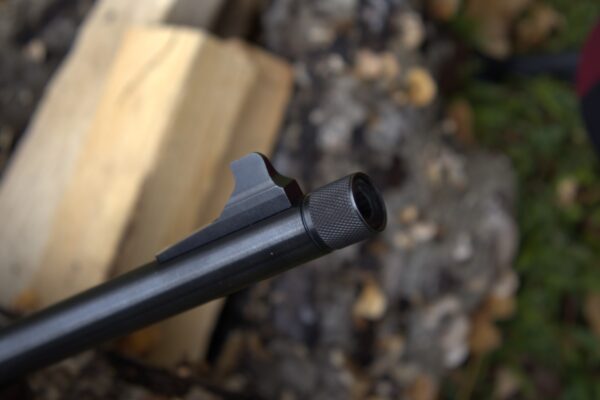
It also uses a forward-locking rotating bolt not far removed from an AR’s bolt carrier group. It also comes threaded for 5/8×24″ accessories like flash hiders and suppressors. But the Supreme is still mechanically lever action and shies away from the more tactical aesthetics by retaining traditional sling studs, a polished blue 16 1/2 inch barrel, and checkered walnut stocks.
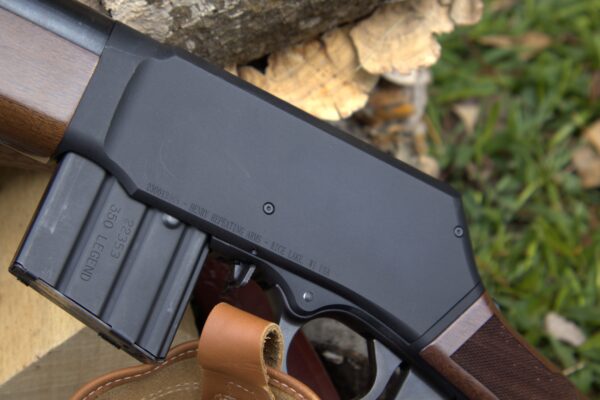
As it comes out of the box, the Henry Supreme weighs an honest 6 1/2 lbs. and balances at the magazine well. The rifle is light and has a handy barrel length, particularly when paired with .300 Blackout as that cartridge tends to do better in shorter barrels. But the Supreme is not a kid’s rifle, as the buttstock has a 14-inch length of pull and a generous rubber butt pad.
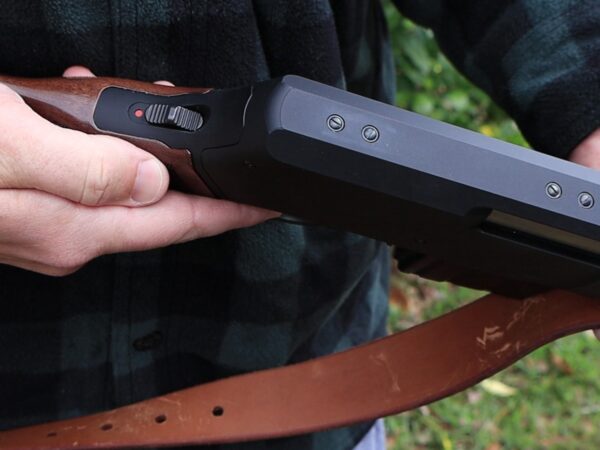
The controls are few but straightforward. Like a late-stage Savage 99, the Supreme has a tang-mounted safety and a standard-sized lever loop. Interestingly, the Supreme uses an AK-like latch as the magazine release. The Supreme comes equipped with a fixed barleycorn front sight and a rear sight that is fixed but screw-adjustable for windage and elevation. Like most Henry rifles, the Supreme is drilled and tapped for an optic via a Weaver 63B mount.
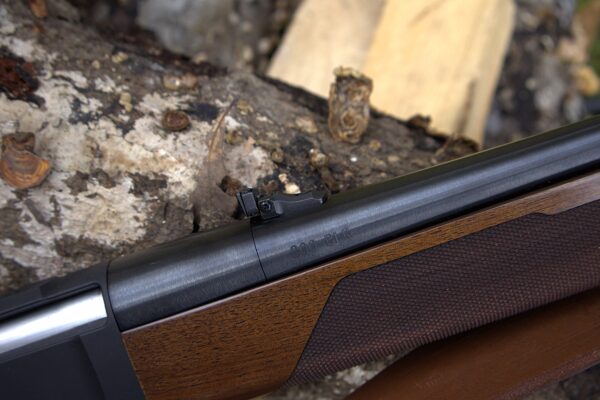
This eclectic mix of old and new is available in either 5.56 NATO or .300 AAC Blackout and ships with one ten-round PMag. MSRP is $1,299.
Accessorizing Aplenty
I changed the setup of the Henry Supreme over the course of my two-hundred round test. At first, I added a Triple K leather sling and ran the rifle with the stock iron sights. Then, I added a SilencerCo Velos 7.62 suppressor. Finally, for the accuracy and distance shooting portion of the test, I added my venerable Vortex Crossfire II 3-9×40 rifle scope. Installing Weaver or Picatinny mount is easy on the Weaver 63B base, but if you want to mount a red dot, a Picatinny rail adapter will be needed.
On the Range with the Henry Supreme
Over the course of several range sessions, I put two hundred rounds through the Henry Supreme. First, I ran some close-range drills on paper at distances ranging from 7-50 yards to get on top of the iron sights. Then on came the optic for an accuracy test from a bench rest at 100 yards and then some offhand shooting at steel at 200 yards.
Rapid Fire
Loading the Supreme is light-years ahead of other lever actions, and it takes some getting used to. Insert the loaded magazine straight in and give it a sharp wrap to seat it into the magazine well. With the bolt closed, it is a tight fit but it is effortless to seat the magazine with the action open. In any event, cycling the action chambers a round and you are ready to shoot.
The iron sights are big, pistol-like, and made for snap shooting but are surprisingly precise. The rear sight is trapezoidal, allowing you to get a fine bead on the tip of the front sight. Most Henry rifles come with a Marbles’ buckhorn/front bead arrangement that can cover up quite a bit of the intended target. These sights don’t have that issue and are high enough to clear a suppressor with ease. With or without a can, it was simple to pick up the sights and not lose them, even when transitioning from target to target.
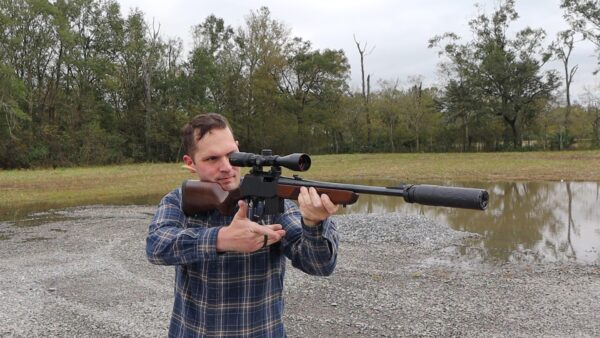
Speaking of transitioning, my first shots were with Federal 220 grain subsonic loads, which scarcely moved the rifle under recoil. The SilencerCo Velos dampened the recoil more by giving the Supreme a slightly muzzle-heavy balance. The can also drops noise low enough to where I can hear the smack of the bullet on the target and the fall of the hammer when firing. Noise was more pronounced with the supersonic loads I tried but the report was hearing safe. Recoil with those more powerful rounds was negligibly more.
One value of the lever action that is being rediscovered is its excellence as a suppressor host without sacrificing quick-handling. The Supreme’s lever action is quick and ambidextrous. It is also the smoothest I have seen on a lever action. There is no resistance, even when the internal hammer is cocked. A casual flick of the wrist works the action and there is no gas blowback like what you would get with an autoloading rifle. Even without a can, the use of AR magazines puts the Supreme only slightly behind a modern rifle in terms of firing quickly. Indeed, the lack of an external hammer caused me to reach for the hammer when I quit shooting only for me to thumb the safety on and then back off.
Accuracy
Throughout the test, I fired four types of ammunition through the Supreme. These included:
- Wolf SuperPerformance 145 grain FMJ steel-case
- Black Hills 125 grain TMK
- Underwood 110 grain Varmageddon
- Federal American Eagle 220 grain OTM
After doing a 100-yard sight-in, I benched the Supreme and took some three-shot groups at that distance. The end result was no shortage of nickel-sized groups from the Wolf and Black Hills loads. Despite being cheap and only on the list to see if the Supreme can feed steel-cased ammunition, the Wolf load consistently gave me the best results with the best group measuring at 1.05 inches. The Black Hills load came slightly behind with a 1.18-inch group. Consistent fliers with the Federal and Underwood loads resulted in a best effort of 2.4 inches and 1.75 inches, respectively. All loads shot near the same point of aim, except for the subsonic Federal load, which drops 18 inches and is basically at the end of its effective range.
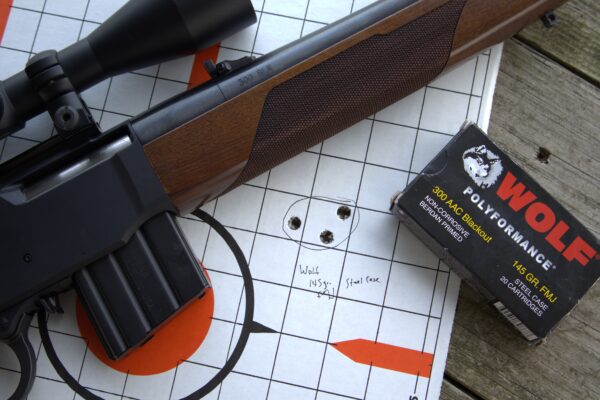
The accuracy of the 1.5-inch was helped by the adjustable trigger, which has the tiniest bit of mush and a clean break. Out of the box, mine broke at 3 1/2 lbs. and I saw no need to change it. The barrel does not seem to be a determent either, but its profile does fall in line with typical tapered hunting barrels that tend to heat up after a few accurate shots. When I went for five-round groups, that Wolf load was still the best, but the group opened up to 1.5 inches. Indeed, during my rapid-fire drills, the barrel is noticeably warm after the first twenty shots downrange. But it was still possible to make good hits. Nevertheless, 1.5-inch groups are stellar compared to your typical lever action and many modern rifles.
At 200 yards, I ran through the rest of my ammunition in rapid succession while shooting the Supreme in a sitting position or off a barricade. In spite of my caffeinated state, all the supersonic loads sailed into my 12 inch plates with only about 6 inches of holdover with more hits than misses.
Reliability
The Henry Lever Action Supreme cycled and fired two hundred rounds of brass cased and steel cased ammunitions with no malfunctions. The MagPul ten-round PMags I used throughout the test also functioned flawlessly, as did a DuraMag steel magazine I had on hand. The polymer PMags induced some slight resistance when chambering a round, though hardly enough to notice while the Supreme with the steel magazine cycled as if there were no magazine at all.
The Bottom Line
For the user seeking an updated lever action platform, the Henry Supreme is worth a hard look. You will get a sleek snag free design, readily available magazine options, and optics/can capability if needed. The 5.56 or .300 Blackout are not appropriate for all purposes, but the ammunition is cheap, available, and can do more than you think.
While we covered some foibles here, the only material one is the fact the Supreme is not your grandad’s lever action rifle. We can’t ignore the allure of the tube-fed lever actions from Marlin and Winchester, their connection to the West, or their connection to us as an inexpensive deer woods rifle. But we have had magazine-fed lever actions for as long as we have had smokeless powder. But Henry has a penchant for giving traditional designs a new lease on life. They did it before and they have done it once again by bringing us what the Savage 99 could have become in the Henry Lever Action Supreme.
About Terril Hebert:
Terril Hebert is a firearm writer native to south Louisiana. Under his motto—Guns, Never Politics—he tackles firearm and reloading topics both in print and on his Mark3smle YouTube channel, where he got his start. He has a soft spot for ballistics testing, pocket pistols, and French rifles. When he is not burning ammo, he is indulging his unhealthy wildlife photography obsession or working on his latest novel. Scourge of God was published in 2017.”



Saying the Savage has similar lines is an insult. The Savage looks like a scalpel, the LASR looks like a rubber mallet. Anyways this seems like a good idea for those that want suppression, are happy with .300 B.O. performance, and insist on a 30-round mag in their lever action. A quick look on GB found that Browning BLRs in .308 are around the same price as a .300 B.O. LASR. You can get 10-round mags for the BLR, I understand that may not be enough for some folk.
Its a big no sale on that 300 blackout mag fed lever action rifle that shoots an inferior round . My old 336 Marlin 35 Remington gets the job done just fine shooting a 200 grain FTX bullet .
While I’ve long wanted to have a couple of 1899s for deer hunting, I see no point in Henry’s ugly and way-overpriced varmint rifle. There are plenty of guns that cost far less and are just as good, or better, at killing gophers or coyotes.
The LASR reminds me of my Leatherman. It does many things well but not as well as a dedicated single purpose knife, wrench, scissors, file, etc. The LASR also provides an option for legal possession of an effective self defense weapon/tool in many, but not all, blue anti-liberty States. I think I’d like to have a 300BLK LASR as, what appears to be, a very good suppressor host. Probably though, I’ll exercise patience, until street prices come down from MSRP.
Love everything about this article and the rifle but I don’t think a 300 black out would beat a 45/70.
amazing how they took the 5.56 the most overrated useless round except varmint hunting then created another round from it that is more useless
Would like to see Henry made a version of this rifle in
44 Automag
45 Win. Mag.
475 Wildey
50 Action
Good for hunting and home defense.