
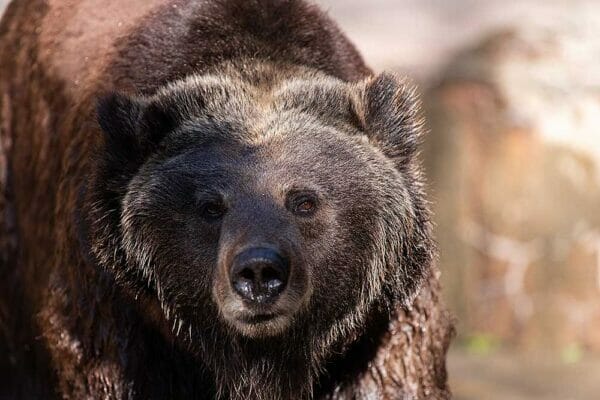
The highest number of fatal bear attacks recorded in Japan was six in fiscal year 2023. In fiscal year 2025, 13 people were killed in Japan by bears. The most significant number of people attacked, injured, and recorded was 213 in 2023. As of fiscal 2025, the number stands at 230. Japan uses the fiscal year from April 1 to March 31 for most of its administrative accounting. Bears in Japan typically begin hibernating in December, but attacks can occur at any time of year.
Japan has used the fiscal year accounting method to record bear attacks since 2006. The Japan Times suggests relatively low numbers before 2023 may be an anomaly of recent history. Previously, no central records were kept. It is possible there were more bear attacks before modern record-keeping.
The most famous Japanese bear attack was the Sankebetsu bear event in 1915. A large brown bear started killing humans in a village on December 9. The bear killed six people in two days, mostly children. The bear may have been ineffectively wounded at least twice. After the bear had killed two people, 50 soldiers were sent to the village to protect it. They were armed with WWI rifles, probably Type 30 Arisakas. The cartridge was the 6.5x50mm, a full-power military cartridge. The rifles had 31-inch barrels, which made them long for close-quarters work. The cartridge is slightly less powerful than the 6.5×55 Swede. It fires a 139-grain bullet at 2500 fps. The 6.5×55 fires a 140-grain bullet at 2650 fps. The soldiers failed in protecting the villages. Four more children were killed when the bear invaded a house that the soldiers had been protecting. Two hunters eventually tracked down and killed the large bear. It weighed 749 lbs.
Until 1990, bears in Japan were considered pests. From powderlife.com:
Until 1990, Hokkaido had a policy of allowing hunters to exterminate brown bears but this was abolished due to conservation concerns.
Since that time, researchers at Hokkaido University and other institutions have confirmed a rapid increase in the brown bear population, something anecdotally understood by many farmers and residents of Hokkaido’s rural and suburban areas.
Hokkaido’s brown bears are a subspecies of the worldwide brown bear, Ursus arctos, the same species as the American grizzly bear and the Kodiak bear. In the rest of Japan, there are rapidly growing populations of the Asiatic black bear, a more aggressive relative of the American black bear. Hunting of both bears has been increasingly restricted since 1990.
The restrictions and extreme firearms regulations in Japan, along with a shrinking population, have resulted in the number of licensed bear hunters dropping from 517,800 in 1975 to 218,500 in 2020. In 1975, 98% of the licenses were issued for bear hunting. In 2020, only 42% or 91,770 were licensed to shoot bears, with 58% only allowed to trap bears.
To illustrate the problems a bear hunter faces in Japan, two bear hunters were tasked with eliminating a brown bear in the village of Sunagawa. The hunters were reluctant to shoot the young bear, but the police and village officials were insistent. One of the hunters shot and killed the bear. The bullet penetrated the bear, hit a hidden rock, ricocheted, and struck the other hunter’s rifle. The ricochet became known to the authorities months later. In response, the authorities canceled the first hunter’s permit to own firearms. The Hunter association responded by refusing any further requests to aid municipalities in the shooting of bears.
Bear hunters in Japan are limited to 50 cartridges per year, for all purposes.
In response to the extreme protections given to bears in Japan, the population of brown bears on Hokkaido more than doubled. The population of black bears in the rest of Japan quadrupled. The Japanese government has responded to the increasing number of bear attacks by authorizing the killing of more bears. Over 9,000 bears were culled in 2023, over 5,000 in 2024, and over 6,000 by the end of September in 2025. About 5% of the bears taken are killed by private hunters. The total bear population in Japan is estimated at 54,000 Asiatic black bears south of the island of Hokkaido and 12,000 brown bears on the island of Hokkaido.
Japan has highly restricted the ownership of firearms for hundreds of years. It has one of the lowest rates of firearms ownership per person, about .003 firearms per person. The United States has about 1.5 firearms owned per person. There are many other variables, but the United States has fewer people killed by bears than Japan.
About Dean Weingarten:
Dean Weingarten has been a peace officer, a military officer, was on the University of Wisconsin Pistol Team for four years, and was first certified to teach firearms safety in 1973. He taught the Arizona concealed carry course for fifteen years until the goal of Constitutional Carry was attained. He has degrees in meteorology and mining engineering, and retired from the Department of Defense after a 30 year career in Army Research, Development, Testing, and Evaluation.


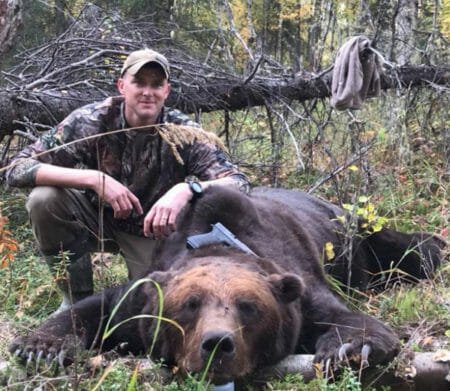

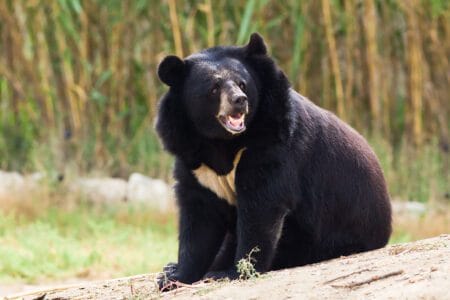
gee whiz beav, who would have thought that not killing an increasing number of bears on an island would lead to increased fatalities?
It’s likely that the giant hornets are racking up a higher body count in Japan than the bears. These hornets fly around like hummingbirds and make simple yard work a mortal risk. They don’t forgive and they don’t forget, and if you cross um’, you’ll wish it was a bear!