
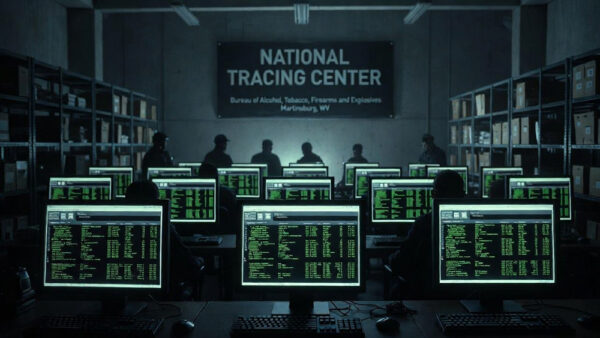
Washington, D.C. — A new report from Reason confirms what AmmoLand has been warning American gun owners about for years: the Bureau of Alcohol, Tobacco, Firearms and Explosives (ATF) has quietly built what amounts to a backdoor gun registry — in violation of federal law.
On February 3, Rep. Michael Cloud (R-TX) and 26 colleagues demanded answers from ATF about the scale and legality of this database after being stonewalled for more than a year. The concern? A digital trove of hundreds of millions — possibly over a billion — firearm transaction records that the agency has digitized from former dealer files.
ATF’s illegal database potentially holds over 1 billion gun registry records, which is a violation of federal law, and the second amendment.
They have stonewalled Congress for 290+ days, it’s past time to deliver answers. pic.twitter.com/PAFRJ0FYxi
— Rep. Michael Cloud (@RepMichaelCloud) February 5, 2026
The Law Forbidden National Registry — and the ATF Built One Anyway
Federal law has banned the creation of a national firearms registry since 1986 under the Firearms Owners’ Protection Act. It states clearly that “no…system of registration of firearms, firearms owners, or firearms transactions or dispositions may be established.”
Yet the ATF, using a Biden-era rule that requires FFLs to retain transaction records indefinitely, has been digitizing Form 4473s — the very forms that list your name, address, and what firearm you bought — and storing them at its National Tracing Center in Martinsburg, WV. In 2021 alone, ATF admitted processing more than 54 million out-of-business dealer records.
That database isn’t some tiny archive gathering dust. It contains details from decades of gun sales, and while ATF claims it is currently not searchable by name, that capability is simply disabled — not destroyed — and could be turned back on at any time.
What AmmoLand Reported Years Ago
AmmoLand first sounded the alarm on this issue back in 2022 when we uncovered the ATF’s systematic scanning of more than 920 million firearm sale records, a database that was searchable and stored digitally, contrary to the plain language of federal law.
We continued to follow the story as it developed, including:
- Deep dives into how the ATF receives and stores records — long after dealers could legally destroy them — effectively capturing a lifetime’s worth of privately initiated firearm transfers.
- Reports revealing that the database’s design makes it functionally indistinguishable from a national registry, even if ATF insists otherwise.
- Warnings that ATF maintained this system despite repeated protests from gun rights groups that it violates both statute and the Second Amendment.
None of this was a surprise to most gun owners, but it was ignored for too long by mainstream media and many in Congress.
Why This Matters for Gun Owners
Gun owners aren’t paranoid when they fear a registry — they’re paying attention to the facts.
A government database containing your name linked to every firearm you’ve ever bought is:
- A privacy nightmare — even the current “no name search” feature is just a toggle away from re-activation.
- Legislatively banned — Congress never authorized a national gun registry; the ATF is effectively rewriting the law in practice.
- A pre-confiscation tool — history shows that registries are often used as the first step toward restrictive policy or seizure, even if officials deny that intent.
This isn’t speculation — it’s legal and bureaucratic reality playing out in real time.
Lawmakers Finally Taking Notice
Rep. Cloud’s letter — now more than a year old — is finally getting widespread attention because this issue affects millions of law-abiding Americans. That lawmakers had to threaten oversight just to get answers underscores how far outside Congressional intent ATF has drifted.
But make no mistake: the threat to your rights didn’t start today. It’s been building for years, and AmmoLand has been documenting it every step of the way.
A gun registry in all but name is still a gun registry and is illegal, dangerous, and something gun owners should vehemently oppose at every turn.
Let lawmakers know — ATF must be held accountable, and your rights must be protected.
ATF Keeping 920+ Million Firearm Records with Almost All Digitized
Signs Suggest Walmart to Turn Over Customer 4473 Gun Records to ATF