
A federal court in Fort Worth, Texas, handed Second Amendment advocates a landmark victory last month when it permanently enjoined the government from enforcing a decades-old ban on firearms in U.S. Post Offices.
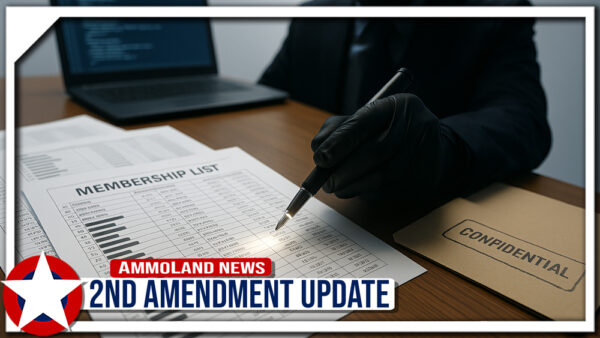
But less than 30 days later, the U.S. Department of Justice (DOJ) is back before the same judge, begging for clarity, or, at a minimum, modification—arguing that the injunction is a practical nightmare that risks contempt, nationwide de facto relief, and constitutional overreach. This request also comes a month after the DOJ said it did not want membership lists of gun rights organizations. The 13-page motion, filed October 28 in Firearms Policy Coalition, Inc. v. Bondi, exposes a post-judgment clash between gun-rights confidentiality and the government’s attempt to limit the number of people allowed to carry guns in post offices.
The case began in June 2024, when Firearms Policy Coalition (FPC), the Second Amendment Foundation (SAF), and two individual plaintiffs challenged the law that makes it a federal crime to possess firearms in post offices. After cross-motions for summary judgment, U.S. District Judge Reed O’Connor ruled on September 30, 2025, that the provisions violate the Second Amendment in “ordinary” post office settings. The final judgment declared the laws unenforceable against “Plaintiffs (and their members)” and permanently enjoined Attorney General Pamela Bondi from “interpreting or enforcing” the ban inside post offices or on surrounding property.
The DOJ does not contest the merits of the case. Instead, it argues the injunction’s reference to “members” of FPC and SAF organizations with tens of thousands of dues-paying supporters renders the order unenforceable. Membership lists are private, and plaintiffs refuse to share them. Without names, federal agents cannot distinguish protected carriers from criminals.
The dispute started in early October. DOJ trial attorney Samuel Holt emailed plaintiffs’ counsel at Cooper & Kirk, requesting a “verified list of [FPC and SAF] members as of the date the case was filed” to ensure compliance. Holt offered a protective order limiting the use of the data to the enforcement of the injunction.
Plaintiffs’ lead attorney Pete Patterson shot back on October 3: “We object to providing the government with a verified list of members… Members can identify themselves as such if questioned about carrying a firearm in a post office… [T]he judgment is not limited to members at the time the complaint was filed.”
The DOJ calls this “unworkable.” Self-identification invites fraud—any armed individual could claim membership—and verification on-site is impossible. Worse, it shifts the compliance burden to third parties with no legal duty to cooperate, leaving the government in perpetual contempt jeopardy.
The DOJ’s primary weapon is Federal Rule of Civil Procedure 65(d), which demands every injunction “state its terms specifically” and “describe in reasonable detail… the act or acts restrained.” The DOJ cites three appellate precedents. The first is American Red Cross v. Palm Beach Blood Bank. The injunction in that case, barring contact with donors on a secret list, was found to be void for vagueness. The second case was NLRB v. Teamsters. That case involved an order protecting employees of “any other employer within its jurisdictional territory,” but it failed to define the territory. The final case was E.W. Bliss Co. v. Struthers-Dunn. That case dealt with the prohibition on contact with unidentified “proposed customers” and found it “excessively vague.”
Part of the motion hinges on Trump v. CASA. That decision barred universal injunctions granting relief “broader than necessary to redress the plaintiff’s injury.” The DOJ is arguing that, without the membership list, the organizations could force nationwide relief by withholding member names, daring the government to risk contempt or to suspend enforcement everywhere.
The DOJ’s second ask is temporal. It seeks to cap the injunction to individuals who were FPC or SAF members on June 18, 2024, the complaint’s filing date. The DOJ claims that without a cutoff, membership becomes “a ticket to prosecutorial immunity.” They claim that anyone charged with carrying a firearm inside a post office could join FPC or SAF post-arrest and claim contempt if prosecution continues.
The DOJ acknowledges NAACP v. Alabama. The landmark case protects membership anonymity due to fear of retribution. The DOJ claims it is not demanding disclosure. They say it is only that relief matches what plaintiffs choose to reveal. DOJ lawyers state that organizations can keep lists secret, but they cannot simultaneously shield thousands while expecting the government to comply blindfolded.
Major Gun Rights Group Calls for Pam Bondi’s Immediate Termination as Attorney General
A Warning to Florida Public Officials About the New Open-Carry Law
About John Crump
Mr. Crump is an NRA instructor and a constitutional activist. John has written about firearms, interviewed people from all walks of life, and on the Constitution. John lives in Northern Virginia with his wife and sons, follow him on X at @crumpyss, or at www.crumpy.com.





I will never understand how a court can rule a law is Unconstitutional for only some citizens. I’m a simple man, Unconstitutional means Unconstitutional.
More of the “I’m pro 2A but..” from the administration. The law doesn’t apply to someone on a list it applies PERIOD.
This is why it’s important to have candidates that are actually 2A not just posing for pictures as tactical barbies and pretend ranchers. This is why when they think they will lose a case and back off it’s not the same as them being pro 2A. Yes it’s better than the option but it’s not a good thing.
If the law is unconstitutional for “Plaintiffs (and their members)”, then it’s null and void and unconstitutional for everyone.
It’s just that simple.
Bondi needs to be cleaning house and gettting rid of these anti 2A thugs in the DOJ.
I support four gun rights organizations with a minimal donation each year, which is what I can afford to do my part. I believe membership information should be protected. Furthermore, I believe that being a member of a gun rights organization should have no bearing on whether you can enjoy the fruits of their lawsuit, which is chipping away at the infringement of our gun rights. If it is found unconstitutional to declare a gun free zone everybody should benefit from that not just members.
How about this. No more gun free zones and institute constitutional carry for the entire USA at the same time making it mandatory without exception. The federal government banned guns in federal buildings in 1964. Under Bruen vs Heller, that law has been in effect less time than when there was no law regarding it so that makes banning guns in government buildings unconstitutional just like the act of 1934 and newer acts. Here is a thought. If they privatize the USPS then they would have no grounds to require that you not possess a firearm on the premises. Reminds… Read more »
Didn’t they do a presser stating that they in no way were asking for a membership list and telling everyone they’re over reacting? Some even said NAAGR was wrong to criticize and had “jumped the gun,” with demands following for a public apology. I guess that apology should read: “We’re so sorry that we were absolutely right.”
Red Flag Pam continues to be a disappointment. If only there had been some previous behavior that we could have looked to in order to predict how she really feels about the 2A….oh, wait, there was! https://youtu.be/P5tP3OLhmA0?si=vm2svHb6yniqrl1j
I’m thinking DOJ is trying to get the judge to say unconstitutional means unconstitutional for all people, not just members of a group. And that it’s illegal for the post office or justice officials to search people without cause to determine if they are protected person, or if they are someone who should be violated because they didn’t send money to a group.
That means the post office couldn’t go through leftist red tape procedures to make it difficult to carry.
If the membership lists were provided, there is no indication that they would be kept private. There is no explanation as to how law enforcement could, on the spot, determine that an individual was “on the list” and could legally carry in a P.O.. So the person would be arrested, booked, and would have to show in court, or at least hire a lawyer to demonstrate to the local prosecutor, that he was covered by the injunction. Therefore there is no practical need for the membership list. It is merely impractical to enforce the law instead. The judge would do… Read more »