
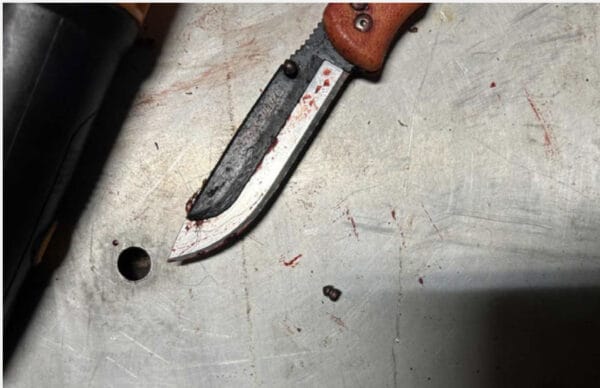
On September 1, 2024, in Willits, Colorado, a resident shot a black bear sow with a pellet rifle. The man said he was attempting to harass the sow to have it move away from his neighborhood, because children might encounter the sow and the two cubs.
According to the Aspen Times, the pellet hit the bear in the side, penetrated a rib, hit at least one lung, and was lodged in the opposite rib cage.
The man who shot the bear was charged with the unlawfull killing of a black bear and unlawfull failing to comply with provisions of a license. The citations carry penalties of $100 plus $37 surcharges each, for a potential of $274. He said he used the pellet gun only after attempts with a garden hose and ammonia failed to persuade the bear to leave. He said he made multiple attempts to obtain help from the authorities.
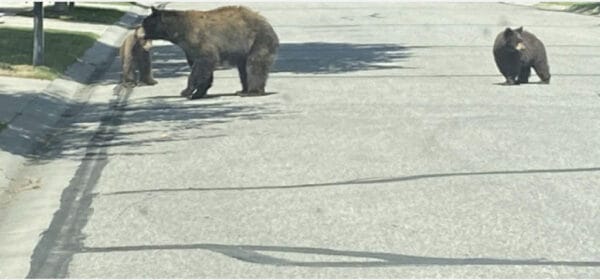
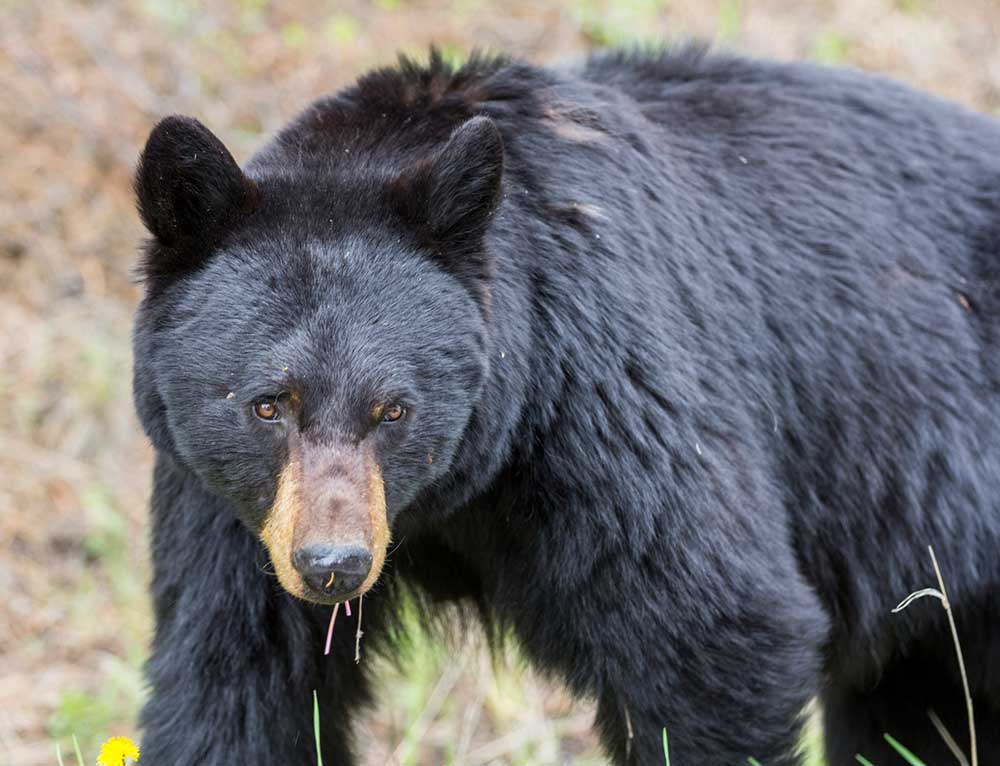
Black bear sows with cubs have a reputation for being aggressive. Researchers say it is almost always a bluff. The resolution, with the citations issued, seems reasonable for the accidental killing of a black bear. Black bears are common in Colorado and in the United States.
The death of the black bear sow illustrates how vulnerable bears are to punctures of the thoracic cavity. Most pellet rifles are much less powerful than the common .22 rimfire, even from a handgun. Other than a direct brain shot, the thoracic cavity is the most vulnerable target. Penetration of the thoracic cavity will usually cause death in a few minutes. Broadside shots are preferred because they are more likely to puncture both lungs, and to cause an exit wound as well. If only one lung is punctured, death may take longer. If the heart is punctured, death is usually quicker.
An attack by a bear is often over quickly, but can take many minutes. It is not uncommon for bears to attack, leave, and come back to attack again. If the bear’s thoracic cavity is punctured, the chances of a return attack are greatly diminished.
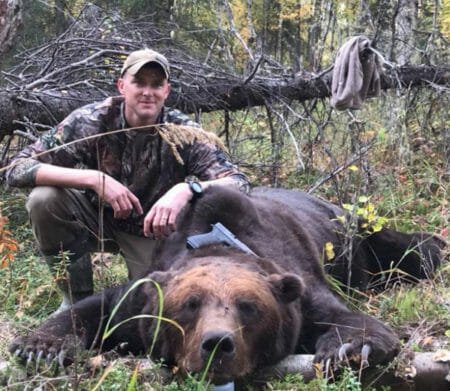
The thoracic cavity is a popular target for hunters. However, if only one lung is punctured and the heart is not injured, large animals may not be seriously disabled for many minutes. This seems to have been the case on a bear hunt in Alaska, where a .338 Ultra Mag was fired and a .454 Casull was used to stop the subsequent charge. Bears shot often break off an attack or leave the area before they die.
A shot to the thoracic cavity will nearly always limit the time the bear has left before it is incapacitated. Some thoracic cavity shots cause immediate collapse of large animals. Such a collapse depends on numerous variables which are difficult to measure, such as the mental state of the animal. Animals in full “fight or flight” mode tend to take longer, or at least travel further before they collapse.
About Dean Weingarten:
Dean Weingarten has been a peace officer, a military officer, was on the University of Wisconsin Pistol Team for four years, and was first certified to teach firearms safety in 1973. He taught the Arizona concealed carry course for fifteen years until the goal of Constitutional Carry was attained. He has degrees in meteorology and mining engineering, and retired from the Department of Defense after a 30 year career in Army Research, Development, Testing, and Evaluation.

Legal Standard for Self-Defense Against Grizzly Bear Attacks


People are often concerned their 9mm handgun won’t be enough to stop a bear — now we have an instance of one killed with nearly the least powerful arm that will penetrate skin?
That’s what self reporting get you
I had a Daisy Powerline 880 Air Rifle Multi-Pump Action Air Rifle that shot BB’s and .177 Cal. pellets. It would kill rabbits, squirrels and other small game with no issues and penetrated particle board I stapled my targets on. Using ten pumps as the number of pumps, it’ll send a BB or .177 caliber pellet downrange at around 800 fps or so on my chronograph. Wish I still had it.
I’m just gonna stick with my slingshot and steel hunting shot.
The problem with .177 pellets is even a 1200FPS pellets the is the pellet looses velocity/energy rapidly. I found that beyond 10 yards it was hard to dispatch ground squirrels. That is why I bought a 25 cal PCP rifle when I moved from the city to the country where engagement ranges are greater. The 20″ range I set up in the garage I found that it required a back stop consisting of a carpet backed by a 5/8″ plywood to prevent denting of an insulated roll-up door.
A 25cal PCP has similar performance to a 22.
Definitely an argument in favour of “shoot / shovel / shut up.”
I WANT THAT PELLET RIFLE!!!!!
I recall in the 90’s and 2000’s, Glock used to publish an interesting magazine, each year. There was a catalog of all current production models, specs for each, accessories, and more. There were also interesting stories in each annual addition. I seem to recall at least three articles in different years about people killing bears in defensive situations with .40 Glock pistols. A couple, I can’t recall for sure, were vague as to model, or may have specified a G-22 or G-23. The last one I recall reading, a guy in Alaska was awakened in his upstairs bedroom one night… Read more »
1) I’m not surprised the pellet can kill, but 2) I’m sure there are many situations where it would disappoint! 3) Anyone who understands his pellet gun knows the pellet will penetrate! 4) So for deterrence, I think it’s a very poor choice: because in the first few seconds: although it may instill fear, it will also be very poor against determined bears. 5) And long-term, a pellet wound will be a source of infection and perhaps orneriness. Don’t ask how I learned, as a teen, that a BB under the skin could well lead to infection. 6) I’m not… Read more »
If it will take a bear down, think what it can do to the traitors in politics.