
HomeDirectorySubmit NewsSubscriptionsAbout UsAdvertiseRecent Posts

 
People like this. Be the first of your friends.

Delaware Division Of Fish & Wildlife Announces Hunting Photo Contest Winners

Wednesday, February 1st, 2012 at 11:01 AM
Delaware Division of Fish and Wildlife

Delaware Division of Fish and Wildlife

DOVER, Delaware --(Ammoland.com)- The judges’ decisions are in: the DNREC Division of Fish and Wildlife’s first fishing and hunting photo contests each have first and second place winners and three honorable mentions.

Three judges – well-known professional photographer Kevin Fleming, and local photographers Tony Pratt and Freda Barrett, both DNREC employees – reviewed 53 fishing entries and 27 hunting entries, and then narrowed each category to the top five.

The contests specified that photographs must have been taken in Delaware and must depict youth participating in fishing or hunting activities. Judges were looking for photos that best portrayed “the promise of the future” as envisioned by the Division’s 2011 theme of “Celebrating 100 Years of Fish and Wildlife Conservation: Reflecting on the Past, Moving into the Future.”

“When we were judging the contest entries, we looked most importantly for photographs that portrayed our theme and ‘the promise of the future,’” said Ms. Barrett, who suggested the contest as part of the Division’s 100-year celebration. “We also considered technical criteria such as resolution, clarity, lighting and composition. Some entries fit the theme, but had flaws such as poor lighting, an undesirable background or out-of-focus. Our winners are crisp close ups of youth partaking in fishing or hunting activities.”

“We saw some very nice entries for a first-time contest, and the winners were all good,” said Mr. Fleming, adding, “I would encourage the Division of Fish & Wildlife to consider making this year’s special photo contest held on the anniversary of 100 years of fish and wildlife conservation an annual event – and in case they do, I hope more people will be encouraged to take their cameras with them on their outdoor Delaware adventures.”


Fishing contest winners are:

  • First place: “Fishing with My Daddy,” toddler at Cape Henlopen, by Michele Reeder of Dover
  • Second place: “Barefoot Basin,” Collins Pond, by Joey Melvin of Georgetown
  • Honorable mention: Untitled photo of 8-year-old boy in waders holding big fish on White Clay Creek, by Brenda Rappa of Wilmington
  • Honorable mention: “Got One,” 9-year-old boy fishing in Cedar Creek Mill Pond, by Kathy Sheldon of Lincoln
  • Honorable mention: “Maddie Fishing Pic,” toddler fishing in Christina River, by James Brainard of New Castle

Hunting contest winners are:

  • First place: Untitled photo of 5-year-old boy hunting at Broadkill Beach, by Tom Burke of Greenwood
  • Second place: “Calling Them In,” 6-year-old boy hunting near Milton, by Amy Argo James of Milton
  • Honorable mention: “Scanning the Skies,” teen boy hunting at Ted Harvey Wildlife Area near Dover, by Dave Sawicki of Magnolia
  • Honorable mention: “Practice Makes Perfect,” 11-year-old girl hunting near Marydel, by Andrea Sergent of Marydel
  • Honorable mention: Untitled photo of two 12-year-old boys hunting near Lincoln, by Joey Melvin of Georgetown

“When we announced these contests as part of our 100-year celebration, we wanted to feature images of young anglers and hunters in our hunting and fishing guides, since young Delawareans will become the next generation of Delaware conservationists. The response from our resident photographers more than met our expectations,” said Division of Fish and Wildlife Director David Saveikis.

“Moving into the next century of fish and wildlife conservation in Delaware, we are encouraged by the promise of the future represented by these photographs of young anglers and hunters enjoying the outdoors.”

The winning fishing photos will appear in the 2012 Delaware Fishing Guide, with Ms. Reeder’s first place photo on the cover and second place and honorable mention photos printed inside the guide. The fishing guide will be available online, at the DNREC license counter in Dover and at fishing license dealers statewide in March.

The winning hunting photos will appear in the 2012-2013 Delaware Hunting and Trapping Guide, which is not yet in production. The hunting guide is due out in July and will be available online, at the DNREC license counter in Dover and at hunting license dealers statewide.

For more information about future Division photo contests, please visit www.fw.delaware.gov.

Tags: , , ,
 Email   Print     
 
People like this. Be the first of your friends.

Delaware’s Division of Wildlife Celebrates A Century Of Conservation

Monday, January 2nd, 2012 at 3:01 PM
Russell Peterson Urban Wildlife Refuge

Russell Peterson Urban Wildlife Refuge

Delaware Division of Fish and Wildlife

Delaware Division of Fish and Wildlife

Delaware --(Ammoland.com)- In 1911, when the first members of Delaware’s new Game and Fish Commission were appointed by the Governor and the state’s first game warden was hired, the state did not own wild lands for conservation purposes, the idea of educating the public on wildlife conservation was yet to take root, and few regulations were in place to properly manage the hunting and trapping of game animals.

However, within three years, the first Commissioners would list conservation, education and appropriate regulation among their recommendations – and these remain priorities today.

As the DNREC Division of Fish and Wildlife celebrates Delaware’s first 100 years of fish and wildlife conservation by reflecting on the past and moving into the future, here’s a closer look at how part of the old Board of Game and Fish Commissioners developed into today’s Wildlife Section.

In the history of Delaware wildlife conservation, several figures loom large, including Ted Harvey, Norman G. Wilder, and former Governor Russell Peterson – all familiar today from the wildlife areas that bear their names. Two of Gov. Peterson’s accomplishments in particular would shape the future of fish and wildlife conservation in Delaware. The first, in 1970, was the creation of the Delaware Department of Natural Resources and Environmental Control (DNREC), which brought the state’s fish and wildlife-related functions together under the DNREC Division of Fish and Wildlife. The second, in 1971, was passage of the landmark Coastal Zone Act, which set the standard for other states and established the regulations that continue today to protect Delaware’s precious and fragile coastline from uncontrolled industrial and commercial development.

“Today we continue to build upon the strong foundation laid by generations of conservation pioneers to preserve and restore Delaware’s rich ecological diversity for the benefit of wildlife and all Delawareans,” said DNREC Secretary Collin O’Mara. “Through our numerous habitat restoration efforts, including the Delaware Bayshore Initiative and the Nanticoke River watershed, we will honor past successes and leave our own legacy of stewardship and conservation for the enrichment of current and future generations.”

After working for the Commission since 1948, Wilder became the first director of Delaware’s fish and wildlife agency in 1957 and began actively pursuing the acquisition of wild lands. A few early acquisitions before Wilder’s directorship included the first state-owned wildlife area, Petersburg Game Management Refuge (now Norman G. Wilder Wildlife Area), established in 1941; Assawoman Wildlife Area lands, which were transferred from the federal government in 1945; and the C&D Canal Wildlife Area established by agreement with the U.S. Army in 1950. Wilder saw the need to acquire more lands for conservation and recreation purposes.

“[Norman Wilder] knew that if lands were going to be set aside for future generations of Delawareans to hunt, fish and play on, it had to be done as expeditiously as possible… He had a far-sighted vision, and spot-on, especially with regard to wetlands, the heart and soul of the magnificent Delaware estuary,” recalled Tony Florio, who was hired as a wildlife technician by Wilder and later became Wildlife Section administrator, working 40 years for the state agency that became the Division of Fish and Wildlife.

In 1961, Ted Harvey made his mark on land conservation efforts by founding a private, non-profit conservation group, Delaware Wild Lands, for the purpose of protecting coastal areas via land purchase, legislation and education. Over the years, Delaware Wild Lands has acquired, or partnered with the state and other organizations to acquire thousands of acres statewide, including the 10,000-acre Great Cypress Swamp conservation area in Sussex County.

A key acquisition and one of the largest was a 4,000-acre, seven-tract Kent County purchase including the Ted Harvey Wildlife Area, negotiated by the Division and Delaware Wild Lands in 1979, and turned over to state-administered public ownership to help tie together a missing piece in protected coastal habitat. Today, with more than 60,000 acres of wild lands owned and managed by the state through the Division of Fish and Wildlife, the emphasis on linking lands and habitats by acquiring missing pieces continues.

Early efforts at educating and informing the public included a 1931 program designed to stir interest in game bird hunting in which school children hatched and raised ring-necked pheasants; a 1933 film entitled “Hunting and Fishing: An Asset to Delaware,” which was shown to community groups and at various events; a natural science camp for teachers in summer 1942; and the first issue of the Delaware Conservationist (now Outdoor Delaware) in 1957. The statewide Delaware Hunter Education program began in 1970, and a facility dedicated to the program, the Ommelanden Hunter Education Center and Range in New Castle, opened in 1981. Ommelanden’s offerings currently include free firearms safety instruction and public-use ranges for rifle, pistol, shotgun and archery target practice.

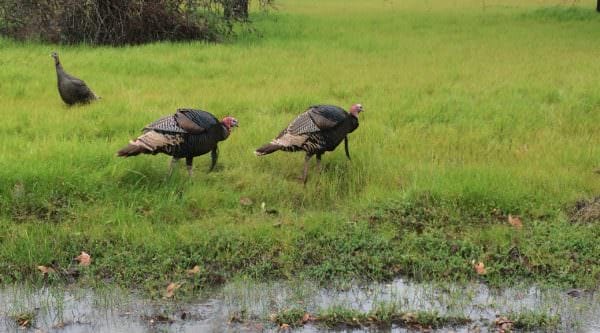
Scientific research was a key function early in the history of Delaware’s fish and wildlife agency, from a test project planting pond vegetation to supply ducks with food in 1930 to early efforts at wildlife management and habitat restoration in the 1950s to the highly successful wild turkey restoration project in the 1980s. Today, the Division continues to manage game animals as well as non-game wildlife and native plants through the Natural Heritage and Endangered Species Program, established in 1986.

Wildlife Section biologists perform a wide range of duties and research, from monitoring shorebird populations to banding owls to counting bald eagles to working with endangered and rare animals and plants, to tracking avian influenza in waterfowl, white nose syndrome in bats and chronic wasting disease in deer. White-tailed deer and wild turkey, both popular game species in Delaware today, are among the section’s significant species restoration success stories.

Today, applied science continues to be the basis by which the Division manages wildlife populations.

From estimating deer densities in order to maintain their populations within ecological and social carrying capacities to determining where suitable roosting sites exist or need to exist for migrating red knot populations, wildlife management decisions are based on data collected from carefully designed studies and through analysis. This basis on science is directly linked to the Division’s ability to manage sustainable populations of wildlife, allowing some species to be recreationally harvested through regulated hunting and trapping. As Delaware’s expanding human population and its needs put increasingly more pressure on wildlife and the habitat it depends on, the need to continue making wildlife management decisions based on science will become increasingly more important.

Since the Delaware Legislature granted regulatory powers over freshwater fish and resident game to the Game and Fish Commissioners in 1953, the state’s fish and wildlife agency has been responsible for planning, drafting, enforcing and modifying state wildlife regulations. Funding for many programs has come from a variety of sources in addition to the state, including federal aid from the Wildlife and Sport Fish Restoration fund through the Pittman-Robertson Act, authorized by the state legislature in 1938; the Delaware Duck Stamp program, started in 1980; hunting licenses – which in 1915 cost a resident hunter $1; nongame wildlife and endangered species tax check-off fund – which has dwindled from contributions of more than $80,000 per year in the 1980s in Delaware to less than $15,000 annually today as tax payers have more and more check-off programs to choose from; federal endangered species funding which also helps support management of federally listed plants; and most recently the state’s diversity of wildlife and habitats have benefited from funding via the federal State Wildlife Grant Program administered by the U.S. Fish and Wildlife Service.

“We are looking ahead to our next century, in which we hope to make further progress managing our game wildlife, nurturing our endangered and rare species, restoring and connecting our wildlife habitat areas, learning more about the animals and plants with which we share our habitat, adapting to sea level rise and climate change and providing recreational opportunities that bring residents and visitors closer to our natural world,” said Division of Fish and Wildlife Director David Saveikis.

This history of the Delaware Fisheries Section is part of a series of press releases issued in honor of the 100th anniversary of fish and wildlife conservation in Delaware in 2011.

Tags: , , , ,
 Email   Print     
  1. Login with Facebook:
    Log In
    Powered by Sociable!
  2. Facebook Activity