
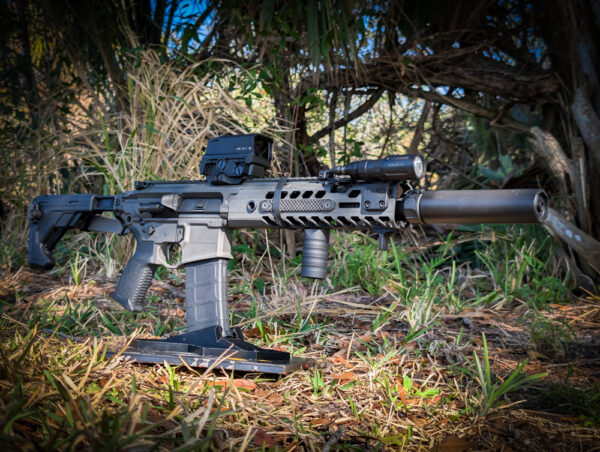
In a decisive move that could finally gut one of the most notorious pieces of New Deal-era gun control, a powerhouse coalition of Second Amendment defenders filed a federal lawsuit yesterday challenging the remnants of the National Firearms Act of 1934. Titled Roberts v. ATF, the complaint was docketed in the U.S. District Court for the Eastern District of Kentucky, with U.S. District Judge Chad Meredith assigned. This isn’t just another legal skirmish. It’s a direct, multi-pronged attack on the unconstitutional registration regime that has burdened law-abiding Americans for nearly a century.
The plaintiffs, backed by the American Suppressor Association (ASA), are demanding a federal court declare the NFA’s registration requirements for suppressors, short-barreled rifles (SBRs), short-barreled shotguns (SBSs), and “any other weapons” (AOWs) null and void. They seek a permanent injunction halting enforcement by the Bureau of Alcohol, Tobacco, Firearms and Explosives (ATF), its acting director, the Department of Justice, and Attorney General Pamela Bondi. This filing marks the third major lawsuit in under a year targeting the NFA since President Donald Trump’s One Big Beautiful Bill (OBBB) effectively zeroed out the infamous $200 “tax stamp.”
Roberts v. ATF: A Direct Constitutional Challenge to the National Firearms Act
Leading the charge are individual plaintiffs T.J. Roberts and Zachary Cockrell, everyday Americans who want nothing more than to exercise their God-given right to keep and bear arms without jumping through unconstitutional hoops. Joining them are Meridian Ordnance LLC, a firearms manufacturer eager to innovate without federal meddling; the Buckeye Firearms Association (BFA); the Center for Human Liberty; Jews for the Preservation of Firearm Ownership (JPFO); and the American Suppressor Association Foundation (ASA). Represented by the elite team at Cooper & Kirk.
The NFA’s origins are steeped in the hysteria of the 1930s gangster era. Congress, lacking any enumerated power to outright ban firearms, cleverly imposed a $200 “excise tax” on machine guns, short-barreled firearms, suppressors, and other disfavored arms, equivalent to thousands of dollars today, while requiring intrusive registration with the federal government. The Supreme Court upheld it in United States v. Miller solely as a valid exercise of Congress’s taxing authority under Article I. But that fig leaf has now been ripped away.
Without a Tax, Does Congress Still Have Authority Under Article I?
Thanks to the OBBB signed by President Trump in 2025, the $200 tax stamp was reduced to zero effective January 1, 2026, for suppressors, SBRs, SBSs, and AOWs. The full deregulatory intent of the Hearing Protection Act (HPA) and SHORT Act was shamefully stripped by a Democrat Senate parliamentarian, but the tax elimination survived.
With no tax to collect, the NFA’s registration, background check, and approval requirements stand exposed as naked federal overreach. The complaint brilliantly argues that these mandates now exceed Congress’s enumerated powers under Article I of the Constitution. No taxing power? No commerce clause fig leaf is sufficient to justify a nationwide licensing scheme on items in common use. The registration regime is simply unconstitutional on its face.
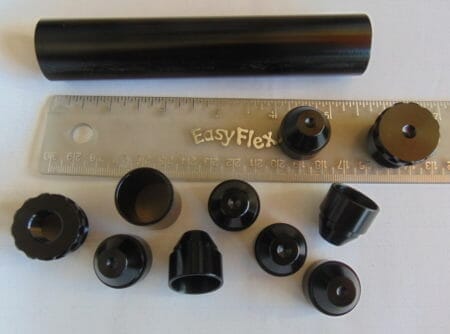
But the lawsuit doesn’t stop at structural constitutional limits. It delivers a devastating Second Amendment broadside squarely under the Supreme Court’s Bruen framework. Suppressors and SBRs are quintessential “arms” protected by the plain text of the Second Amendment, “bearable arms” in common use for lawful purposes like self-defense, hunting, and sport. Suppressors protect hearing, reduce noise pollution, and enhance situational awareness, making shooting safer for families and responsible citizens. SBRs offer maneuverability in home defense and vehicle carry without sacrificing ballistic performance. Americans own millions of these items. They are not “dangerous and unusual” weapons.
No Historical Tradition of Federal Firearm Registration
Under Bruen, any regulation must be consistent with this nation’s historical tradition of firearm regulation. The plaintiffs hammer home that no such tradition exists for a federal registration and approval scheme on these arms. At the Founding, citizens freely possessed and carried short firearms, blunderbusses, and even early noise-reducing devices without licenses or registries. The complaint meticulously demonstrates the absence of historical analogues for the NFA’s burdens. This isn’t speculation it’s black-letter constitutional law post-Bruen, Heller, and McDonald.
FPC President Brandon Combs captured the fighting spirit perfectly: “This new case is another critical shot at taking down the National Firearms Act, an immoral, unconstitutional ban scheme that has no place in a free country. FPC is proud to stand with our allies as we drive a nationwide strategy to dismantle this federal regime, and we’ll keep fighting until all peaceable people can exercise their rights when, where, and how they choose.”
Buckeye Firearms Association Executive Director Dean Rieck echoed the optimism, noting BFA’s proud history in landmark victories like Heller, McDonald (2010), and Bruen. “If we win the Roberts case, it will be yet another major victory, not just for Ohioans, but for all U.S. citizens who value and respect the Constitution.”
“The government’s historically claimed constitutional authority for the NFA was its ability to levy taxes,” said SAF Executive Director Adam Kraut. “Once President Trump signed the One Big Beautiful Bill and taxes on silencers and short-barreled rifles were zeroed out, that authority no longer applied. Without it, the remaining registration requirements must be struck down as well. That’s exactly why we are now supporting a third challenge to this law in federal court.”
“The National Firearms Act has been a weight around the neck of law-abiding gun owners for nearly a century,” said Knox Williams, President and Executive Director American Suppressor Association. “With the elimination of the excise tax on suppressors, short-barreled rifles, short-barreled shotguns, and AOWs through the One Big Beautiful Bill, our lawsuit challenges the NFA as an unconstitutional registry of now untaxed firearms. Common sense and the law are on our side, and we look forward to fighting on behalf of all Americans in Federal Court.”
Live Inventory Price Checker
|
Superior Plated(R) 9mm (.356) Round Nose Handgun Bullets - 9mm (.356) 147gr Round Nose 1000/Box | Brownells.com | $ 100.99 |
|
|
|
Sportsman's Select Remanufactured 9mm 124 Gr FMJ (1000 Rounds) | Ammunition Depot | $ 239.99 $ 199.99 |
|

|
Ultimate Training Munitions 9mm MMR Red - Case of 1000 Rounds | Primary Arms | $ 750.00 |
|
|
TULA 9mm Ammo 115gr FMJ Steel-Cased 1000-Round Case | The Mag Shack | $ 449.99 |
|
Growing Wave of Post-Tax NFA Lawsuits
This filing builds momentum from parallel challenges. Brown v. ATF (filed August 2025, Eastern District of Missouri) and Jensen v. ATF (filed October 2025, Northern District of Texas) already test the same post-tax NFA framework. With three federal courts now poised to scrutinize the regime, the pressure on ATF bureaucrats is mounting. A win in any district could trigger nationwide injunctions, freeing millions of Americans from the NFA’s yoke and opening the door for manufacturers to produce affordable, innovative suppressors and compact rifles without federal permission slips.
The implications are profound. For decades, the NFA has served as a de facto ban for many working-class gun owners priced out of the $200-plus fees, paperwork delays, and felony risks. Law enforcement and military personnel have long enjoyed suppressors and SBRs as standard tools; why deny them to civilians who fund their own training and range time? Deregulation would boost American manufacturing, create jobs, enhance public safety through better hearing protection, and affirm that the right to keep and bear arms includes effective, modern tools for self-defense.
Anti-gun extremists will scream “loophole” and “danger,” but facts don’t care about their feelings. Suppressors don’t make guns silent like Hollywood fantasies; they merely bring noise to safer levels. SBRs aren’t “assault weapons”; they’re simply rifles with barrels under 16 inches, often preferred for home defense in tight spaces. The real danger has always been government overreach, treating peaceable citizens like suspects for owning property the Founders would have recognized as protected arms.
Time to Dismantle the NFA
The timing couldn’t be better. With a Trump administration and Republican majorities in Congress, the judiciary is increasingly receptive to originalist arguments. Judge Meredith’s assignment in Kentucky, a state with a strong gun culture, offers hope for a favorable early ruling. Even if appealed, the Supreme Court’s post-Bruen trajectory suggests little tolerance for creative federal power grabs.
This lawsuit isn’t about “loopholes” or technicalities. It’s about restoring the Second Amendment to its rightful place as the supreme law of the land. For too long, the NFA has represented federal arrogance: the idea that Washington knows better than free men and women how to defend their homes, families, and liberty. The plaintiffs in Roberts v. ATF are saying, “Enough is enough.”
Gun owners across America should watch this case closely and support the organizations leading the fight. FPC, SAF, ASA, JPFO, and BFA are proving once again that persistent, strategic litigation can roll back decades of infringement. If successful, Roberts could pave the way for full repeal efforts in Congress and render the NFA’s core provisions a relic of history.
The Second Amendment isn’t a second-class right. It’s the bedrock of our free republic. Yesterday’s filing in Kentucky is a thunderous declaration that Americans will no longer tolerate federal schemes designed to disarm and control the people. The NFA’s days of terrorizing law-abiding citizens are numbered. Liberty is on the march and the courts are finally listening.
Kentucky HB 749 Follows West Virginia in Expanding Citizens’ Access to Modern Machine Guns
About John Crump
Mr. Crump is an NRA instructor and a constitutional activist. John has written about firearms, interviewed people from all walks of life, and on the Constitution. John lives in Northern Virginia with his wife and sons, follow him on X at @crumpyss, or at www.crumpy.com.



Great news, and I hope they also have arguements included for why post Bruen and in light of the 2nd, the NFA is undeniably unconstitutional with or without the $200 poll tax, as is the cruel and unusual punishment for refusing to comply. What other $200 tax results in a 250,000 $ fine and 10 years in prison? People like Jesse Jackson owed millions to the IRS and never went to prison.
CONgress has zero standing.
I didn’t read deep into the weeds on this, but it seems that one name missing from those suing the FedGov, is the NRA. You’d think that they’d be the Big Dog in this fight. I guess they’d rather remain the lapdog on the porch.
Ted Cruze for the supreme court!!!!!!
One hopes that it will succeed, but no doubt the D’s will drag it out in hopes of a new Congress and President that will reimpose the tax.
Shred the NFA! The most interesting thing in the article (to me) was to see that the JPFO is still around. With all the anti-semitic rhetoric and pro-Hamas demonstrations that were (are) a plague on our country since the October atrocities, where the hell has the JPFO been??? Or when Jewish students were shamed and ridiculed in their college classrooms? And when Mamdani was campaigning, Mr. global intifada himself, where was the JPFO in NYC? I never heard one peep out of them, leading me to believe they were no longer in existence. Certainly not much of an existence, anyway.… Read more »
A win will be great but it won’t change a thing in New York State
Yet again, they are NOT challenging the NFA, just the continued inclusion in the NFA of the items that have recently had their taxes zeroed out. Even if they win, the NFA will still exist. It will only cover machine guns & destructive devices but it will still be there, waiting for the Democrats to regain power and re-introduce the taxes and, thus, the registration requirement in their first budget. I can actually see them not only adding-back suppressors, short-barreled rifles/shotguns, & AOWs but also rationalizing that since they are going to the trouble of adding things that they believe… Read more »