ATF’s new reform package has the gun-control lobby in full panic mode. Everytown claims the changes are a gift to the gun industry, but many of the proposals simply roll back Biden-era overreach and restore common sense for lawful gun owners.
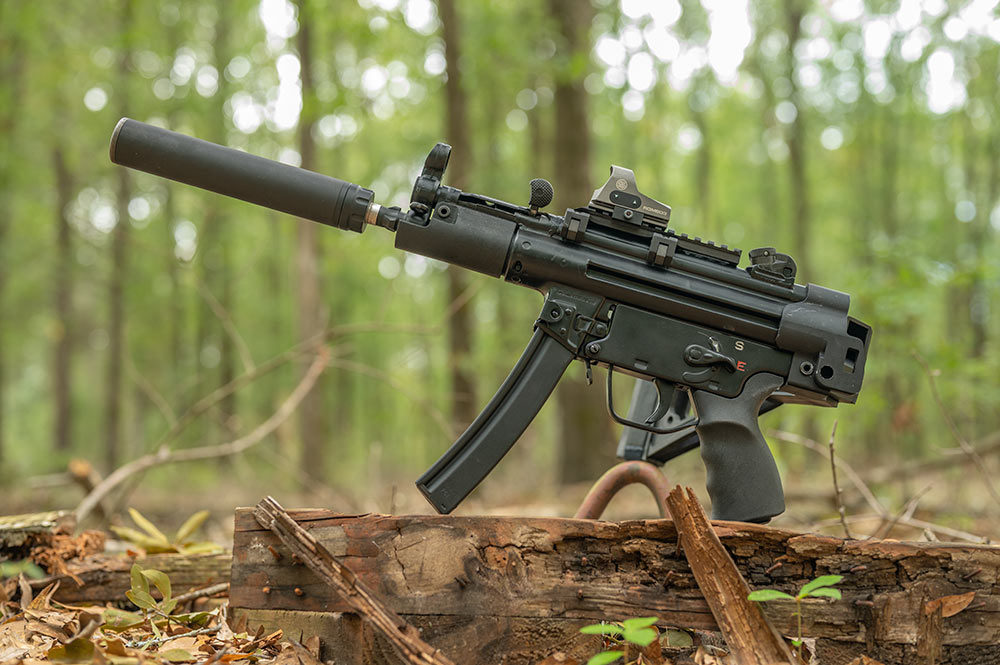
Rep. Jimmy Patronis has introduced the Firearm Freedom Act, a GOA-backed bill that would repeal the Hughes Amendment and remove the federal freeze on post-1986 machine gun transfers.
Rep. Lauren Boebert’s Freedom from Taxes Act would reduce remaining NFA transfer and making taxes to $0 and eliminate the Special Occupational Tax, sharpening the constitutional fight over the NFA registry.
The Supreme Court has denied Patrick Tate Adamiak’s case, leaving the former Navy sailor with a June resentencing hearing or a presidential pardon as his remaining paths to freedom after a 20-year sentence tied to demilled gun parts and ATF claims of machine gun possession.
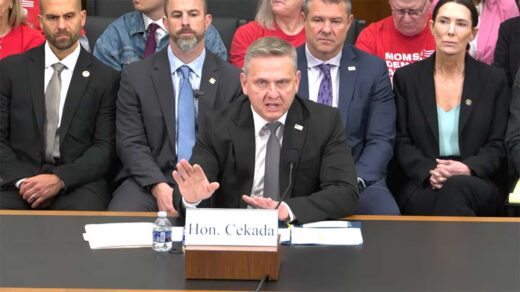
ATF Director Robert Cekada faced House Oversight questioning over the agency’s handling of protected gun trace data, the Tiahrt Amendment, and growing concerns that ATF’s massive digitized records system edges too close to the national gun registry Congress banned.
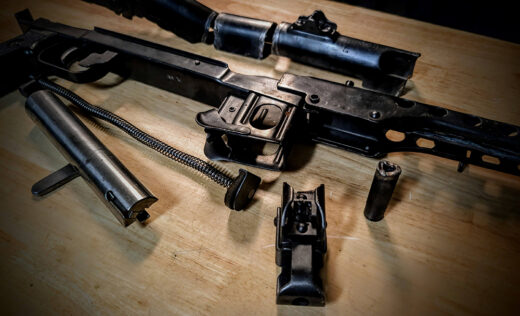
Patrick “Tate” Adamiak was sentenced to 20 years in federal prison after the government treated cut-up parts, separated components, and inert training tubes as National Firearms Act weapons. Now Palmetto State Armory, the National Association for Gun Rights, and the Right to Bear Association are asking the Supreme Court to step in.
George Peterson’s case began with an armed ATF raid on his Louisiana home and business. It ended, at least for now, with the Supreme Court refusing to review his NFA suppressor conviction and a two-year prison sentence hanging over him.
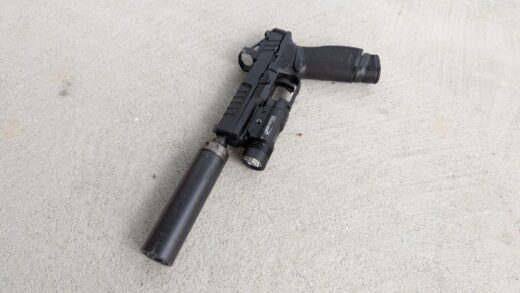
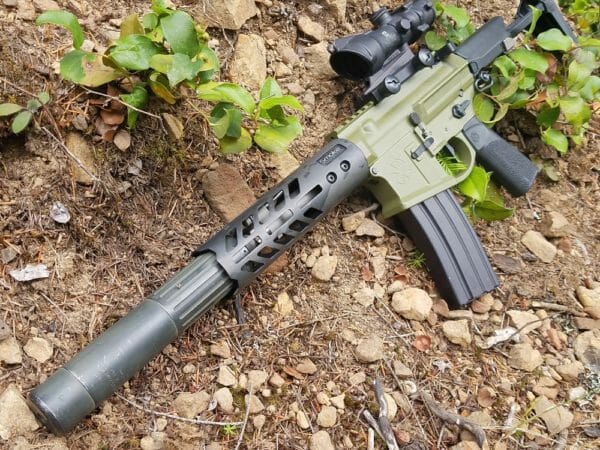
Congress reduced the NFA tax on suppressors to $0, but suppressors remain trapped inside the federal registration system. Now several states are moving to clean up their own laws before gun owners get caught in another legal mess created by decades of federal overreach.
Attorneys representing the plaintiffs in a federal lawsuit challenging the constitutionality of the National Firearms Act (NFA) have filed a motion for summary judgment in U.S. District Court for the Eastern District of Kentucky.
New figures attributed to the ATF show nearly 5.8 million registered suppressors in the United States, underscoring just how fast silencer ownership is growing among American gun owners.
The Fifth Circuit’s opinion in Morris v. DOJ did not decide the National Firearms Act question directly, but it may give fresh support to challengers arguing Congress cannot rely on the taxing power when no tax is actually being paid. That argument could have major implications for NFA registration requirements on suppressors, SBRs, SBSs, and AOWs.
The March 2026 NSSF-adjusted NICS figure rose 1.9% from a year earlier, even as the raw FBI total declined. The bigger story may be in the NFA market, where monthly checks surged 121.2%.
The plaintiffs in Brown v. ATF say the National Firearms Act’s remaining registration requirements cannot survive now that Congress has reduced the NFA tax on suppressors, short-barreled rifles, short-barreled shotguns, and AOWs to zero.
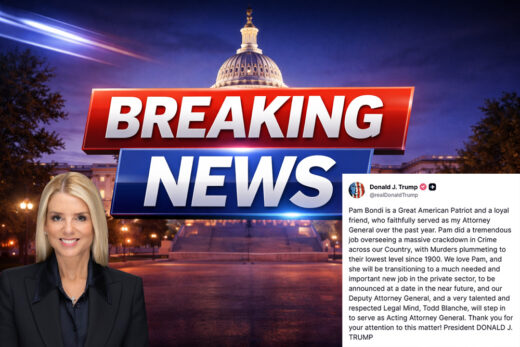
President Trump has removed Pam Bondi as attorney general and named Todd Blanche acting AG. The move comes after mounting Epstein-related backlash and raises fresh questions about DOJ transparency and firearms litigation.
A Missouri federal judge has ordered supplemental briefing in Brown v. ATF, a case challenging the National Firearms Act’s registration scheme and the regulation of suppressors and short-barreled rifles.
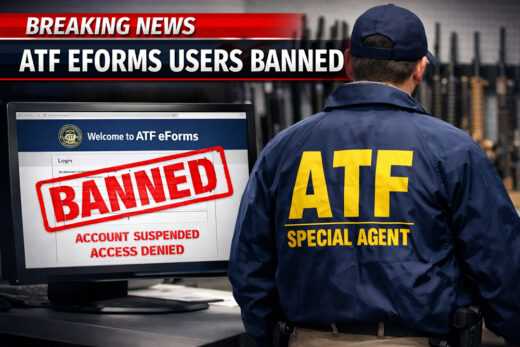
ATF eForms users have reportedly been banned after exploiting a vulnerability, as a flood of NFA applications add new strain to the system.
Short-barreled rifles and shotguns did not end up in the NFA by accident alone. Here’s how a sweeping 1934 gun control push trapped SBRs and SBSs in federal law.
West Virginia Senate Bill 1071, commonly referred to as the “Machine Gun Bill,” will not proceed in the current legislative session.
1986 wasn’t just a bad year for machine guns. It was the beginning of a regulatory power grab that we’re only now in a position to challenge.
A new federal lawsuit, Roberts v. ATF, argues the National Firearms Act registration scheme is unconstitutional after the $200 tax stamp was reduced to zero.
This legislation establishes an Office of Public Defense within the Kentucky State Police, tasked with acquiring and transferring modern, select-fire machine guns directly to law-abiding citizens.
The bill would establish state-run entities to purchase and transfer fully automatic machine guns to qualified, law-abiding private citizens.
Approvals don’t erase the infringement. They reveal the needless bureaucracy of fingerprints, photos, forms, and months-long waits.
The rush to submit Form 1 and Form 4 NFA applications for suppressors, short barreled rifles, short barreled shotguns, and any other weapons continues.
$0 tax stamps are available now for suppressors, short-barreled rifles (SBRs), short-barreled shotguns (SBSs), and “any other weapons” (AOWs)!
The credibility of the self-styled most pro-2A DOJ in history took another major hit and criticism of Bondi ramped up to new heights.
For nearly a century, the National Firearms Act (NFA) has treated ordinary gun owners like suspects—forcing them to pay a steep tax and register perfectly legal firearms accessories just to exercise their rights.
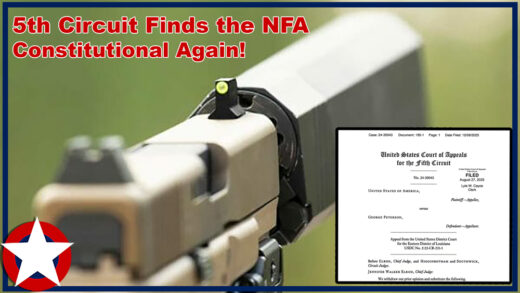
On December 9, 2025, a three-judge panel from the United States Court of Appeals for the Fifth Circuit reissued a significant ruling in the case of United States v. George Peterson.
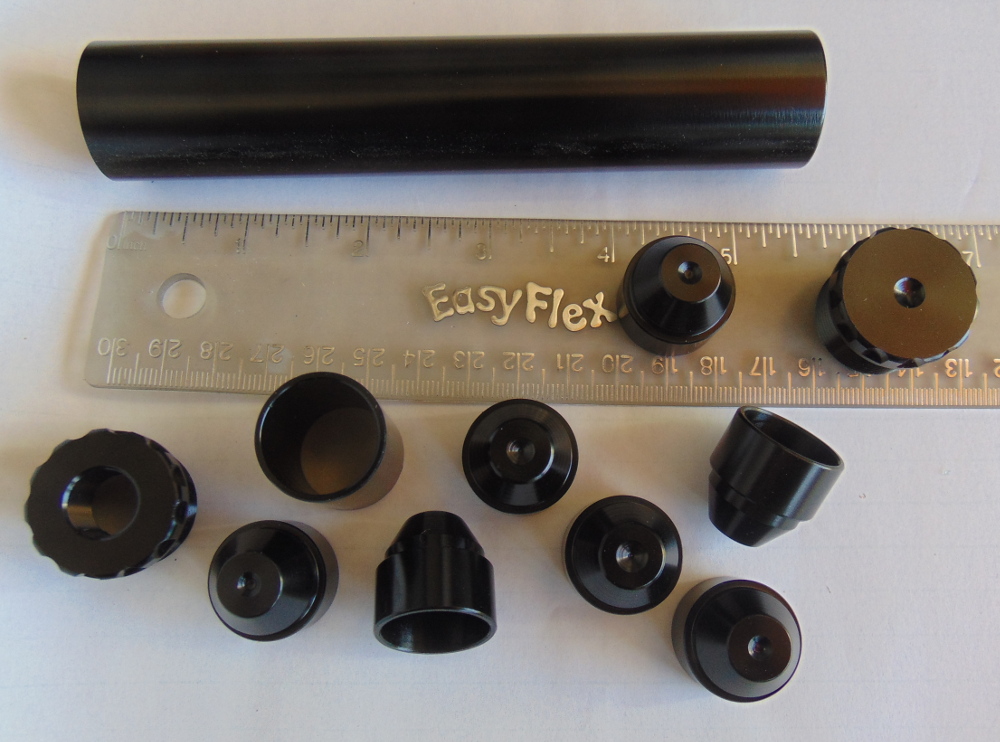
80% silencers are analogs to 80% firearms receivers. A silencer can be made from legally available shapes. It only becomes a silencer when machined and assembled as a silencer.
The Trump administration had filed a brief in defense of the NFA. Could this be a deliberate means to bring the NFA to the Supreme Court, and then switch sides?

 RSS feed