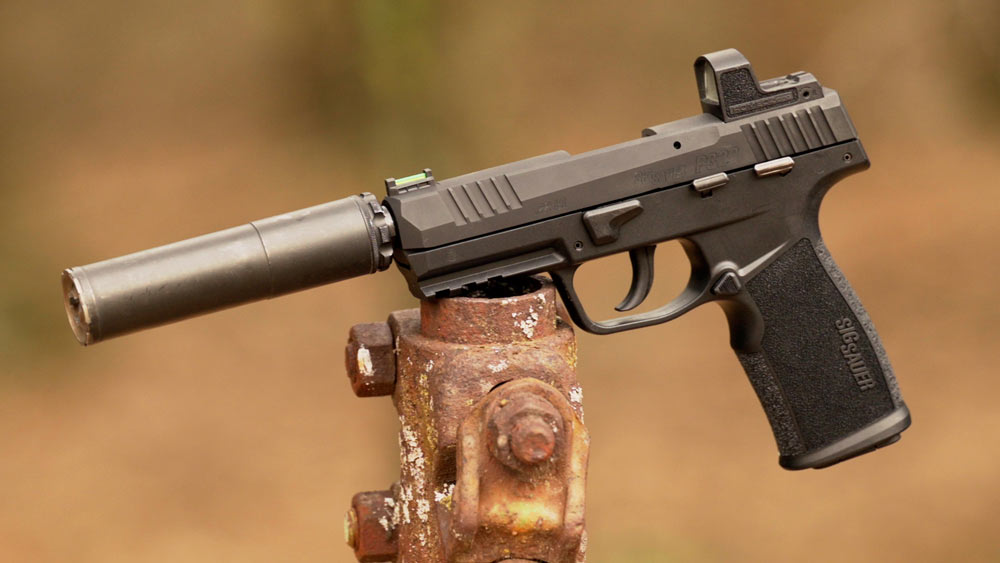
New figures attributed to the ATF show nearly 5.8 million registered suppressors in the United States, underscoring just how fast silencer ownership is growing among American gun owners.
The Fifth Circuit’s opinion in Morris v. DOJ did not decide the National Firearms Act question directly, but it may give fresh support to challengers arguing Congress cannot rely on the taxing power when no tax is actually being paid. That argument could have major implications for NFA registration requirements on suppressors, SBRs, SBSs, and AOWs.
Short-barreled rifles and shotguns did not end up in the NFA by accident alone. Here’s how a sweeping 1934 gun control push trapped SBRs and SBSs in federal law.
A new federal lawsuit, Roberts v. ATF, argues the National Firearms Act registration scheme is unconstitutional after the $200 tax stamp was reduced to zero.
This legislation establishes an Office of Public Defense within the Kentucky State Police, tasked with acquiring and transferring modern, select-fire machine guns directly to law-abiding citizens.
The rush to submit Form 1 and Form 4 NFA applications for suppressors, short barreled rifles, short barreled shotguns, and any other weapons continues.
According to the National Shooting Sports Foundation (NSSF), gun owners submitted over 150,000 NFA applications to the ATF in just one day.
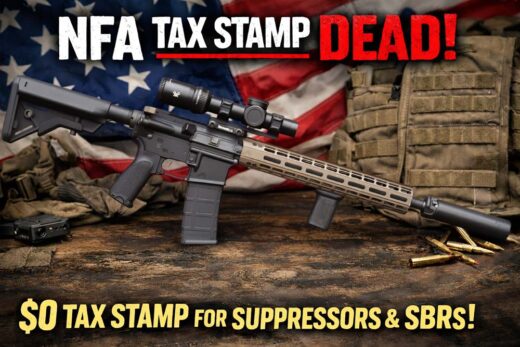
$0 tax stamps are available now for suppressors, short-barreled rifles (SBRs), short-barreled shotguns (SBSs), and “any other weapons” (AOWs)!
The credibility of the self-styled most pro-2A DOJ in history took another major hit and criticism of Bondi ramped up to new heights.
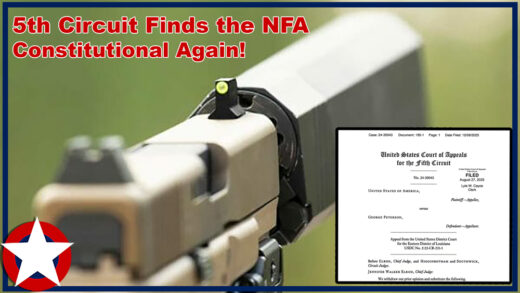
On December 9, 2025, a three-judge panel from the United States Court of Appeals for the Fifth Circuit reissued a significant ruling in the case of United States v. George Peterson.
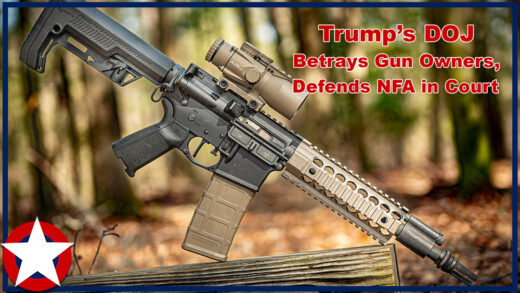
The Trump administration had filed a brief in defense of the NFA. Could this be a deliberate means to bring the NFA to the Supreme Court, and then switch sides?
Trump’s DOJ is hailed as the “most pro-gun DOJ ever,” but its response to the GOA lawsuit paints a different picture.
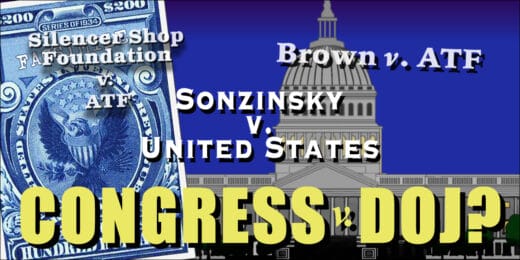
With the tax now eliminated for these firearms, Congress argues that the constitutional basis for the registration and transfer requirements has been rendered obsolete.
Buried in the Federal Register notice is the big one: the agency plans to remove the Chief Law Enforcement Officer (CLEO) notification requirement for NFA registration.
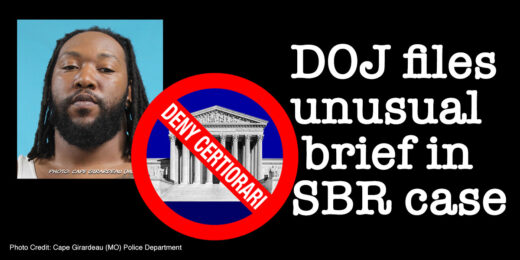
Solicitor General John Sauer filed a brief urging the Supreme Court to deny certiorari to Rush v. United States, a challenge to the inclusion of short-barreled rifles in the National Firearms Act.
A coalition of 26 House Republicans led by Reps. Ben Cline and Mary Miller is demanding the ATF resume processing NFA applications during the government shutdown, arguing that furloughing examiners violates Americans’ Second Amendment rights.
In what could become one of the most consequential Second Amendment battles in decades, a coalition of gun-rights organizations have filed a new lawsuit challenging the constitutionality of the National Firearms Act of 1934 (NFA).
This case seeks to dismantle the National Firearms Act (NFA) registration requirements for certain firearms and suppressors, arguing that recent legislative changes have rendered them unconstitutional.
Franklin Armory has removed its Antithesis firearm from the market after a threat from the Bureau of Alcohol, Tobacco, Firearms and Explosives (ATF).
The government continues to require the registration of these arms — ignoring the need to satisfy the Supreme Court’s test for Second Amendment challenges.
Franklin Armory announced today the launch of Antithesis, a new class of rifled, short-barrel firearm completely unregulated by the National Firearms Act (NFA).
Two major lawsuits are taking aim at the NFA after Congress cut its suppressor and SBR tax to $0 — but veteran gun-rights lawyer Matt Larosiere says winning won’t be easy….
GOA-branded AR15 Rifle lowers to help fund Gun Owners of America’s lawsuit against the NFA. Now $59.99 each, $25.00 of each sale goes directly to fund GOA’s legal battle!
The NFA became law in 1934 as the first national gun control law, and just like all other gun control laws adopted since, it didn’t prevent criminals from committing violent crimes.
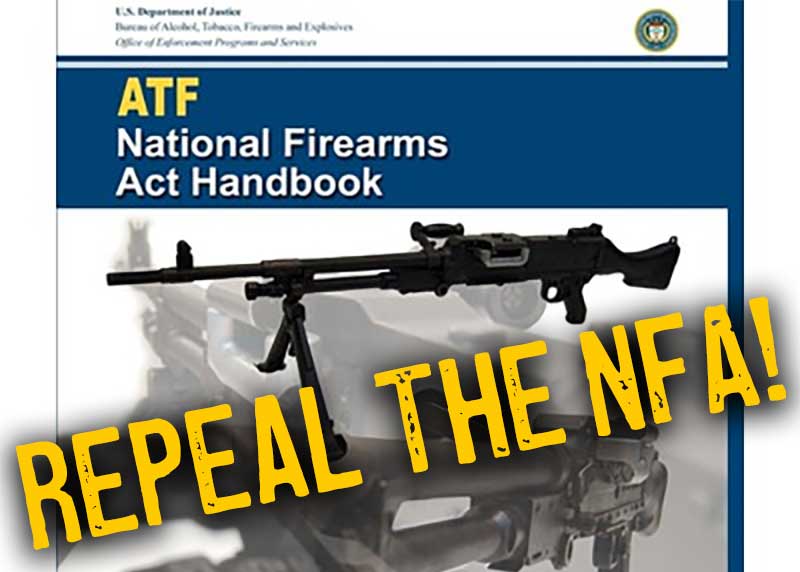
For nearly a century, the National Firearms Act (NFA) has taxed and restricted some of the most useful tools in the firearms world. Now, with the help of allies in Congress, that could finally change
“The NFA is a tax, and gun owners will remember who stood strong to repeal it — and who caved. Pass it, or prepare to explain why you didn’t in the next election.”
Do I have to carry my tax stamp with me?” The short answer is yes, but there’s a smart and safe way to do it.
Dubbed the “Repealing Illegal Freedom and Liberty Excises (RIFLE) Act,” the three-page bill is being spearheaded by Republican U.S. Senators John Boozman and Tom Cotton, both representing Arkansas.
The NFA division processed 157,673 applications, which set a new monthly record for the NFA Division.
Representative Michael Cloud (R-TX) has introduced the SHUSH Act in the House of Representatives, which would deregulate suppressors.

 RSS feed