
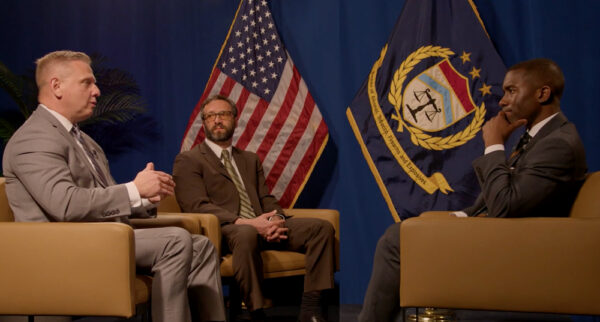
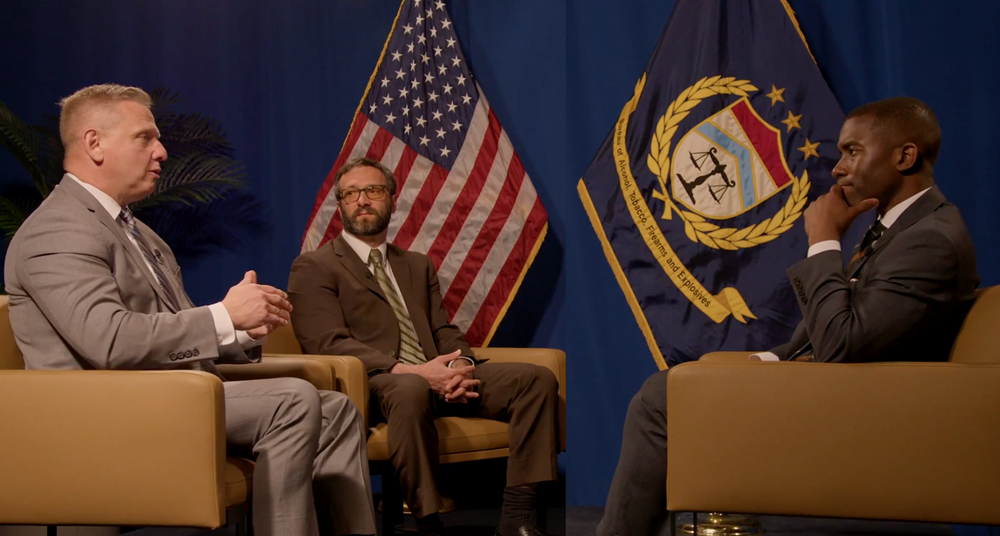
Shermichael Singleton of We the Free recently interviewed Bureau of Alcohol, Tobacco, Firearms and Explosives (ATF) Director Robert Cekada on his platform, alongside ATF Chief Legal Counsel Robert Leider.
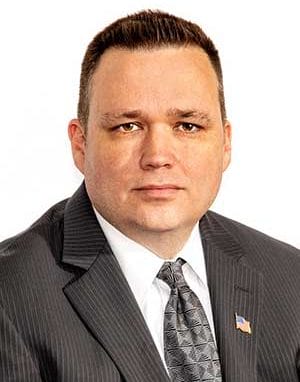
Director Cekada was confirmed in late April. On the same day, he and Leider introduced a package of 34 new rules and regulatory rollbacks intended to make the ATF more accessible and responsive to law-abiding gun owners. This approach represents a clear departure from the previous ATF administration, which took a much more adversarial stance toward gun stores and gun ownership. Cekada has publicly stated that he wants the ATF to focus on criminal activity rather than average, law-abiding gun owners.
The interview began with Cekada’s personal history and background in law enforcement. His parents immigrated from Yugoslavia to escape a brutal communist dictator. His father worked in the trades and held a negative view of law enforcement, not only because of the Yugoslavian secret police that made political dissidents disappear, but also due to corruption in the New York City Police Department (NYPD).
Despite his father’s objections, Cekada joined the NYPD in 1992. He served in anti-gang units, street crime, and organized crime investigations, eventually rising to the rank of detective. He later served with the Plantation Police Department in Florida before joining the Broward County Sheriff’s Office, where he worked in patrol and as a member of the SWAT team. In 2005, Cekada joined the ATF as a Special Agent, where he would serve for over 20 years.
Director Cekada said most Americans do not understand what the ATF does on a daily basis. He noted that when the Bureau fails, it makes headlines, but its successes often go unnoticed. He acknowledged that the ATF has not done a good job of explaining its mission. Cekada believes the lack of transparency and ambiguity surrounding the agency has led to widespread misunderstandings about its role and operations.
Mr. Leider noted that the Bureau has held diverse views on the Second Amendment over the years. He pointed out that under the previous administration, some high-ranking officials held anti-gun views. Cekada confirmed Leider’s statement and highlighted how the ATF has flip-flopped on policy in the past. He criticized the agency for previously making decisions with little or no explanation. Cekada said he intends to fix that by making the Bureau far more transparent.
Director Cekada criticized the last administration for targeting lawful gun owners instead of focusing on criminals. One key way to change this, he said, is to reform or roll back certain rules.
Leider emphasized that the ATF must operate within the laws passed by Congress. He noted that some previous ATF regulations went too far beyond what Congress intended — specifically citing the pistol brace rule. Cekada even mentioned receiving pushback for personally owning braced pistols. He pointed out that braced pistols rarely appear at crime scenes. He described the old pistol brace rule as more of a “feel-good” measure than an effective public safety policy.
Director Cekada said the ATF would be happy to work with Congress to clarify and revise regulations on suppressors, short-barrel rifles (SBRs), and short-barrel shotguns (SBSs).
When Singleton asked why the ATF needs to keep records for 20 years, Cekada replied that data shows records that are 20 years old still provide value, while older ones do not. He said this position is supported by data.
Director Cekada stated that he needs additional budget support for technological improvements. He believes customers should be able to purchase a suppressor and walk out with it the same day. He noted that the ATF is currently limited by outdated technology and budget constraints that prevent the implementation of such a system. This exchange highlighted the agency’s need for better technical personnel.
As an engineer who specializes in some of the systems the ATF uses, I can say that implementing this upgrade would not be a heavy lift.
The final topic was the Tiahrt Amendment. That law restricts how the ATF can share firearm trace data. Recently, the ATF sent unredacted information to Gun Owners of America (GOA). The ATF tried to claw back the data and got a restraining order against the gun rights group, preventing them from sharing it.
That legal battle continues, but both men highlighted that certain anti-gun states are sharing the information that is supposed to be used for law enforcement only.
Firearm Freedom Act Would Repeal Hughes Amendment Machine Gun Ban
About John Crump
Mr. Crump is an NRA instructor and a constitutional activist. John has written about firearms, interviewed people from all walks of life, and on the Constitution. John lives in Northern Virginia with his wife and sons, follow him on X at @right2bear, or at www.crumpy.com.



Director Cekada was interviewed by Cam Edwards last week. When it came to the Adamiak case, my take on what Cekada essentially said was ‘we at the ATF have a different interpretation of what’s legal.’
All this sounds great. Now answer me this: How soon until I don’t have to click the “I am at least 18 years of age” button that pops up on every visit to a gun/ammo/accessory website?
He didn’t rise to the number 3 position in ATF. By being pro 2nd amendment.
He is a snake in the grass until proven other wise
I’ll believe in Cekada when I see him give Evidence Fabricator and Perjurer Bodell a boot up his arse that knocks out teeth. Til then it’s just a kabuki show.
No amount of reform will justify the “F” in ATF.
FTATF
ATF is gay
Never trust a wild animal, no matter how docile he may appear.
The NFA of 1934 and GCA of 1968 are the Teeth and Claws of the BATFE.
Eliminate these two UnConstitutional Acts, and death by natural causes will soon follow.
Pulling each tooth and claw of the Tiger, one at a time, (preferably while he sleeps) is a long and difficult task, that is not without risks.
Without “Enough Gun” it seems to be our best option.
So where are the arrest warrants and convictions? And why is the database, er, I mean gun owner registry, still allowed to exist?
Cekada is a BUG.
Tbis is all smoke he and his ahency are blowing in our shorrs, trying to dodge public anger
This does not fit here, but … President Trump is putting up to $1,000 into a new government-backed investment account for every American child under 18. With a fast-approaching deadline and plenty of parents in the dark, The Flyover Podcastbreaks down exactly who qualifies, how to sign up, and what every family needs to do before time runs out. Plus, see how grandparents can get involved in helping build their grandchildren’s future. Tune in here!