

Jay Jones, Virginia’s attorney general, should be ashamed. The Boxtop School of Law and Massage Parlor should recall his degree and the Virginia bar should be looking into why he was admitted.
The shoddy ‘weapons of war’ excuse Jones used to justify Virginia’s new gun laws dishonors George Mason, one of the leading lights among the Founders and a champion of an armed citizenry.
Jones’ claims have no basis in fact, even if the Fourth Circuit used them to uphold Maryland’s ban. The choice of politics and prevarication over law to deprive a state’s citizens of their rights is reprehensible.
Jones’ justification is a lie; it’s a sham easily discredited with even a cursory search of our history dating back to Colonial America. To add insult to injury, it is a repudiation of George Mason, a Founding Era patriot and a champion of the people’s right to be armed.
Spotsylvania County Judge William Glover also has some explaining to do.
American colonists owned ‘weapons of war’ for years before the Declaration of Independence. Many owned British Land Pattern ‘Brown Bess’ muskets because they were relatively plentiful, less expensive than other muskets of comparable quality, suitable for most uses, and easily met the requirements for militia service.
Colonists were more likely to have the original Long Land Pattern Musket introduced in 1722. British troops had begun transitioning to the Short Land Pattern version in 1768. Other than four inches in barrel length, the muskets were the same. They were produced by the same contractors, just like Colt, which made both the M16 rifle and the AR-15 Sporter.
Among the colonists, the Brown Bess was generally a personally owned gun. The Continental Army’s primary long arm was the Charleville musket the French government supplied in the tens of thousands.
So-called ‘weapons of war’ continued to remain popular into the Nineteenth Century. There were thousands of Spencer carbines, Sharps rifles, 1853 Enfields, and Springfield Model 1861s in American households. The Henry Rifle used by the Union Army in the Civil War became the mass-market Winchester; the most popular rifle among American hunters well into the Twentieth Century.
During this period, hunters wanting a bolt-action rifle were dependent on U.S. government surplus sales. The first commercial market bolt-action didn’t appear until 1920.
The best example of the ‘weapons of war’ fallacy is the World War II M1 Carbine.
The M1 Carbine was designed for the military and exclusively produced for and sold to the U.S. military. Millions were issued and used in combat in World War II, Korea, and the early years of the Vietnam war. They were also issued to the National Guard, so they were used in militia service, as well.
The M1 Carbine was supplied solely with 15-round and 30-round magazines. In its M1A1 configuration, it had a pistol grip and folding stock. The M2 version was selective-fire and ticked all the boxes for an actual assault rifle.
Yet the M1 Carbine was not included in the 1994-2004 assault weapons ban. Because it had a pistol grip and folding stock, the M1A1 was included despite the fact the actions and barrels could be freely swapped between the different stocks.
In the eerily 1960s, the federal government began selling surplus M1s and M1A1s into the civilian market with an initial lot of about 240,000. Prices were as low as $20.00. M1s were sold in F.W. Woolworth stores; private citizens could order them by mail.
Looking at Virginia’s statutory excuse, we start with the U.S. Supreme Court’s 1939 decision in United States v. Miller. In its opinion, the court said:
“In the absence of any evidence tending to show that possession or use of a ‘shotgun having a barrel of less than eighteen inches in length’ at this time has some reasonable relationship to the preservation or efficiency of a well regulated militia, we cannot say that the Second Amendment guarantees the right to keep and bear such an instrument. Certainly it is not within judicial notice that this weapon is any part of the ordinary military equipment, or that its use could contribute to the common defense.”
In other words, the court said the Second Amendment protected only those weapons suitable for military service.
Jones is asserting a claim that the rifles the state wants to ban are exactly that. So Jones is also saying they are protected by the Second Amendment and cannot be banned.
Never let it be said the gun-grabbers are troubled by contradictions.
In District of Columbia v. Heller (2008), the Supreme Court expanded the protection of the Second Amendment to other types of firearms but carved out a poorly defined niche for firearms considered to be “dangerous and unusual.”
The AR-15 and similar rifles are functionally and operationally equivalent to firearms first offered to American hunters more than 100 years ago. Even detachable magazines holding more than ten rounds were available.
Considering the standard cartridges in the most common platforms are an average of 43% less powerful than popular deer hunting rounds, it’s hard to say they are particularly dangerous. Their popularity shows they are definitely not unusual.
But not a single army in the world uses a semiautomatic rifle as its standard-issue infantry weapon.
Now for the coup de grace.
The Fourteenth Amendment, which extended the Bill of Rights to the states, was ratified in 1868. However, not all of the Enumerated Rights were fully incorporated until later.
The Supreme Court ruled the Second Amendment was fully incorporated into the Fourteenth Amendment under the Due Process Clause in McDonald v. City of Chicago (2010).
The Supremacy Clause means the federal constitution trumps every state constitution and every treaty with a foreign power (Reid v. Covert (1957)).
Including Virginia’s.
[Note: I am not a lawyer, nor do I play one on TV. I will happily admit there are (lots of) deficits in my knowledge of constitutional law. However, when it comes to knowledge of firearms, their technology, and their history and tradition in America, I am more than a novice.]
Judge Rules Against Injunction in Militia Challenge to VA Gun Ban
Suppressors Are Protected Arms, Fifth Circuit Rules in Major 2A Case
About Bill Cawthon
Bill Cawthon first became a gun owner 55 years ago. He has been an active advocate for Americans’ civil liberties for more than a decade. He is the information director for the Second Amendment Society of Texas.




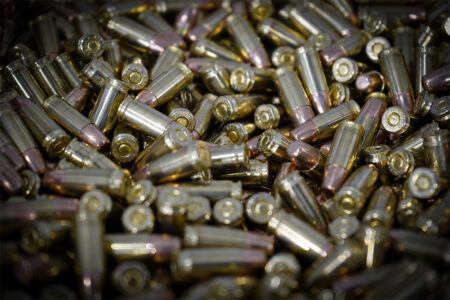

AR’s are produced specifically for the civilian market and were never formulated to be combat rifles. Civilians like Virginians for example.
These politicians – one party especially – are tyrants. They lie, they stir up feelings of fear (fear facilitates the Hegelian dialectic), but in reality We The People are SUPPOSED to have ‘weapons of war’! “The power of the sword, say the minority…, is in the hands of Congress. My friends and countrymen, it is not so, for the powers of the sword are in the hands of the yeomanry of America from sixteen to sixty. The militia of these free commonwealths, entitled and accustomed to their arms, when compared with any possible army, must be tremendous and irresistible. Who… Read more »
Down Louisiana way, a teacher is conducting the geography portion of an elementary school day. She asks the class, “Anyone, what is the capital of the State of New York?” Most of the class raises their hands to be called upon, but not Little Andre, like most of the class, a proud product of the nearby Cajun community. Andre is quietly sitting straight and tall at his desk with his hands neatly folded on top. So of course the teacher calls upon him to give his answer to the class. Andre stands up next to his desk as tall and… Read more »
IMO, Virginians should visit their LGS and purchase a couple of the “Weapons of war” along with 5k rounds of plinking ammunition. Talley up the surge in the purchases and hand deliver the numbers to this buffoon and present him with his “Jay Jones, best “Weapons of war” salesman of the year” plaque.
On 18 April 1775, the colonists around Boson, Lexingon, Concord, had plenty o deer guns, turkey guns, shoguns, muskets, Bown Bess long guns, and pistols in many boes. These were instruments in possession and use by the locals to put their supper meat on their tables, to kill predators (4 legged, mostly) threatening their animals and children, and similar domesic uses. However, when General Gage sent out Brit toops who began shooting at thos same colonists, those various weapons suddenly became weapons o war. The same instruments that on the 18th helped them eat and survive became weapons to secure… Read more »
The right to arms, as declared in the Second Amendment, guarantees a general right to arms. The Militia Clause, when properly understood, specifically indicates that a right to “weapons of war” is included within the general right, in case any future authority attempted to claim otherwise. I have a severe dislike of the term “dangerous and unusual” when applied to firearms. All firearms are dangerous. Their utility is found in their ability to harm and kill. I’m not sure what an “unusual” firearm might be, except one that isn’t dangerous. All other firearms spit lead, and may or may not… Read more »
Poor Virginia, its leaders have never been able to escape their antebellum plantation mentality. Indeed, they now wish to expand it to the entire population of the state. The great irony of the situation is their strongest support comes from those who represent the descendants of former slaves.
Why every gun owner and pro-gun advocate doesn’t have a copy of Federalst #46 hanging from their wall is a ponderous thought. It says nothing of any personal right to own firearms for personal protection, nothing about hunting and certainly nothing about “sport shooting” or sporting firearms. It was all about defeating Government.
The Federalist Number 46, [29 January] 1788
Speaking of war, Jay Jones ‘ bros’ in Chicago celebrated junetemth by shooting over 50.people! What a celebration!
Not as many shot as in some years though.
Friend asked a question, what happens when they leave their neighborhoods and start shooting in white neighborhoods?
Then you will have a war.
I’ve said it thousands of times, dozens here. During my time in service ss my unit armorer, if I had a select fire weapon returned in semiautomatic function inky it would be immediately removed from rotation, be deemed combat ineffective, and not returned to rotation until repaired.
Be that as it may, the entire premise behind the NFA adding short barrel shotguns and suppressors to the ban list is because they were not carried or used by militia (ie “weapons of war”).
The antis contradict themselves attempting to navigate their prohibitive language.