
This article first appeared on AmmoLand News on December 12, 2023, and appears here now with fresh updates.
Sanctions and Joe Biden suck; they have driven the price of ammo through the roof, even previously affordable steel-cased stuff. This is a huge problem given the recent surge in new gun owners who are looking to hone their skills on their new guns, but simply can’t. They either can’t afford the rounds or can’t find the rounds at all – and whenever they can, the majority of the rounds are steel-cased.
These rounds are often maligned for performance, reliability, and being generally inferior to brass-cased ammo. But are they really? Let’s take a closer look.
Steel-Cased Ammo
As its name suggests, steel-cased ammo utilizes steel for its shell casings instead of brass (or in the case of older Soviet ammo, bi-metal). Americans first got a taste for steel-cased rounds when China began exporting its arms and ammo to the US in the 1980s.
With a price tag well below the average cost of American-made brass-cased ammo, many American shooters on a budget gobbled up the ammo in droves. But shortly thereafter, many found that the rounds weren’t performing as accurately, or reliably in their American firearms.
The same held true a few years later when Russian Saigas, Mosin Nagants, and SKS carbines hit the market -but not for those guns. Many shooters began to see the value of steel-cased ammo when $299 Saiga carbines were able to chew through the stuff without a single hiccup. It may not have been match-grade or the cleanliest ammo, but the Soviet calibers ran perfectly in Soviet-designed firearms.
Reliability
What about American guns? Well, it depended on the action and type more than anything. The direct-impingement AR-15 can be ammo sensitive especially when not ran, ‘wet’. This was even more the case a few years ago when most companies made sure their guns were precisely gassed.
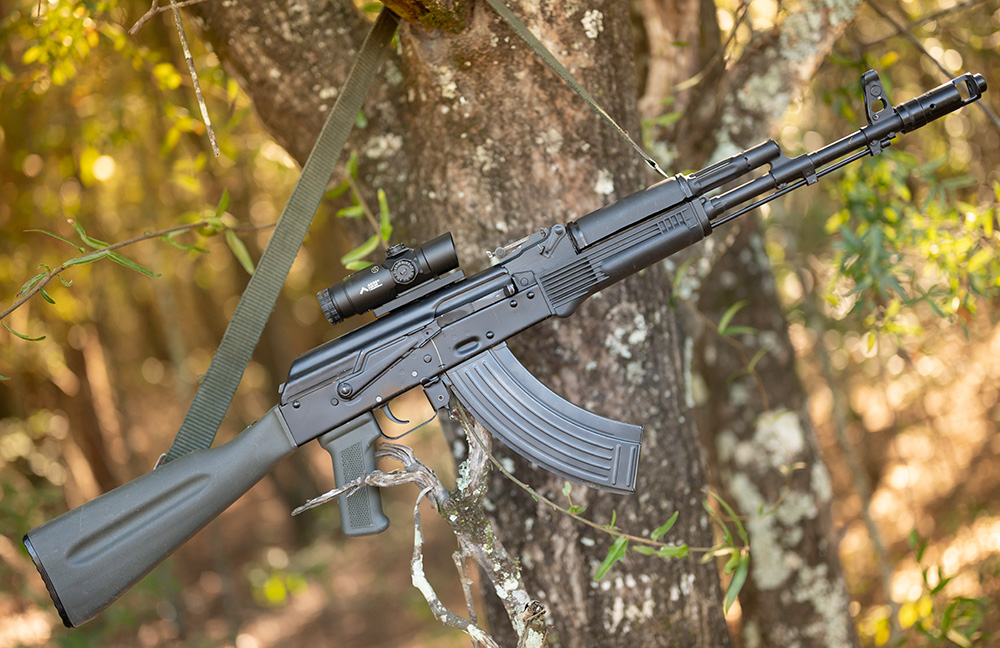
In a world where all ammo is accurately loaded, finely-tuned gas systems are ideal, the gun has less felt recoil, lasts longer, and requires less cleaning. But many companies around the mid-2000s discovered that customers were complaining that their guns weren’t reliable because they wouldn’t run Russian steel-cased ammo very well.
The solution was simple – they over-gassed their guns. This is true of PSA, SIG, Anderson, Colt, and basically everyone today. But don’t get me wrong, they aren’t over-gassed to the point of negatively impacting performance. The guns are just slightly over-gassed to ensure reliable operation with underpowered cheap ammo.
Bottom line: most modern firearms will have no issues whatsoever running with steel-cased ammo, but I would still recommend thorough lubrication and regular cleaning.
Pros vs Cons
Why would shooters pick steel-cased rounds over standard ammo?
Price. That’s it. That’s the only real advantage of the ammo.
As far as downsides, there are a few objective drawbacks to running steel and a few man-made ones.
While the steel used in the ammo’s casings is relatively mild, and thus not terribly hard, it is still harder than brass. This means any component it comes in contact with will wear faster than if a shooter was running brass-cased rounds. The other real downside is that steel’s coefficient of friction is greater than that of brass, so when the spent casing is being extracted from a hot chamber, it requires more force to break the initial bond.

This in turn means more force is exerted on your firearm’s extractor which can lead to premature breakages if the gun wasn’t designed for the rounds in the first place. (SKS / AK owners, needn’t worry.)
As far as man-made issues, many ranges ban the use of steel-cased ammo out of concern for their backstops – this is particularly true with indoor ranges. This is because most steel-cased ammo uses a mild steel core, and is difficult for ranges to differentiate from armor-piercing steel-core ammo which would quickly destroy targets.
The other manufactured downside is that some companies will tell shooters that using steel-cased ammo voids their warranty. In my not-so-humble-opinion, this is a cop-out to let companies brush off shooters who want to run cheap ammo in their gun.
Live Inventory Price Checker
|
|
Hornady Black 7.62x39mm 123gr SST Steel Case Ammunition 20rds - 80784 | Palmetto State Armory | $ 32.99 $ 29.29 |
|
|
|
Wolf Polyformance 145 gr FMJ Steel Cased 300 Blackout Ammunition, 20 Rounds - WOLA300AACFMJ | Palmetto State Armory | $ 19.99 $ 15.99 |
|
|
Apex Ammunition S3 Stratified Waterfowl 12 Gauge Ammo 3" #4 and #6 Steel Shot 1-1/4 oz Case of 200 (8 Boxes of 25) | MidwayUSA | $ 219.99 |
|
|
Apex Ammunition S3 Stratified Waterfowl 12 Gauge Ammo 3" BB and #2 Steel Shot 1-1/4 oz Case of 200 (8 Boxes of 25) | MidwayUSA | $ 219.99 |
|
Overall
In a nutshell, steel-cased ammo is good to go. It’s not as powerful, clean, or pretty as brass-cased stuff, but it runs fine if your gun is properly-gassed. Just make sure to check your gun’s warranty before running it, just in case.
About Jim Grant
Jim is one of the elite editors for AmmoLand.com, who, in addition to his mastery of prose, can wield a camera with expert finesse. He loves anything and everything guns but holds firearms from the Cold War in a special place in his heart.
When he’s not reviewing guns or shooting for fun and competition, Jim can be found hiking and hunting with his wife Kimberly, and their dog, Peanut, in the South Carolina low country.



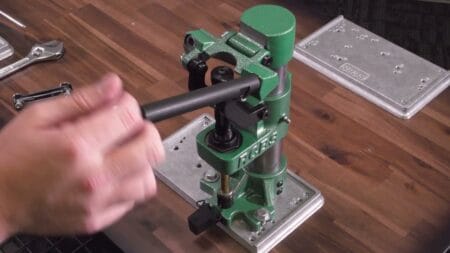
The lacquer that coats the steel case can be problematic when a round sits in a hot chamber. The lacquer will soften, and if the round sits in the chamber as it cools, it can make extraction more difficult in firearms not designed with a generous chamber.
I disagree on the viability of steel cased ammo in weapons when the mfg states otherwise. My HK USPc owners manual specifically states: “CAUTION: HK firearms are designed to function with quality manufactured brass cased ammunition. Use of steel or aluminum cased cartridges is not recommended and could adversely affect safe and reliable functioning. (emphasis mine) For further information on ammunition selection, contact HK Customer Service…” HK does not sell ammunition, so they have no dog in the cost of ammunition argument. Further, HK specifically says: “All USPs are approved for use with +P and +P+ ammunition as it applies… Read more »
If you look at a 5.56 besides a 7.62 russian round you’ll notice th x39 and x54 both have a taper from the base to the mouth. The 556 has little taper.
The taper aids extraction considerably
@jh45gun – Your statement above non bi-metallic seems to be saying that the case is bi-metallic. In most Russian ammo (Tula, Monarch, etc.) the case is steel and the bullet has a mild steel jacket with a thin copper coating. It is only the jacket which is bi-metallic, NOT the case. The projectiles typically have an lead core, not steel. Penetrator rifle rounds similar to M855 are available as well, and they do have steel core. No commercially available handgun rounds have the steel core as they would qualify as illegal “armor piercing” ammo under federal law. From discussion with… Read more »
I shot thousands of rounds of it in AK’s SKS with out trouble.
I seen problems with stuck cases in AR type rifles.
Personally I do not use steel case ammo in AR’s.
I have a friend the reloads 223 steel cases better him than me.
Back in the 80s you could buy one of the cheap SKSs with pinned barrel for under a hundred bucks. 1000 round boxes of steel cased 7.62×39 were available for $69.95. I wish I’d bought more of each, a lot more.
I killed a mule deer with my Chinese surplus SKS, using Chinese soft point ammo. That deer never knew what hit him. I’ve hunted all my life and that cheap ammo was amazing. Still have a few boxes. NO, it’s not for sale:)
Those were the days.
Cheap ammo is always good, or at least was. The issue I had with steel was I experienced a ‘hard lock’ almost every 60 rounds or so, which required a hammer and steel rod to rectify, as you all know.
I have had six show up here in the last two years saying that they had an AR that was not working right. I asked what ammo they were using and it was the steel case. I told them to switch to brass and all was fine thereafter. I noticed that there was some burning of the breach when using steel case ammo. So, I disagree with all steel case ammo is great. Not one good experience with steel case in an AR or AK.
I’ve shot it and it worked OK.
The softest of steels has a surface hardness at least 2 1/2 times the surface hardness of annealed brass (on the Brinell scale), that being the case, unless the chamber was manufactured for the use of steel, from a metallurgical standpoint, steel will erode the chamber over time, not just the extractor. The extractor may be the first part to show wear, but the wear is going on nonetheless. I reload, so I’ve no interest in shell casings I can’t reload. The majority of steel cased ammo is Berdan primed. It was never engineered to be reloaded, while it is… Read more »