
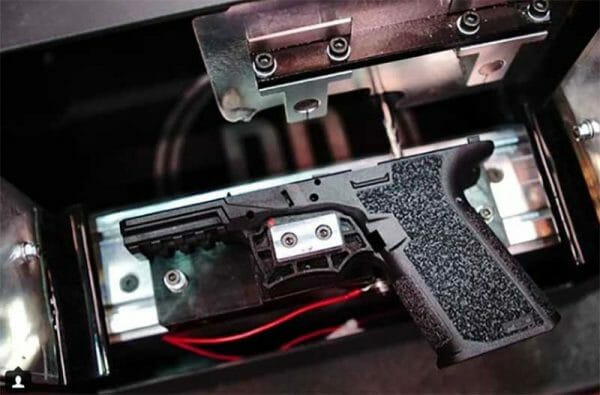
New York Governor Kathy Hochul unveiled a package of proposals as part of her State of the State agenda to combat the rise of untraceable “ghost guns,” with a particular focus on those produced via 3D printing.
Dubbed a “first-in-the-nation” initiative, the legislation would require 3D printer manufacturers to equip devices sold in New York with software that can detect and block the production of firearms or their components. Additional measures include criminalizing the unlicensed possession, sale, or distribution of digital blueprints (CAD files) for guns, requiring gun makers to design pistols that are resistant to easy conversion into machine guns (e.g., via “Glock switches”), and mandating that law enforcement report recovered 3D-printed firearms to a statewide database.
Hochul framed the proposals as essential to closing the “plastic pipeline” of illegal weapons, building on New York’s already stringent gun laws. She highlighted a reported 1,000% increase in 3D-printed gun recoveries over recent years and cited cases like the alleged use of a 3D-printed gun in high-profile crimes. Supporters, including Manhattan District Attorney Alvin Bragg and State Police Superintendent Steven G. James, praised the measures for addressing an “emerging threat” that undermines progress in reducing gun violence—shootings statewide hit record lows in 2025.
The core of Hochul’s plan is to force 3D printer companies to integrate safeguard technology into their firmware or software. This process could involve algorithms that scan sliced print files for matches against a database of known firearm designs and halt jobs deemed suspicious. Proponents argue that this multilayered detection, potentially at the slicer software, cloud management, or printer level, would deter casual production and make it harder to manufacture unserialized firearms at home.
Yet, despite the ambitious rhetoric, this approach is fundamentally flawed and unlikely to achieve its goals. Technical, practical, legal, and enforcement challenges render it ineffective against determined individuals, while imposing burdens on legitimate users and manufacturers.
Live Inventory Price Checker

|
200rds 9mm 115gr Ammo With 3x Magpul Glock Magazines - 200rds 9mm 115gr With 3x G17 17rd Mags | Brownells.com | $ 126.99 |
|

|
Winchester 9mm 115gr Full Metal Jacket Ammo - Box of 200 | Primary Arms | $ 54.99 |
|
|
Gorilla Silverback 9MM 115gr, Self Defense, 20 Round Box | Gorilla Ammunition | $ 39.99 |
|
|
|
PMC Bronze 9mm 115gr FMJ Ammunition 300 Round Sealed Battle Pack - 9A-BP | Palmetto State Armory | $ 103.99 $ 92.99 |
|
First, the proposal applies only to new 3D printers sold in New York after its enactment. Millions of existing printers nationwide, and thousands already in New York homes, workshops, and schools, remain unaffected. Hobbyists, makers, and potential bad actors can continue using older models without restrictions. Even for new printers, compliance depends on manufacturers based outside New York (many of them overseas) agreeing to region-specific firmware, which creates logistical and economic hurdles.
More critically, any built-in blocking software is easily circumvented. Most consumer 3D printers run open-source firmware like Marlin or Klipper, which users routinely modify, flash, or replace. Tech-savvy individuals, precisely those most likely to pursue homemade firearms, can disable or remove detection features in minutes. Offline printing via USB or SD card bypasses cloud-based checks, and altered files (e.g., slightly modified geometries or disguised as innocuous objects) evade signature-based detection. As experts note, this is a classic “whack-a-mole” problem: databases of banned designs quickly become outdated as new variants proliferate.
Historical precedents underscore this futility. Efforts to restrict digital firearm files, such as the 2013 controversy over Defense Distributed’s Liberator pistol, failed spectacularly. Files spread via torrent sites, decentralized platforms, and dark web repositories beyond any single jurisdiction’s reach. Court battles have affirmed that code is speech under the First Amendment, thereby protecting blueprints as expression. Hochul’s criminalization of unlicensed possession of CAD files invites similar constitutional challenges, likely leading to the striking down of broad restrictions on information sharing.
Enforcement poses another insurmountable barrier. Detecting private 3D printing requires invasive monitoring, home raids based on suspicious filament purchases, or monitoring online activity? New York’s law would struggle to police decentralized file sharing globally. Criminals motivated enough to build untraceable weapons won’t be deterred by software hurdles they can hack around, while law-abiding makers face unnecessary restrictions on printing benign objects.
Critics from Second Amendment advocates, including the 3D printing community, argue the plan infringes on rights without addressing the root causes of crime. Most illegal firearms stem from theft, trafficking, or straw purchases, not home printing. Data shows privately manufactured firearms (PMF), while rising, remain a fraction of recovered crime guns. Punishing printer manufacturers and users burdens innovation in a technology used for prototyping, education, medicine, and art.
Moreover, the proposal risks unintended consequences. Forcing detection tech could drive users to unregulated imported printers or DIY builds, undermining safety standards elsewhere. Manufacturers like Prusa, Bambu Labs, or Creality might limit sales in New York or challenge the mandate legally, citing interstate commerce issues.
Hochul’s initiative reflects a broader trend: politicians targeting emerging technology to signal tough-on-crime stances amid a decline in overall violence. New York’s shootings dropped dramatically under existing laws, yet the focus on 3D printing amplifies a niche threat. Similar past attempts, bans on 80% gun kits or file distribution, slowed but never stopped proliferation, as innovation outpaces regulation.
Ultimately, information and technology cannot be fully controlled in a free society. Firearm designs have circulated in books and diagrams for centuries; digital files are no different. Determined actors will always find ways to modify printers, source files anonymously, or use alternative methods like CNC milling. Hochul’s plan may score political points and inconvenience some, but it won’t meaningfully curb the production of 3D-printed guns. True public safety lies in targeted enforcement against criminals, not futile battles against bits and bytes.
Not to be outdone by New York, Washington state has introduced a nearly identical and equally flawed law.
Can’t Stop the Files: Media’s War on 3D-Printed Firearms Exposed
About John Crump
Mr. Crump is an NRA instructor and a constitutional activist. John has written about firearms, interviewed people from all walks of life, and on the Constitution. John lives in Northern Virginia with his wife and sons, follow him on X at @crumpyss, or at www.crumpy.com.





State Police Superintendent Steven G. James should be asked, in public, how many perpetrators of violence using a firearm have been identified in 2025 through the tracing of a firearm by serial number. Don’t know? How about 2024? If tracing does no solve any crimes, why should this “ghost gun” law be enacted? What if it does not reduce the number of “guns on the street” but does increase the number of lawfully owned guns that are stolen? Empress Hochul should be asked Mark Walters’ perennial question: “What is it in Democrats long term plans that requires the disarmament of… Read more »
Here’s the “sand in the gears” part. The first 3D printers were DIY (Do it Yourself) units where the software was open source, the hardware was off the shelf or repurposed, and the filament was string trimmer line from a local garden center. Bottom line is what can be done from scratch can be done again from scratch. Moreover, that nine year old girl that Larry Kudlow says can program a DVR could probably get a scratch built printer up and running even if Gov Hochul thinks they all have to come from some “3D Printer Fairy”. The video linked… Read more »
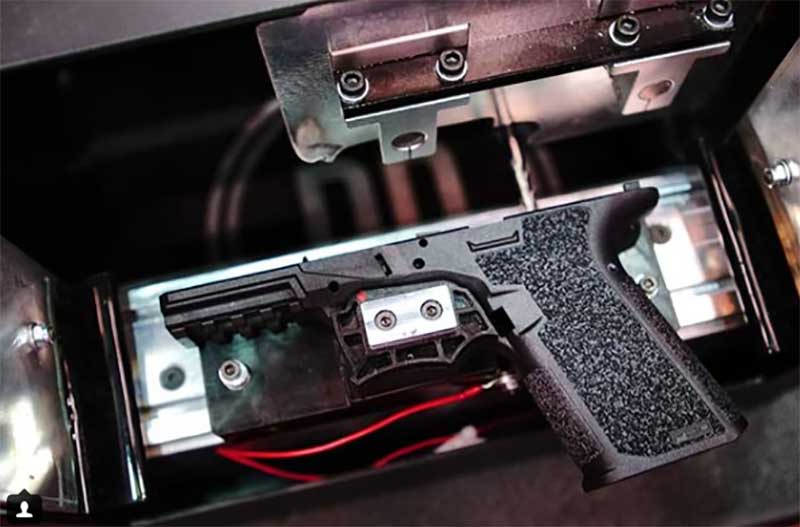
Did anyone else notice that the lead photo for an article about 3D printing doesn’t show a 3D printer?
That’s Defense Distributed’s table top CNC mill: “The Ghost Gunner.”
https://ghostgunner.net/?srsltid=AfmBOooFPJFi3-GoP9zdZCN-1M5ehlLEEOzRODTGRGvYSbpitpcs-Ir-
It can pretty much accomplish the same things a 3D printer can accomplish, but comes at it from a 180 degree change in direction. Where a 3D printer uses code to add stuff to an object (additive manufacturing), CNC mills use code to remove stuff from an object (subtractive manufacturing).
Bottom line, you should get one of either (or both) because Gov. Hochul hates them both equally.
Someone should 3D-print Kathy a brain: a lump of plastic is bound to be better than that lump of shit she currently has…
Surely Governor Hochul is attempting to induce fear and clutching of pearls when she states that 3D printed firearms have increased 1000% in “recent years”. More vague and assumptive language to hoodwink the masses. 1000 % can mean the number went from 1 to 10. If there had been large numbers of 3D printed seized/recovered, they would give the exact numbers or say more than X hundred have been seized. What exactly does “recent years” mean anyway? Hochul is trying to make it sound like this supposed 1000% increase happened in the last 2 years or less when it could… Read more »
The simplest step for 3D printer companies is to forbid the sale & support of their products in NY. Site her speech as their determining factor & move on. I’m sure that whack job’s edicts are in violation of some interstate commerce, patent safeguard, or something else I can’t think of right now. So, don’t even sell/support “behind enemy lines” & they’ll be better off. I’m sure Kommiefornia will be next.
Model legislation mills from the left side of the ideological isle continue to spew spurious ‘common sense’ solutions to non problems and real problems alike. They don’t do their homework, don’t understand technology but spew out a flurry of proposed legislation to progressive utopias anyway. Leftist politicians are incapable of educating, motivating and inspiring people to be better citizens so they legislate to try to show some form of activity. Consequences be damned, they flood the codes with contradictory trash in the hope that they can convince their voters they are doing something. While this flurry of activity is going… Read more »
New York Governor Kathy Hochul has sided with the new Mayor of NYC a democratic socialest comminst who wants to defund the police. That is the dream of every democratic socialest in America. Hochul her regin of power the election of Mamdani who was born in Kampala Ugenda went unchallenged by the whole republican party. Young college aged Americans along with illegals allowed to vote in NYC ushered in a new chapter which will result in the democrats going all in on the removeal of firearms from all NYC residents making it impossible for New Yorkers to protect themselves. Hochul… Read more »
As it is blatantly unconstitutional, for numerous reasons, besides being immoral, we won’t follow it and she can grind her teeth in anger. We will exercise our rights, and celebrate our rebellion against tyrants.
I haven’t laughed so hard since Congress considered the process of banning banana peels.
https://psychedelicscene.com/2025/06/16/acid-lore-the-great-banana-hoax/