
The U.S. Supreme Court today heard vigorous oral arguments in United States v. Hemani, a high-profile Second Amendment case testing whether a decades-old federal law can permanently disarm Americans who regularly use marijuana or other controlled substances. The justices appeared deeply divided on the scope of historical analogues but broadly skeptical of applying the ban to non-impaired, occasional-to-moderate users, denoting a likely victory for respondent Ali Danial Hemani and potentially millions of cannabis consumers in states where the drug is legal.
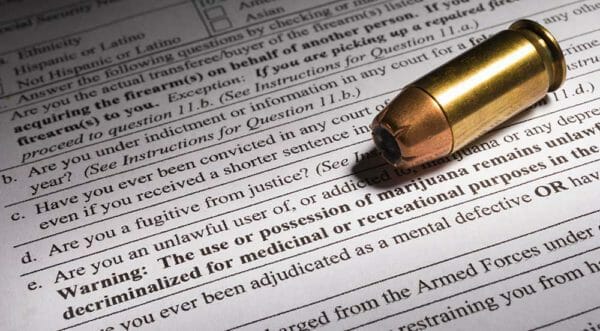
The case revolves on 18 U.S.C. § 922(g)(3), part of the 1968 Gun Control Act, which makes it a felony for any “unlawful user of or addicted to any controlled substance” to possess a firearm or ammunition. Marijuana is still a Schedule I substance under federal law, despite legalization or decriminalization in most states and continuing efforts (including under the current Trump administration) to reschedule it to Schedule III.
United States v. Hemani
In 2022, FBI agents raided the Denton County, Texas, home shared by Hemani (a 25-year-old dual U.S.-Pakistani citizen) and his parents as part of a wider investigation. They found a 9mm pistol, a small amount of marijuana, and trace cocaine. Hemani admitted to smoking marijuana “every other day.” He was indicted only on the § 922(g)(3) charge, with no allegation that he was intoxicated at the moment he possessed the gun, and no other charges were filed.
Hemani moved to dismiss, arguing the statute violated the Second Amendment as applied to him. Both the federal district court and the conservative 5th U.S. Circuit Court of Appeals agreed, relying on the Supreme Court’s 2022 decision in New York State Rifle & Pistol Association v. Bruen. That ruling requires modern gun restrictions to be “consistent with this Nation’s historical tradition of firearm regulation.” The 5th Circuit held that § 922(g)(3) can constitutionally apply only when the government proves the defendant was presently intoxicated while possessing the firearm. Habitual or past use alone is insufficient.
The Government’s Defense of the Ban
The United States, represented by Sarah M. Harris, Principal Deputy Solicitor General, defended the law as a “modest, temporary” restriction on a category of people who present special risks when mixing firearms and mind-altering substances. She pointed to founding-era laws disarming “habitual drunkards,” vagrants, and those subject to civil commitment or surety bonds measures that targeted individuals whose frequent intoxicant use created public-safety dangers without requiring proof of intoxication at every moment.
Harris emphasized that the restriction is reversible (rights can be restored upon cessation of use) and that illegal drugs differ from alcohol because of their federal illegality, association with black-market violence, and explicit congressional scheduling judgments about abuse potential and lack of accepted medical use.
Hemani’s Rebuttal: A Historical Mismatch
Hemani’s lawyers, Erin E. Murphy (of Clement & Murphy PLLC, arguing alongside ACLU and other counsel), countered that the government’s analogy fails Bruen’s “relevantly similar” test.
Historical “habitual drunkard” laws focused on severe, life-disrupting intoxication, people who were “falling-down drunk,” neglecting families, or unable to function, not moderate or occasional users. Founding-era Americans, she noted, consumed far more alcohol than modern marijuana users without losing gun rights. Applying the ban to someone who consumes marijuana “a few times a week” is a category error and renders the statute unconstitutionally vague and overbroad.
Murphy urged the Court to limit the “unlawful user” prong to cases of proven functional impairment or to strike it entirely, while conceding that the “addict” prong (loss of self-control) may have firmer historical grounding.
Gorsuch, Barrett Signal Skepticism
Justice Neil Gorsuch repeatedly pointed out the mismatch. He asked whether daily hard cider drinkers like John Adams or nightly whiskey drinkers like James Madison would have been disarmed. When Harris suggested the law targets “habitual” illegal-drug use, Gorsuch quipped about “one gummy bear every other night” and pressed whether that qualifies. He appeared inclined to rule narrowly for Hemani: “Isn’t it just enough to say that is not a habitual drunkard?”
Gorsuch (I think) now pointing out that the founders knew how to party and drank a lot.
And Hemani only smoked “every other day.” What if he just used one pot gummy per day?
Govt is flailing right now it seems.
— SAF (@2AFDN) March 2, 2026
Justice Amy Coney Barrett zeroed in on practical absurdity. She asked whether lawful users of Ambien, Xanax, or even Robitussin who exceed dosage become “unlawful users” subject to lifetime disarmament. She questioned whether Congressional scheduling decisions automatically translate into Second Amendment disqualifications. Barrett seemed open to some restrictions, but unconvinced of a blanket rule untethered to actual dangerousness.
Liberal Judges Focus on Dangerousness
Justices Sonia Sotomayor and Ketanji Brown Jackson (who dissented or concurred skeptically in Bruen and Rahimi) expressed concern that the government offered no specific congressional finding that marijuana users as a class are dangerously impaired with guns. Sotomayor stressed that historical drunkard laws required evidence of lost self-control affecting daily life. Both appeared ready to side with Hemani.
Justice Elena Kagan explored hypotheticals involving hallucinogens like ayahuasca, probing whether frequency alone or functional impairment should determine whether gun rights are lost.
Chief Justice John Roberts and Justice Samuel Alito voiced practical worries about the government’s position. Roberts questioned whether case-by-case dangerousness hearings would flood courts. Alito noted modern synthetic drugs post-date the founding and suggested stricter rules might be justified for substances unlike culturally entrenched alcohol. They appeared more receptive to upholding the ban in its entirety.
The overall tone was technical and respectful, with occasional flashes of humor (Gorsuch’s Founding Fathers drinking references drew chuckles). There was broad agreement that the “addict” prong has historical support if properly tied to loss-of-control cases. The fight centered on the far broader “unlawful user” prong, which is likely a good thing for the Second Amendment.
Likely a Narrow Ruling — With Major National Impact
While no final votes were cast today, a majority appeared prepared to rule for Hemani at a minimum, striking the law as applied to him and likely narrowing § 922(g)(3) to require proof of present impairment, addiction, or clear dangerousness. A divided decision is possible, with different justices writing separately on how Bruen’s history-and-tradition test applies to modern substances.
The ruling, expected by late June, would have enormous practical consequences. It could open gun ownership to tens of millions of state-sanctioned marijuana users, force ATF form revisions, and intersect with federal rescheduling efforts. It would also test the durability of the Bruen framework just four years after it upended Second Amendment jurisprudence.
For now, the justices’ questions today suggest the federal government’s categorical ban on gun ownership by marijuana users is on shaky constitutional ground.
Roberts v. ATF Challenges Post-Tax NFA Registration Scheme in Federal Court
Mayor LaGrand’s Epic Fail: Defensive Gun Use Data Destroys the Narrative
About John Crump
Mr. Crump is an NRA instructor and a constitutional activist. John has written about firearms, interviewed people from all walks of life, and on the Constitution. John lives in Northern Virginia with his wife and sons, follow him on X at @crumpyss, or at www.crumpy.com.


Prescribed morphine no problem. Prescribed marijuana enter the screams “think of the children”.
If a NFL player has an illegal gun or the presidents son it just goes away. If a marijuana card holder with zero proof of actual usage wants to buy a gun it’s let’s prosecute.
And where is the most friendly 2A America has ever seen at? Supporting the prosecution
It took a constitutional amendment for government to ban alcohol. Government has absolutely zero constitutional authority to ban the use or possession of any substance and they are expressly forbidden from regulating the possession or bearing of arms.
Personally I don’t care what drugs someone does, so long as they are not a public nuisance. Homeless people should all be relocated to Porkland, Oreganistan along with all the unconstitutional retards in Commiefornia.
Make the punishment for committing a crime heavy and hard labor….
Move up the timetable for swift public executions. Murder, attempted murder, armed robbery, home invasions get the noose within 30 days…
(Their, I solved the overpopulated prison issues as well)
Thats how you get people to obey basic common sense rules…
Queue the believers of “Reefer Madness.”
scotus needs to issue broad rulings, especially when civil rights are being infringed. The right thing to do would be to say all citizens not currently in prison have the right and duty to keep and bear arms. It’s a right the government has been prohibited from exercising any authority over.
30+ years in city FD/EMS has proven over and over…
Alcohol makes bigger morons than marijuana by FAR.
We had so many alcoholic loser calls compared to the few that smoked too much and that was usually a “angel dust” smoker NOT MJ.
Yes just like alcohol – MJ has it’s addicts – many times they are alcoholics first and there’s WAY MORE alcoholics causing problems.
Volumes and volumes of EMS reports prove it.
So maybe in 4 months I might be able to use CBD oil on my hands and knees and not lose my carry permit. I shouldn’t have to suffer because of their law. I wouldn’t be a druggie but I would test positive for pot! I have posted the law multiple times and that CBD has THC in it and you would test positive for pot. I have been suffering for years and I have done all I can to try and find a way to legally use CBD oil. Here in OreGONEistan the cops say there would not be… Read more »
So I have a friend. He is a collector with a huge safe. It is full. I suspect he drinks a pint of Black Velvet daily. He buys a lot. On a schedule. He has a big red chewing gum habit to cover it. He is a functional alcoholic. I am sure there are thousands of folks like this. He drives to and from work every day and I bet he is legally drunk while doing so. He is usually shaking by 4 o’clock. Weed or alc, this kind of substance abuse is a problem for all of us. He… Read more »
All bulls@#&! DOJ needs to quit dickin around and do away with 1715 and forbid the communist states from enforcing any firearm mailing laws they may create.
Now the chances of this happening is about as good as a politician telling the truth.
Hmmmmm…..marijuana users can’t be disarmed. Gang members can’t be disarmed. Trans med patients can’t be disarmed. Criminals can’t be disarmed. Looks like the onIy ones who can be disarmed are law abiding Citizens. “From my coId, dead hands…”