

New filings argue that three Supreme Court decisions have stripped away the government’s excuses for maintaining a zero-tax federal gun registry. The tax is gone. The registry remains.
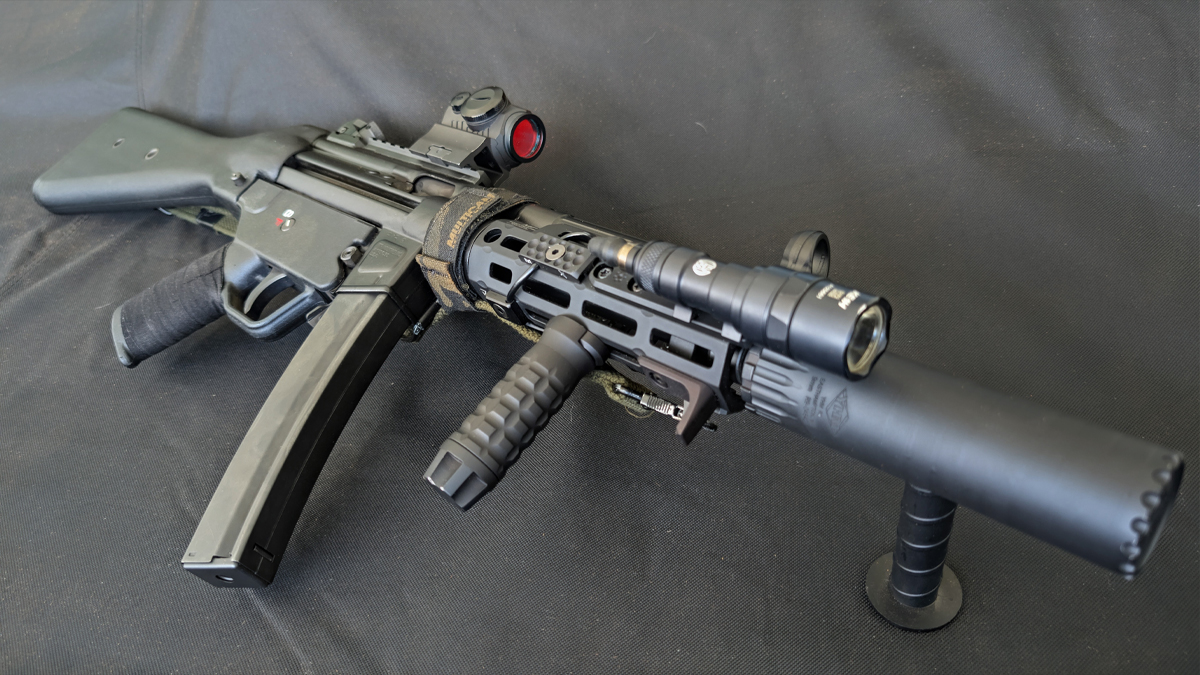
The Second Amendment Foundation (SAF) and its partners have opened a coordinated, three-court attack on the National Firearms Act registration requirements for suppressors and short-barreled firearms. Supplemental filings in Brown v. ATF, Jensen v ATF, and Roberts v. ATF argue that three recent Supreme Court decisions leave the federal government with neither a valid taxing-power excuse nor an easy escape from the Second Amendment.
The Jensen filing is part of the consolidated Silencer Shop Foundation v. ATF litigation in Texas, where Silencer Shop Foundation and allied plaintiffs are pursuing a parallel challenge to the NFA registry.
Congress Zeroed the NFA Tax but Kept the Registry
Congress reduced the NFA making and transfer tax on suppressors, short-barreled rifles, short-barreled shotguns, and “any other weapons” to zero in the One Big Beautiful Bill. Washington, however, kept the paperwork, fingerprints, registration, prior approval, and felony penalties.
That creates the question now confronting federal courts: If the registry existed to collect a tax, what constitutional authority supports it when Congress no longer collects that tax?
SAF says the Supreme Court’s decision in Landor v. Louisiana Department of Corrections & Public Safety reinforces the answer: none. Congress cannot stretch the Necessary and Proper Clause into an independent police power, then impose a burdensome registration scheme on Americans who owe no tax.
The Jensen filing puts the point bluntly. Maintaining registration on untaxed citizens, plaintiffs argue, would permit Congress “to regulate in minute detail the activities of untaxed Americans.”
That should concern every gun owner. A federal agency should not be able to preserve a national weapons database merely because the database once accompanied a tax.
Supreme Court Rulings Strengthen the Second Amendment Challenge
The Second Amendment attack may be even more consequential. SAF argues that Wolford v. Lopez and United States v. Hemani require courts to apply the Supreme Court’s text-and-history test instead of inventing special exemptions for NFA regulations.
According to the filing, a suppressed firearm is a form of an arm, while a short-barreled rifle is “indisputably” a form of an arm. Once protected conduct is implicated, the government bears the burden of proving that its restriction is consistent with America’s historical tradition of firearm regulation.
The filing also takes direct aim at the Fifth Circuit’s decision in United States v. Peterson, which treated NFA registration as comparable to a presumptively lawful shall-issue licensing system. The plaintiffs contend that Wolford “leaves no room for a carveout” from the required Second Amendment analysis and therefore abrogates Peterson on that point.
That licensing comparison was always strained. Licensing evaluates whether a person is legally disqualified. Registration creates a government record of particular weapons and their owners. As the Jensen filing explains, “Registration, by contrast, focuses on tracking firearms and who owns them.”
Three NFA Lawsuits Target the ATF Registry
In a press release, SAF Senior Director of Legal Operations Bill Sack said: “When the Supreme Court rightly ruled in favor of Landor, Wolford, and Hemani, the precedent set had a direct impact on SAF’s ongoing NFA challenges. With those rulings in hand, we are now able to better explain to the courts exactly why the remaining registration scheme left in the NFA lacks constitutional authority and is a direct violation of Americans’ Second Amendment rights. We are hopeful these cases will move expeditiously and rightfully restore the full constitutional rights of gun owners across the nation.”
“There is no doubt the Supreme Court’s rulings this past term have direct bearing on our current challenges to the NFA’s remaining registration scheme,” said SAF founder and Executive Vice President Alan M. Gottlieb. “The relevant district courts should recognize the rulings for what they are – binding precedent that bolsters SAF’s arguments in these three cases. The One Big Beautiful Bill eliminated the tax for suppressors and short-barreled firearms, and it’s now time to remove the registration burden so citizens can exercise their right to keep and bear arms without fear of being placed on some government list.”
The burden is now where Bruen put it: on the government. ATF must identify a historical analogue, not wave at modern licensing practices and demand judicial deference. The government now faces a problem it cannot solve with slogans about licensing or administrative convenience.
No tax means no taxing-power excuse. Protected arms mean the Second Amendment applies. And a government list of firearms and their owners is exactly what it looks like: registration.
Gun-Rights Groups Tell Sixth Circuit the NFA’s SBR Registry Is Unconstitutional
Seventh Circuit Upholds Illinois AR-15 Ban Days After Supreme Court Takes Up Same Fight
About Duncan Johnson:
Duncan Johnson is a lifelong firearms enthusiast and unwavering defender of the Second Amendment—where “shall not be infringed” means exactly what it says. A graduate of George Mason University, he enjoys competing in local USPSA and multi-gun competitions whenever he’s not covering the latest in gun rights and firearm policy. Duncan is a regular contributor to AmmoLand News and serves as part of the editorial team responsible for AmmoLand’s daily gun-rights reporting and industry coverage.



NFA has always been repugnant to the Constitution, as even the AG at the time it was shoved down our throats admitted during testimony to the senate. Gov has no authority to limit or restrict or criminalize ownership of firearms or types of firearms, nor can it require permits or licenses or even background checks, which just started in the 80’s. No historical tradition for any of those BS laws, and none of them do squat to keep citizens safe or reduce crime.
The first pertinent questions are “Will it go away” and “When”.
The I’d ask, should the NFA requirements be removed, what will happen to the information? Will it be like 4473s and “only” be kept for 20-30 years?
Great progress has been made, but there is nothing to keep a future bunch of Communists from reinstating bad laws or using old information to track us.
December 15, 1791! That’s ALL l need to know.
Sic semper tyrannis!
At some point 600 million firearms need to speak up against tyranny. 1791 now 2026 seems it’s about that time again…