
An alleged robber reportedly threatened to kill a Tulsa County homeowner and followed him inside. A baseball bat failed to stop the attack. One gunshot did.
Bat Fails, Gun Ends Attack: Tulsa Homeowner Stops Alleged Robber
![iStock.com/[Oliver Peric]](https://www.ammoland.com/wp-content/uploads/2026/07/Defensive-Gun-Use-Self-Defense-9mm-iStock-2265679515-1-520x347.jpg)
America’s oldest Second Amendment News outlet.
 RSS feed
An alleged robber reportedly threatened to kill a Tulsa County homeowner and followed him inside. A baseball bat failed to stop the attack. One gunshot did.

Gun-control activists and hostile state officials are regrouping after major Second Amendment defeats in Hawaii and New Jersey. The reactions to Wolford and Cheeseman show that the anti-gun lobby will keep fighting even after its restrictions are ruled unconstitutional.
![iStock.com/[Greggory DiSalvo]](/wp-content/uploads/2026/07/Congress-Senate-Political-Parties-iStock-2259628333-520x347.jpg)
Lindsey Graham’s gun-rights record was imperfect, but his role in confirming Gorsuch, Kavanaugh, and Barrett helped build the Supreme Court majority that delivered Bruen, Hemani, and Wolford.

Congressional researchers say the Supreme Court’s Hemani decision may reach beyond the marijuana gun ban and prompt lawmakers to examine other federal prohibited-person laws.

An en banc Third Circuit ruling invalidates New Jersey’s ban on semiautomatic rifles and magazines holding more than ten rounds. The decision creates the federal appellate split the Supreme Court will confront in Viramontes and Grant.

Ana Lucia Lopez went from leading an obscene anti-campus-carry protest to helping draft three gun-control bills for James Talarico. All three failed, but the record matters now that Talarico wants a U.S. Senate seat.

CTV reported that most source-identified “crime guns” traced by the RCMP came from within Canada. But an unclear denominator, incomplete Ontario and Quebec data, and the RCMP’s broad definition of a crime gun make that conclusion far less comprehensive than it sounds.

The Justice Department has moved to abandon its appeal defending the federal post office gun ban, leaving a permanent injunction protecting present and future SAF and FPC members at ordinary post offices.

The House passed H.R. 1181 by 221–201, advancing a federal ban on firearm-specific merchant category codes. The bill would shut down MCC 5723 and override state gun-store tracking mandates.

School officials searched 18-year-old Jack Harrington’s truck after learning he lawfully owned a handgun. They found nothing. SAF says gun ownership cannot erase Fourth Amendment protections.

After JSD Supply and Eagle Shows entered Chapter 7 bankruptcy, New Jersey filed a new lawsuit seeking to hold founder Jordan Vinroe personally liable under the state’s gun-industry public-nuisance law.

Virginia is asking a court to declare AR-15s and standard-capacity magazines outside constitutional protection. Its motion in Crump v. Katz also revives interest-balancing language rejected by the Supreme Court.

Three federal lawsuits argue that Congress’s zeroed-out suppressor and SBR tax leaves ATF’s registration system without a leg to stand on.

The Wolford ruling could strengthen national carry reciprocity and shape the Supreme Court’s coming showdown over AR-15 and magazine bans.

Everytown ranks Washington among America’s strongest gun-control states. But the group’s own data says Washington’s gun homicide rate rose 33% from 2015 to 2024—more than twice the national increase.
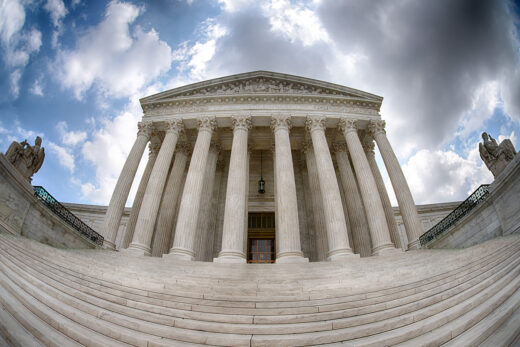
After striking down Hawaii’s “vampire rule” in Wolford, the Supreme Court again refused to settle whether 1791 or 1868 controls the Second Amendment’s historical test.

Four major gun-rights groups say 1.17 million registered SBRs are protected arms. Their Sixth Circuit brief argues the NFA registry rests on a 1934 drafting accident, not American history.

ATF would eliminate the Biden administration’s formal presumptions for identifying unlicensed firearms dealers. Gun Owners of America warns that the replacement still preserves enforcement theories that could be used against ordinary gun owners.
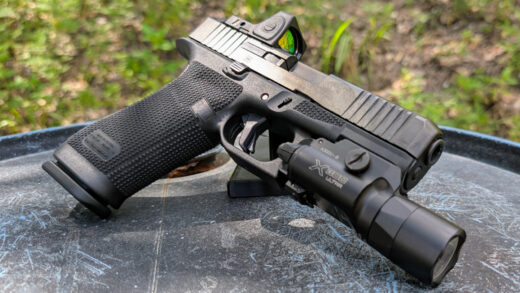
Maryland says Glock-style pistols are different because criminals can illegally convert them. Gun-rights plaintiffs say Heller and Bruen forbid banning common defensive handguns.

Delaware wants the federal challenge to HB 451 kept on ice despite binding Third Circuit law recognizing adults ages 18 to 20 as part of “the people.”

Air Force veteran Craig Philips can legally own handguns, but Pennsylvania permanently bars him from carrying one because of a 1994 marijuana conviction. GOA says the lifetime ban cannot survive Bruen and Hemani.

California’s Glock-style pistol ban remains in force after a federal judge rejected the DOJ’s emergency request, but the central Second Amendment question remains unanswered.

ATF comment periods are not popularity contests. They create the legal record that can make or break federal gun rules in court. Gun owners who stay silent hand the opposition the field.

The Seventh Circuit has upheld Illinois’ ban on AR-15s and standard magazines, doubling down on Bevis just days after the Supreme Court agreed to hear Viramontes and Grant. Chief Judge Brennan warned the court is allowing Illinois to ban “the best-selling rifle in America and its standard magazine.”
Texas has a pro-gun reputation, but history shows those rights were hard-won. A Soros-backed push to turn Texas blue should wake up gun owners nationwide.

A new SAF petition in Calce v. City of New York could give the Supreme Court another reason to reject bans on AR-15s and other modern arms.

The Supreme Court’s decision to take up two major AR-15 cases shows the justices were not ducking the Second Amendment. Mark Smith argues the delay was strategic, setting up a cleaner fight over semiautomatic rifle bans in the October 2026 Term.

A Washington County judge has clarified that the injunction in Santolla v. Katz applies statewide, blocking enforcement of Virginia’s new assault-firearm and magazine ban while the NRA-backed lawsuit moves forward.

The Third Circuit has ordered fast supplemental briefing in New Jersey’s AR-15 and magazine ban case, asking both sides to address the impact of the Supreme Court’s latest Second Amendment rulings in Wolford and Hemani.
The Supreme Court agreed to hear a major Second Amendment case over AR-15-platform rifles, but the real impact could reach far beyond so-called “assault weapon” bans.